

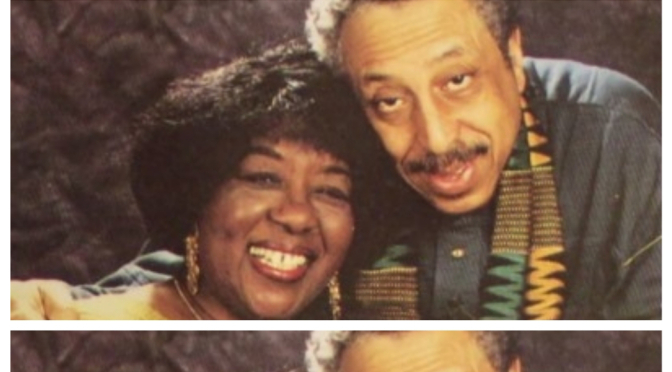
This Japanese restaurant held a lavish Sunday Jazz buffet with Trudy Pitts and Mr. C. Dr. Janice Presser shared they ended each performance with “What a Wonderful World.”
Tag Archives: Cultural Heritage Preservation

Sun Ra Arkestra House
The three-story rowhouse in Germantown has been home to the Arkestra since 1969. Sun Ra Arkestra Director Marshall Allen still lives and plays here.
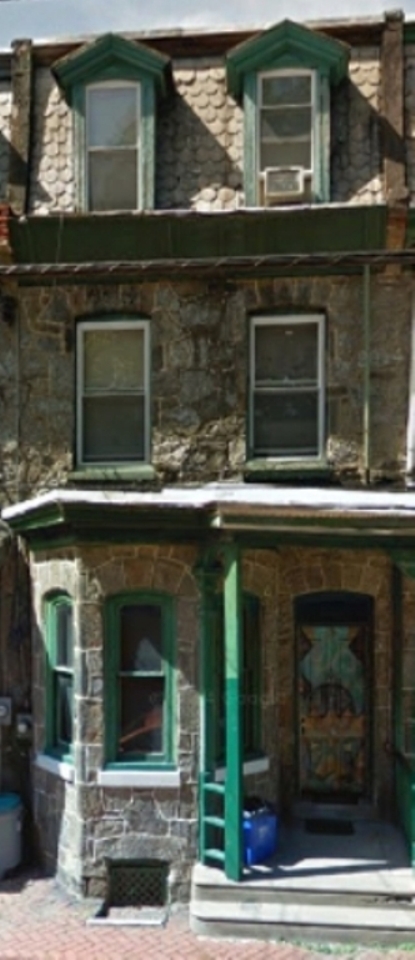
Today the house is a living museum, full of paintings, sheet music and concert posters, dedicated to keeping the spirit of Sun Ra alive.
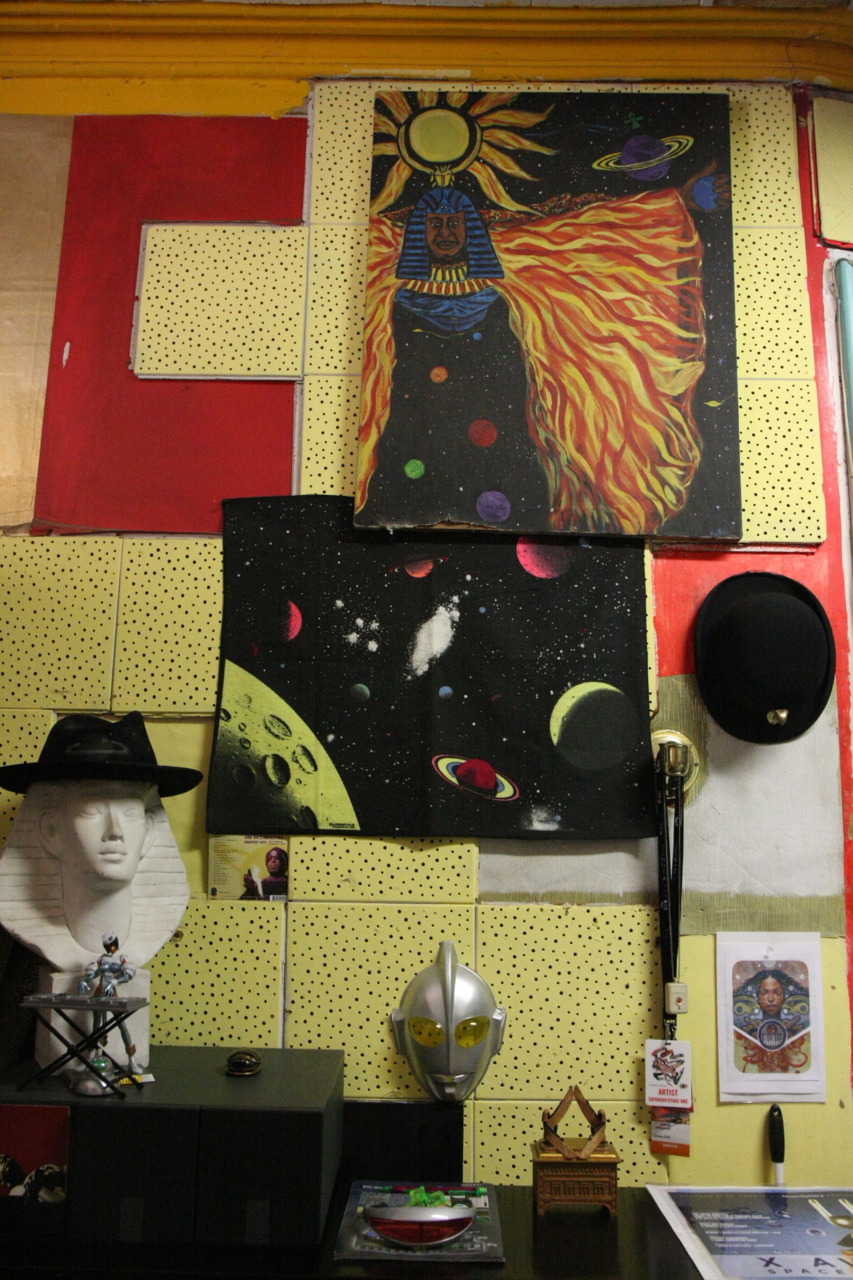
Memories from jazz educator and musician Paul Combs:
One thing about having Sun Ra as a neighbor was the possibility of running into him in everyday situations, like shopping at the supermarket. One day a friend of mine and I did just this. Sun Ra and John Gilmore, the great tenor saxophonist and Ra’s right-hand man, were taking care of the shopping for their household (many of the Arkestra members lived in a big house together with their leader). I have always had the impression that life was one big cosmic game for these folks, one that involved serious dedication and a deep sense of humor.
Both musicians were wearing robes, although less elaborate ones than they would wear on stage. Gilmore had a small, brimless North African cap on, and Ra a small turban. Gilmore pushed the cart, and Ra followed behind directing him to the various things they needed. My friend and I followed them at a respectful distance. Finally they got to the meat counter. This was a small neighborhood supermarket and it was customary to have a butcher on duty behind the counter in those days. As they parked themselves in front of the counter Sun Ra said, “John, tell the butcher that Sun Ra would like five pounds of hamburger,” and, although the butcher could hear Ra at least as well as we could, Gilmore relayed the request. The butcher served up the meat with a straight face, as if he were either in on the play or it was a normal scene to him.
I may be wrong, but I have always had the feeling that once the two of them got home they sat down and had a good laugh. My friend and I sure did, and we wished we had thought of this little piece of theater ourselves.

All That Philly Jazz Presentation at Open Access PHL
Faye Anderson, director of All That Philly Jazz, made a presentation at the March convening of Open Access Philly.

Women of Jazz Mural
The Women of Jazz mural features many of the most iconic female jazz performers in the world, including Nina Simone, Billie Holiday, Dinah Washington, Betty Carter, Shirley Scott, Dottie Smith, Ella Fitzgerald, Sarah Vaughan and Mary Lou Williams. The tiles below and to the left of the mural were designed by students at several of the city’s public schools.

Smith, affectionately called Miss Dot, is the blonde next to Nina Simone. She was a longtime resident of Strawberry Mansion and a former manager of the legendary Gert’s Lounge. Miss Dot died in December 2014.
Women of Jazz is included in the Mural Arts Program’s African American Iconic Images Collection.
UPDATE: In 2016, the Philadelphia Housing Authority demolished the mural.
Richard Allen Homes Community Center
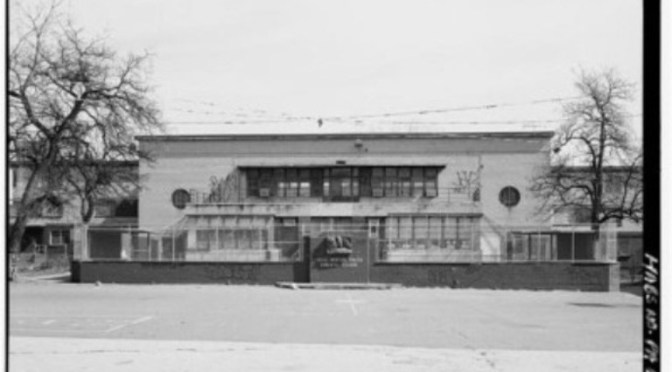
Tenor saxophonist Bootsie Barnes grew up in this public housing project whose residents included Bill Cosby.
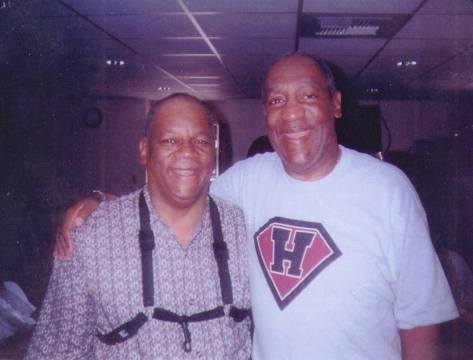
Barnes recalled dancing the bop with others at the community center where jam sessions were held. His “Boppin’ Round the Center” was inspired by his childhood memories.
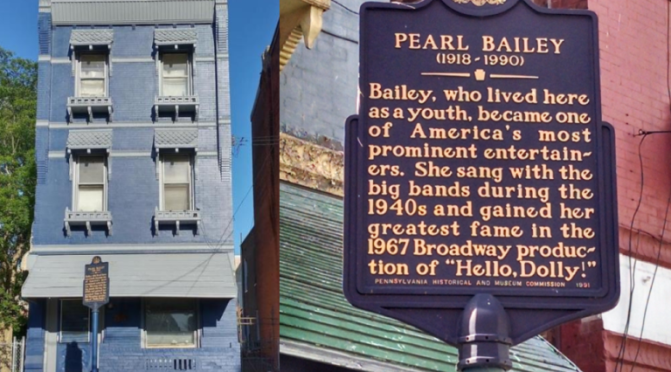
Pearl Bailey House
Pearl Bailey grew up in North Philadelphia in the 1920s and ’30s. Her family was part of the Great Migration from the South. She began her storied career by winning an amateur song and dance contest at the Pearl Theatre, which was located on the Ridge Avenue jazz corridor, a few blocks from the Golden Strip.
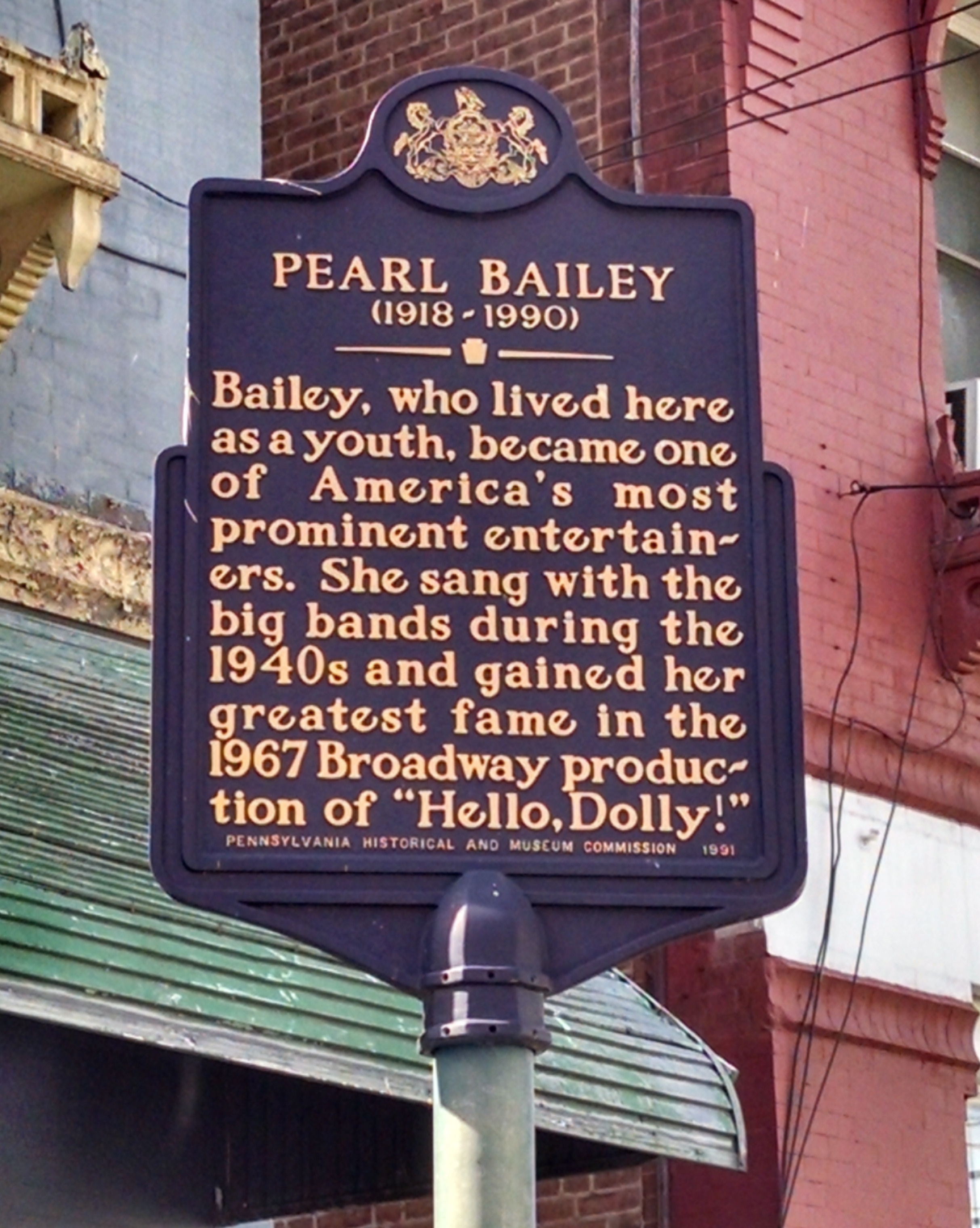
After she hit the big time, Bailey bought the house on N. 23rd Street for family members who had migrated from Newport News, Va., where she was born.

The current owner, William Sharrock, shared that overnight guests included comedians Redd Foxx and Slappy White, Bailey’s ex-husband. She opened the house to friends because African Americans were barred from hotels that catered to white guests.
The Pearl Bailey House has been visited by, among others, Bon Jovi and Bill Clinton (yes, that Bill Clinton).
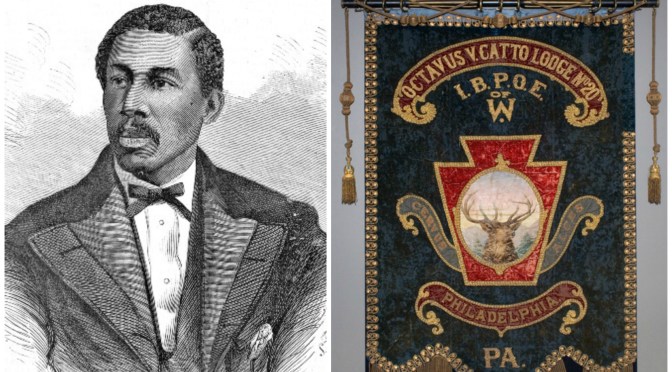
Two Bit Club
The Two Bit Club was located on the top floor of the O.V. Catto Elks Lodge, a cultural center for the African American community. The building was demolished in 1994.
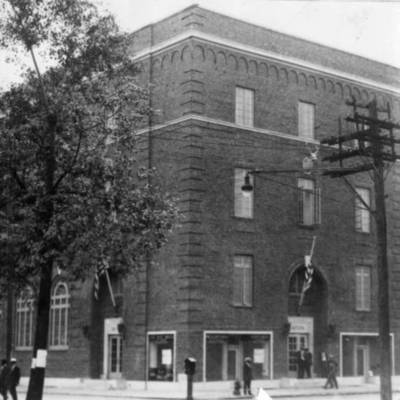
From a 1994 Philadelphia Inquirer article lamenting the loss of this landmark:
Lois Fernandez, who lives a few blocks away, was one of the mourners who stopped by last week to see the wrecking ball at work.
“Damn, we’re losing a big part of our history and nobody cares,” said Fernandez, co-founder and director of Odunde, the annual African American festival on South Street.
Back in the 1950s, when Fernandez was a teenager, the “O.V.,” as she called it, was the late-night place to be.
After dinner at the former Postal Card, at 15th and South, and drinks and jazz at the former Pep’s, at Broad and South, young African Americans told each other, “Meet you at the Two Bit” after all the other clubs had closed at 2 a.m.
They were referring to the nightclub that once was located on the top floor of the old Elks Lodge.
On weekend nights until 5 a.m., couples danced the stroll, the strand and the Philly bop. The men wore their hair in the close-cropped “hustler” style and dressed in suits of silk and sharkskin. And their dates did their hair in pageboys or poodle cuts and wore long flared dresses over crinoline slips, accompanied by high heels and white gloves.
It was at the Two Bit Club that then-19-year-old Fernandez held her breath as she waited to get past the man at the door. Once inside, she ordered a Tom Collins or a Canadian Club and ginger ale, and let it sit all night until it turned to water.
“You felt so adult when you went to the Two Bit Club,” Fernandez said. ”You were always trying to act so sophisticated.”
It was at the Two Bit Club that Fernandez listened to jazz bands and saw tap dancers, her first shake dance and her first striptease.

Spider Kelly’s
WRTI Jazz Host Bob Perkins recently wrote:
From North Philly, “Queen of the Organ” Shirley Scott was a dear friend of mine. Saxophonist Eddie “Lockjaw” Davis heard her play at the old Spider Kelly’s jazz spot in Center City, and didn’t have to persuade her to accompany him to New York City, where they would help Count Basie open a nightclub. They remained the featured attraction for several years. Scott married saxophonist Stanley Turrentine in 1960, and they toured and recorded together for the next 10 years.
Don Gardner, managing director of the Philadelphia Clef Club of Jazz & Performing Arts, played here. Don Gardner and his Sonotones included organist Jimmy Smith.
Spider Kelly’s is where legendary bandleader Louis Jordan discovered Dottie Smith. He hired her on the spot.
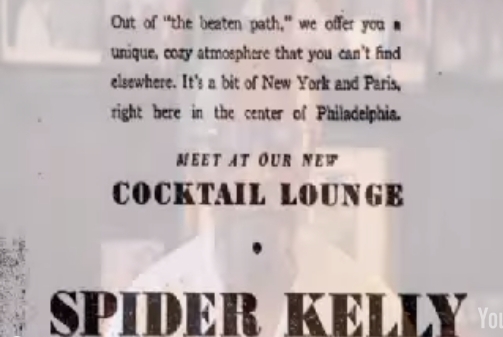
In a 2005 interview with the West Philadelphia Music, a project of the University of Pennsylvania School of Arts and Sciences, jazz vocalist George Townes remembered:
There was a little place on Mole Street right between 15th and 16th. There’s no more Mole Street now, between Market and Ranstead, no more Mole St. And a place called Spider Kelly’s that was a club, and there was Kelly’s, um, fishery next door, but Spider Kelly’s was the place, where if you want to hide from someone, don’t go to Spider Kelly’s, ’cause they would see you there, and that was a good place.

Tuskegee Clubhouse
In an interview with All About Jazz, bassist Jymie Merritt talked about the “Forerunners” jazz workshops:
JM: So I started a workshop at the Tuskegee Clubhouse, and I got Kenny Lowe, the late, gifted pianist, the drummer Donald Bailey (we called him Duck), singer September Wrice and the saxophonist Odean Pope. And we kept it going for five years until I went with Max Roach.
AAJ: So the “Forerunners” was an ongoing workshop.
JM: Yes, and then we got to play on Sundays at Father Paul Washington’s church [Church of the Advocate], and I used that opportunity to go beyond the kind of bass playing I’d been exposed to, in order to develop new forms and build from that.
Memories of Trudy Pitts and Mr. C
Jazz memories must be stored in a special place – not just your brain, but body and soul.
After being at Faye Anderson’s talk about the old locations and why she wants them given their due respect via a walking tour, I could hear – and want to move to – the wonderful sounds of Trudy Pitts & Mr. C playing the classics at Sunday jazz brunches on the river, somewhere near Spring Garden around the late 80s/early 90s. They had an occasional guest, but the highlight for me was Mr. C always ending with the Louis Armstrong classic, “What a Wonderful World.”
Anyone have more detailed memories?
Dr. Janice Presser, CEO of The Gabriel Institute, is a behavioral scientist and the architect of Teamability® – a completely new technology that measures how people will perform in teams.
ED. Note: Trudy Pitts and Mr. C held forth at Meiji-en on the Waterfront.
 All That Philly Jazz