Tag Archives: #BlackCultureMatters

Nina Simone Netflix Documentary

Later this year, Netflix will debut an original documentary about Nina Simone, What Happened, Miss Simone? The film was screened at the Sundance Film Festival.

Rolling Stone reports:

Beginning with footage of the singer staring down an audience at the Montreux Jazz Festival in 1976, What Happened goes about answering its question by flipping back to Simone’s childhood, detailing her early musical ambitions to be the first black female classical pianist. Despite her talent and the financial support of well-to-do patrons, she was rejected by the prestigious Curtis Institute in Philadelphia; that “early jolt of racism,” as Simone referred to the incident, became the first of several events to fuel an inexhaustible supply of anger at society. A summer gig at an Atlantic City bar gave birth to the blues chanteuse she’d eventually become, with the film tracing her rise to hit recording artist, jazz sensation, long-suffering wife (her manager/husband Andrew Stroud does not come off well), a major player in the Civil Rights movement, industry pariah, American ex-pat, playing-for-chump-change café performer and, eventually, a rediscovered legend.

READ MORE

Downstairs at the Showboat

The legendary Showboat was located in the basement of the Douglass Hotel. The historical marker out front notes that Billie Holiday “often lived here.”

Billie Holiday Marker

A while back, I visited what used to be the Showboat with Yasuhiro “Fuji” Fujioka, founder of the Coltrane House of Osaka and co-author of “The John Coltrane Reference”; Lenora Early, founder of the Philadelphia John Coltrane House; and Dr. George E. Allen, author of “I Was Not Asked.”

Until that visit, I assumed the Showboat was in the lower level space with the two windows facing Lombard Street. As we descended the stairs, Dr. Allen said something was wrong. Back then, there was no landing between the steps. Instead, the club was down a steep set of stairs. And sure enough, after a bit of snooping, we found what remains of the original steps that led down to the Showboat.

Stairs 1

Stairs 2

Stairs 3.jpg

So imagine the likes of Billie Holiday, Miles Davis, Lee Morgan, Art Blakey, Cannonball Adderley, Bootsie Barnes, Philly Joe Jones, Jimmy Heath, Thelonious Monk, Dinah Washington, Ray Charles and Ramsey Lewis descending those steps to take their place on the small bandstand behind the bar.

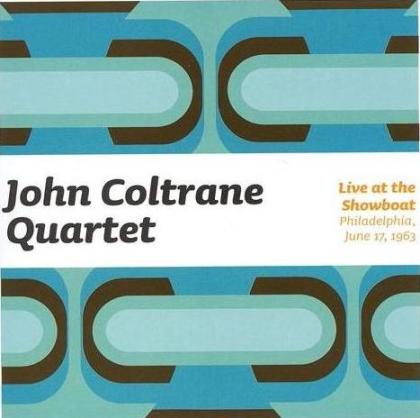
Showboat - John Coltrane - Live at the Showboat

The Douglass Hotel is a stop on the Green Book walking tour which will be held on Saturday, October 12, 2024, 10am to 12pm. Tickets are $25 per person.

Buy Tickets

1959: The Year that Changed Jazz

There are some years that were so momentous just their mention evokes milestones. Think 1776 and 1964. Or 1965 and “Bloody Sunday,” a retelling of which, “Selma,” is now playing in theaters.

1959 was the year that changed jazz. That year marked the release of Miles Davis’ “Kind of Blue,” John Coltrane’s “Giant Steps,” Ornette Coleman’s “Shape of Jazz to Come” and Dave Brubeck’s “Time Out.”

Is Jazz Healthy?

The Jazz Connect Conference, organized by JazzTimes and the Jazz Forward Coalition, was held January 8-9, 2015, in New York City and led into the annual Association of Performing Arts Presenters Conference, as well as Winter Jazzfest. The Jazz Connect Conference featured a series of workshops, panels discussions, and keynote address by Philly-native Christian McBride.

South Street

In the 1920s, jazz became the soundtrack for the revolution in manners and morals that was sweeping the nation. In New York’s Harlem, South Philadelphia, the south side of Chicago, Pittsburgh’s Hill District and other northern cities urban African Americans, known as the New Negroes, were finding expanded opportunities and new identities. One of the first singers to give voice to this new generation was Chester, Pennsylvania’s Ethel Waters, the first recording star of the African-American-owned Black Swan Record Company.

In the African-American-owned Standard Theatre on South Street, Waters, Bessie Smith, Duke Ellington, Louis Armstrong, and other jazz and blues stars performed their music for black and white audiences. The Standard and Dunbar were stops on a circuit of African-American theaters that brought the best of black touring shows to their cities.

READ MORE

Jazz was Everywhere

Jazz venues are broadly defined. Tenor saxophonist Bootsie Barnes said, “Back then, a jazz club became a jazz club as long you had jazz played in it.”

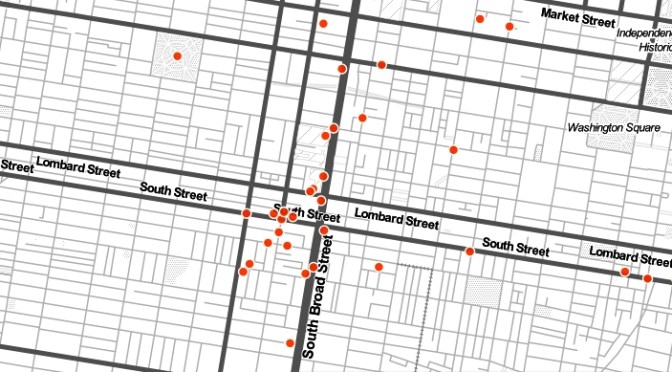
There were four jazz corridors — the Golden Strip, Ridge Avenue, the Strip and South Street. From ExplorePAHistory.com:

In the early years of the twentieth century, the church and concert based musical culture of black

Philadelphians was challenged by the popularity of a new, high energy, uptempo, loud, and improvisational music coming up from the South. At first, respectable churchgoing families looked down upon “jazz,” but the music had a life of its own, and its performers and audiences had little use for what they considered antiquated notions of respectability.

In the 1920s, jazz became the soundtrack for the revolution in manners and morals that was sweeping the nation. In New York’s Harlem, South Philadelphia, the south side of Chicago, Pittsburgh’s Hill District and other northern cities, urban African Americans known as the New Negroes were finding expanded opportunities and new identities. One of the first singers to give voice to this new generation was Chester, Pennsylvania’s Ethel Waters, the first recording star of the African American-owned Black Swan Record Company.

[…]

Jazz has always been an improvisational and constantly evolving music. A new wave of African American migration to Philadelphia during the Second World War helped set the stage for a jazz renaissance in the City of Brotherly Love. Jazz greats Dizzy Gillespie, John Coltrane, and the Heath Brothers all came to Philadelphia from the Carolinas. The legendary Billie Holiday was born in the city. The musical ferment of the 1940s and 1950s in Philadelphia was similar to the explosion of jazz and pop music in the 1920s, especially within the black community.

[…]

At the dawn of the twenty-first century, jazz is once again entering a new period of musical synthesis and experimentation. Philadelphia continues to boast more than its share of innovators and virtuosos, including Jamaaladeen Tacuma, Bobby Zankel, Uri Caine, Ahmir Thompson and many others. With its rich musical cultures and vibrant jazz scene, Philadelphia promises to build upon its rich history as a center of jazz innovation.

Read more