The inaugural North Philadelphia History Festival, a celebration of African American and Puerto Rican heritage through art, music, film, history and culture, will be held July 24-27, 2025.
The Historical Society of Pennsylvania will unveil a new exhibit, Voices of the Community: Local Preservation in Philadelphia, on June 12, 2025. The exhibit explores the history and preservation of Black communities in Philadelphia and Lawnside, New Jersey. I am one of the community curators, along with Shamele Jordon.
The exhibit focuses on four themes:
Black Joy: Development of Lawnside, the only historically African-American incorporated municipality in the Northern United States
Sounds of Freedom, Resistance and Resilience
Fulfilling America’s Promise: Founding of the Association for the Study of African-American Life and History (ASALH)
All Power to the People: Local community efforts to preserve and restore Black Philadelphia
With the “Sounds of Freedom, Resistance and Resilience,” I use archival materials to tell the story of Black music from the 1770s to the 1970s.
Voices of the Community: Local Preservation in Philadelphia will be on view June 12, 2025 to September 26, 2025. To be added to the mailing list for the exhibit opening and my gallery talk, send your name and email address to phillyjazzapp@gmail.com.
Preservation Month is an annual celebration dedicated to promoting the importance of preserving historic places and cultural heritage. This year’s theme is “The Power of Place.”
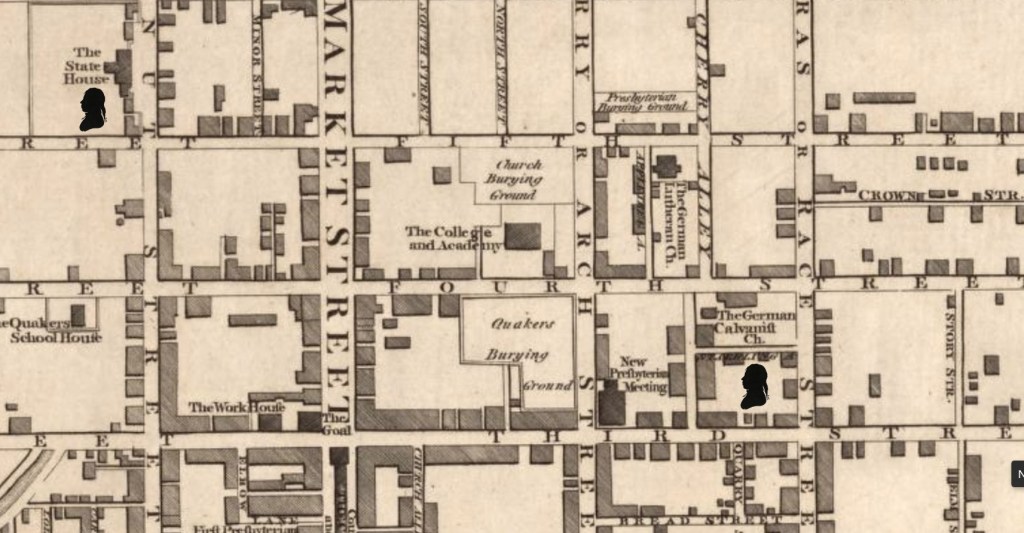
I kicked off the celebration by walking the streets of Old City, the same streets that master silhouette artist Moses Williams walked.
Moses died on December 18, 1830. If he were to come back from the dead, he would recognize many of the places in his old neighborhood, including:
Independence Hall
Philosophical Hall
Christ Church
Christ Church Burial Ground
Free Quaker Meeting House
Arch Street Meeting House
Loxley Court
Elfreth’s Alley
St. George’s Methodist Church
Moses lived at 10 Sterling Alley (now Orianna Street). Once paved with cobblestones, the granite blocks of Orianna Street were added to the Philadelphia Register of Historic Places’ Historic Street Paving Thematic District in 1998.
On my upcoming walking tour, “Moses Williams’ Neighborhood,” I will share undertold stories and breathe new life into Old City. The tour will begin at the State House (Independence Hall) and end at Sterling Alley.
The walk and talk will be held on Saturdays in October and November 2025. To be added to the mailing list for updates, send your name and email address to phillyjazzapp@gmail.com.
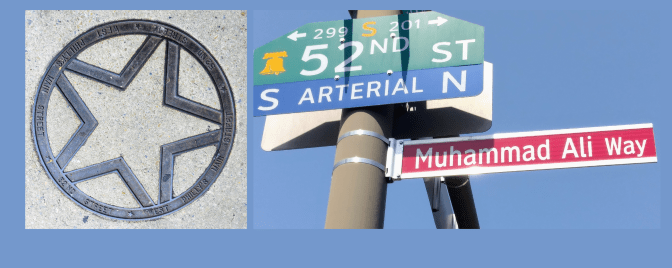
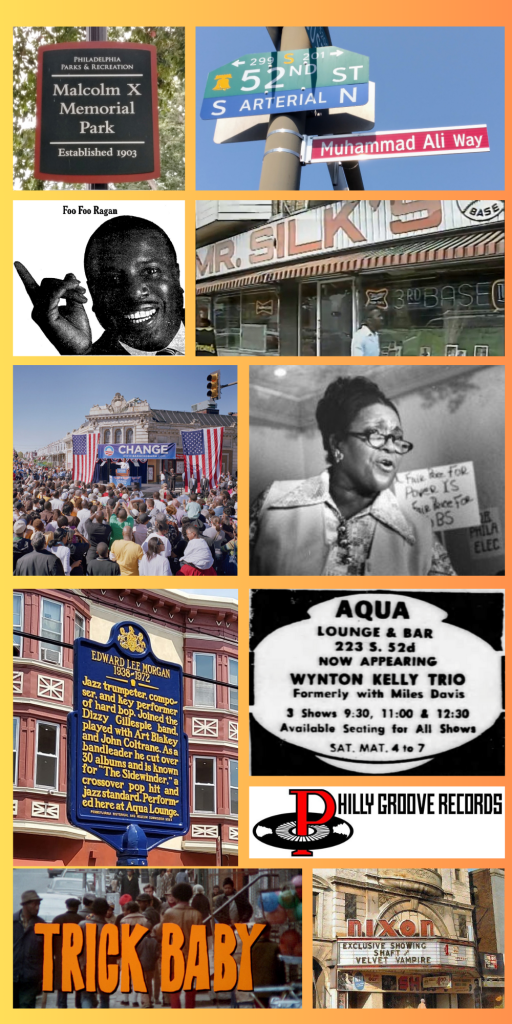
Join us in October and November for a walking tour of West Philadelphia’s 52nd Street, aka “the Strip,” a historic commercial and cultural corridor. The 52nd Street Stroll will uncover the Strip’s hidden past as an entertainment destination for African Americans.
Points of interest along the Strip include:
Nightclub frequented by celebrities such as Muhammad Ali, Cab Calloway, Joe Frazier, Teddy Pendergrass and Stevie Wonder;
Restaurant where President Bill Clinton ordered soul food;
Historic landmark where then-candidate Barack Obama held a campaign rally;
First-ever Walk of Fame memorializing African American artists of stage, screen and television;
Jazz trumpeter Lee Morgan’s historical marker;
Oldest Black-owned bookstore on the East Coast;
Free Library branch designed by a Black architect who was also a jazz club proprietor;
Sites featured in the 1972 Blaxploitation film “Trick Baby.”
The 52nd Street Stroll will be led by All That Philly Jazz Director Faye Anderson. The walking tour will begin at Malcolm X Memorial Park (52nd and Pine Streets) and end at the Nixon Theatre (.06 mile).
There will be a bonus stop at the jazz club where John Coltrane met McCoy Tyner.
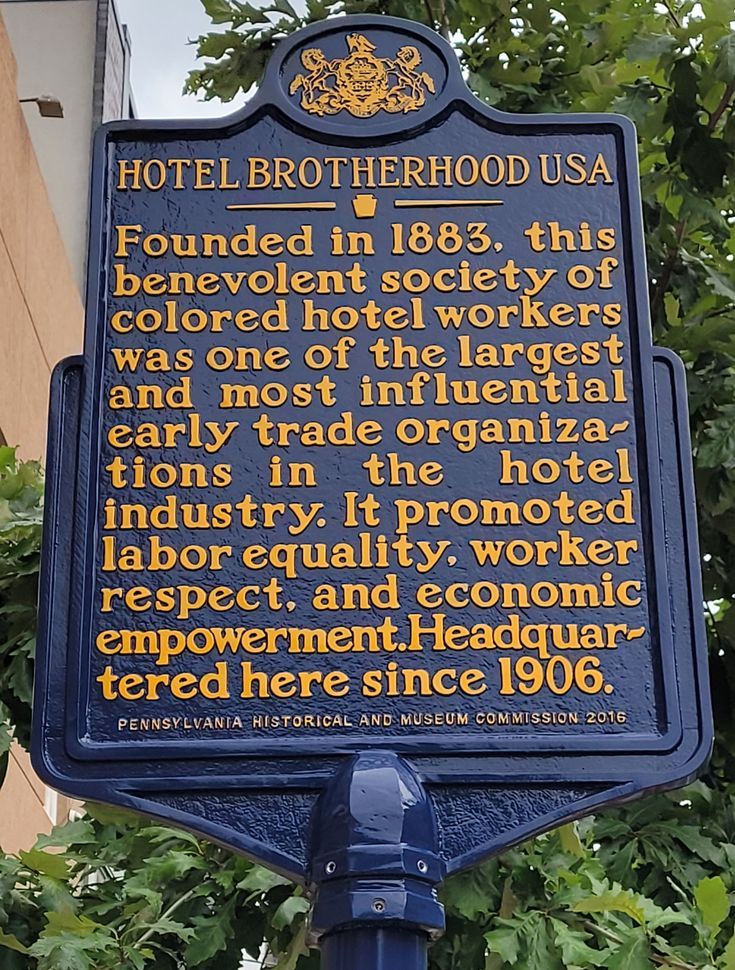
The Hotel Brotherhood USA was a benevolent and mutual aid society founded in 1883 by African American hotel workers. A precursor to the labor movement and Civil Rights Movement, the Hotel Brotherhood advocated for equal pay for Black hotel workers and provided members with healthcare, life insurance, and death benefits. The historic union hall moved to its current location in 1906.
A historical marker was unveiled in 2016.
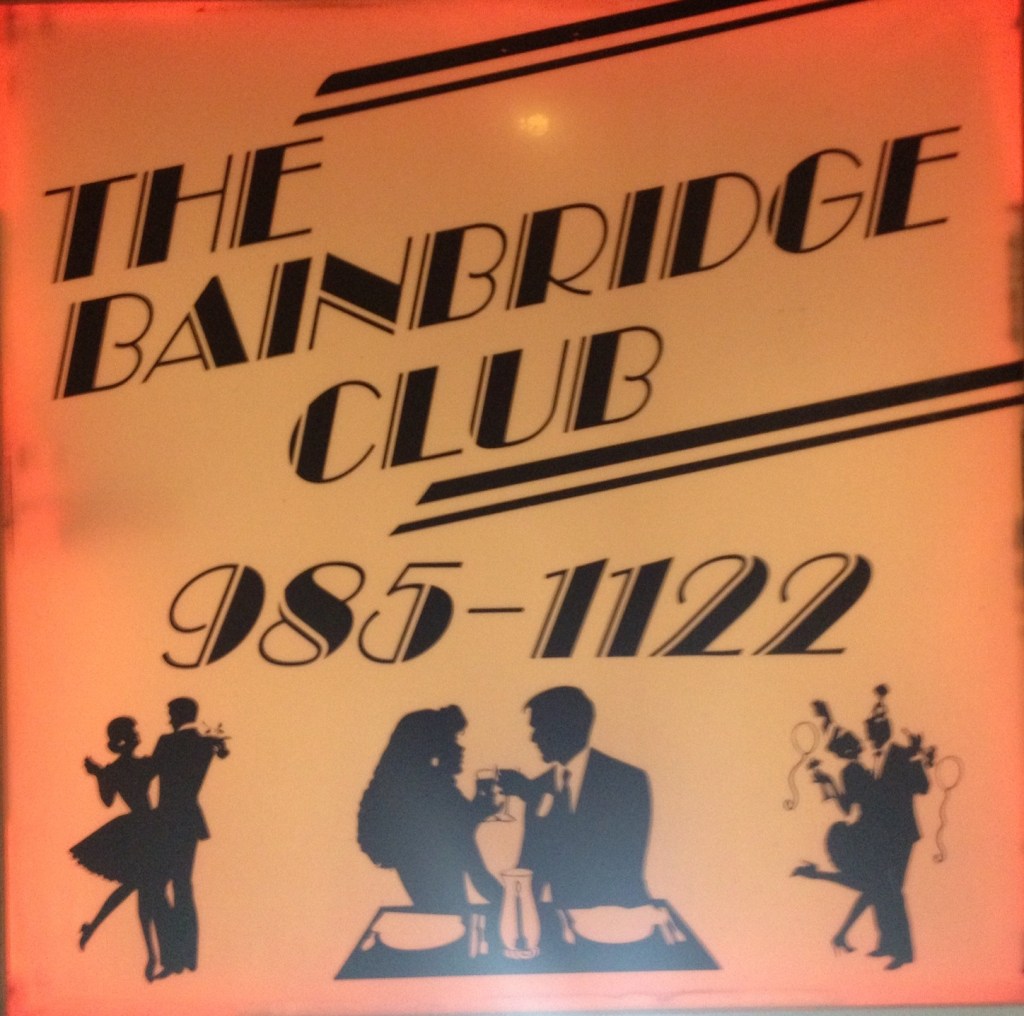
The Bainbridge Club, the social arm of the Hotel Brotherhood, opened in 1924. Membership was open to the public. The Bainbridge Club was jumping during Philadelphia’s golden age of jazz.
The Hotel Brotherhood USA was added to the Philadelphia Register of Historic Places in August 2023.
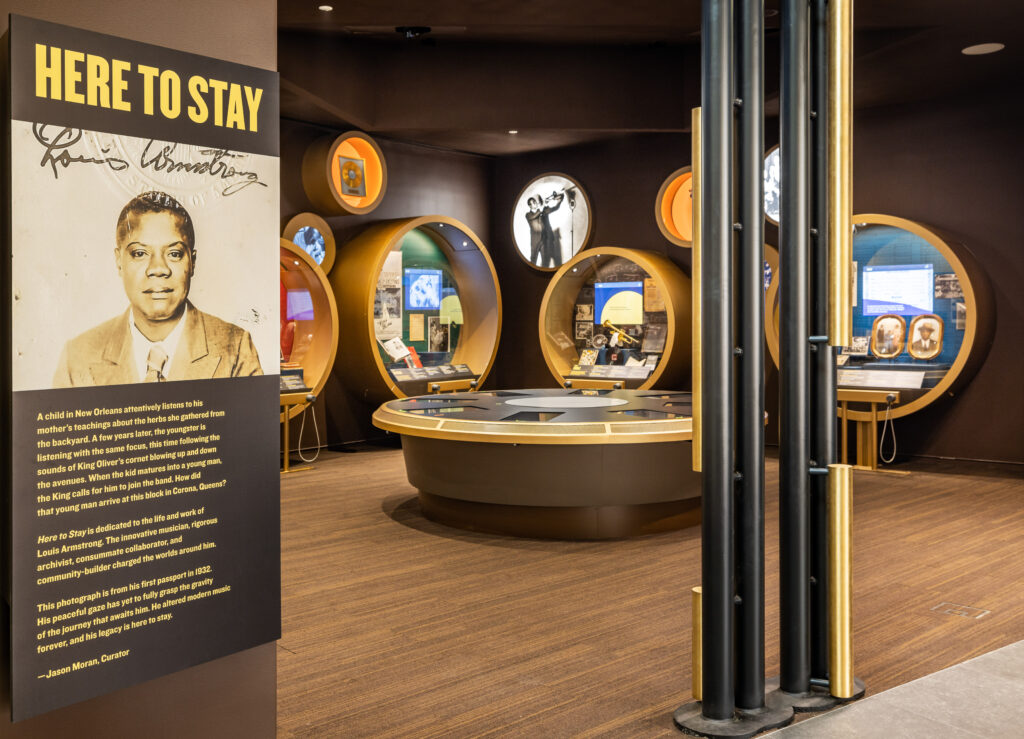
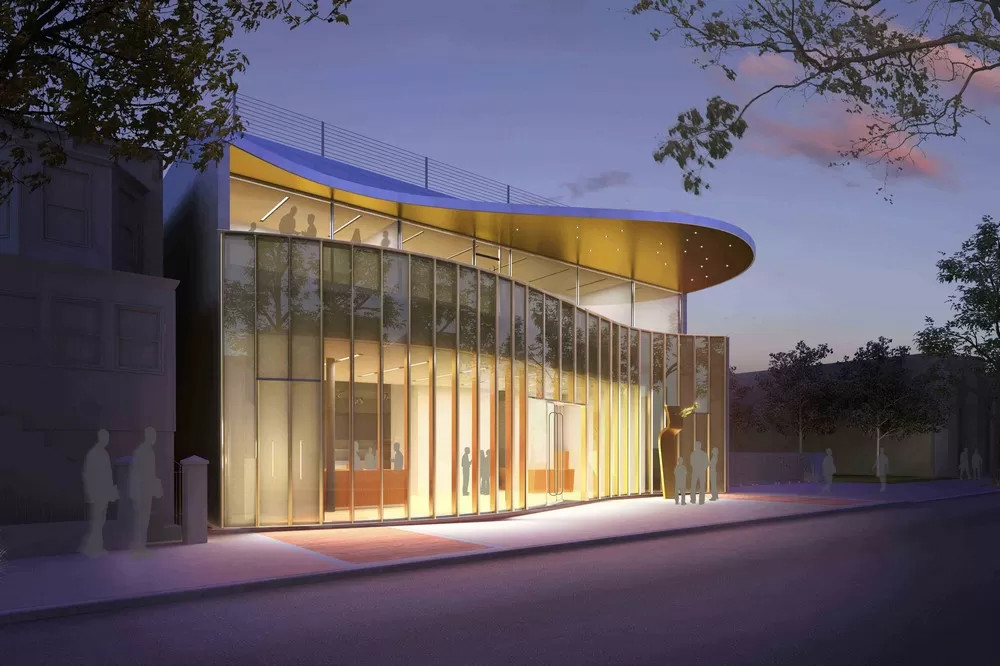
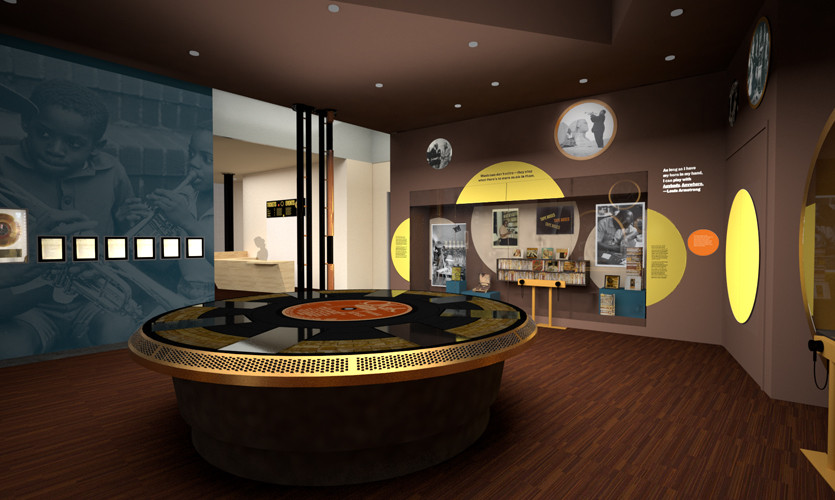
With over 60,000 items, the Louis Armstrong Archive is the largest for one jazz musician. On July 6, the Louis Armstrong Center opened across from the house in Corona, Queens where Pops lived from 1943 until his death on July 6, 1971.
Check out CBS Sunday Morning’s tour of the Louis Armstrong Center.
All That Philly Jazz is a place-based public history project at the intersection of art, public policy, and cultural heritage preservation.
While our content is free, researching and documenting Philadelphia’s jazz history and untold stories takes time. And time is money. If you value and appreciate what we do, please make a donation today.
Please click on the image to make a donation with PayPal, debit or credit card. Thank you!
For years I could not get pass the optics of Louis Armstrong, mainly the broad grin and ever-present handkerchief. Fast forward to today, I share Ossie Davis’ love and respect for Pops.
As a preservationist, I am in awe of Pops and Lucille Armstrong’s dedication to preserving his legacy in public memory. The Louis Armstrong House Museum, a National Historic Landmark, and the new Louis Armstrong Center provide a blueprint for preservation of the built environment, as well as cultural heritage preservation.
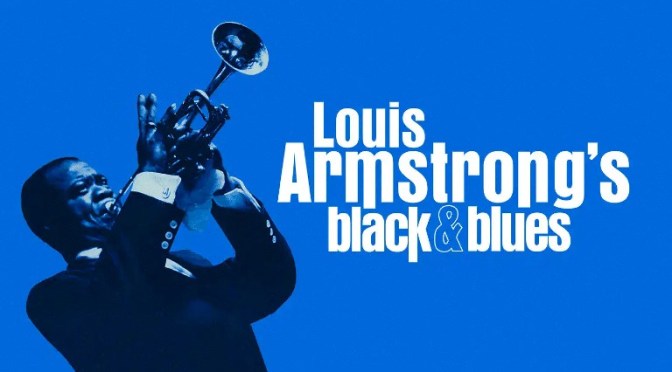
Pops once said, “I don’t get involved in politics. I just blow my horn.” Behind closed tours, he had a lot to say about politics and racism. Decades after his death, the public will hear the full story of Louis Armstrong in the documentary, “Louis Armstrong’s Black & Blues.”
The legendary trumpeter got his flowers while he was alive. Pops is now getting overdue props for his resilience and resistance to white supremacy. “Louis Armstrong’s Black & Blues” premieres October 28 on Apple TV.
In their latest court filing to gain possession of the Strawberry Mansion rowhouse that John Coltrane purchased in 1952, Ravi and Oran Coltrane claim their father’s beloved cousin, “Mary Lyerly Alexander, put in place a plan to unlawfully claim the Coltrane House for herself and her progeny instead of the remaining grandchildren of Alice Gertrude Coltrane, as required by the Will.” Ravi and Oran speciously claim that a typo is evidence that conveyance of the Philadelphia property was “fraudulent.” In the deed conveying the property to Norman Gadson in 2004, Coltrane is misspelled “Cultrate.”
Cousin Mary had a plan to preserve the John Coltrane House. After decades of indifference, do Ravi and Oran Coltrane now have a plan to rehabilitate the National Historic Landmark?
To catch up on the ongoing John Coltrane House family feud, go here.
In the Before Times, I celebrated John Coltrane’s birthday (September 23, 1926) by leading a walking tour. We would meet at Coltrane’s Walk of Fame plaque where I would give an overview of the legendary saxophonist’s time in Philadelphia and talk about the John Coltrane House.
In light of the drama unfolding in the Court of Common Pleas, I am not in a celebratory mood. Coltrane’s sons, Ravi and Oran, are suing Norman Gadson’s daughters, Aminta and Hathor, for possession of the Philadelphia rowhouse that their father purchased in 1952 and where he composed Giant Steps.
They claim Mary Lyerly Alexander, better known as Cousin Mary, “duped” Gadson into buying property that she had no right to sell. Gadson paid $100,000 for the National Historic Landmark in 2004. That same year, John and Alice Coltrane’s house in Dix Hills, NY was at imminent risk of demolition.
On August 31, 2022, the third anniversary of Alexander’s death, Defendants allege in court documents that Cousin Mary “extinguished” Ravi and Oran’s remainder interest in the property with their knowledge and acquiescence. Defendants further claim that if they lose possession of the property, they should be reimbursed more than $220,000 for costs incurred in maintaining, renovating and insuring the Coltrane House. They claim “Plaintiffs would have no remainder interest were it not for the activities of Gadson and his successors.”
While the claims and counterclaims fly back and forth, I think about that hot and humid Saturday morning when something – or someone – told me to go check on the Coltrane House. Later that day, I learned Cousin Mary had died.
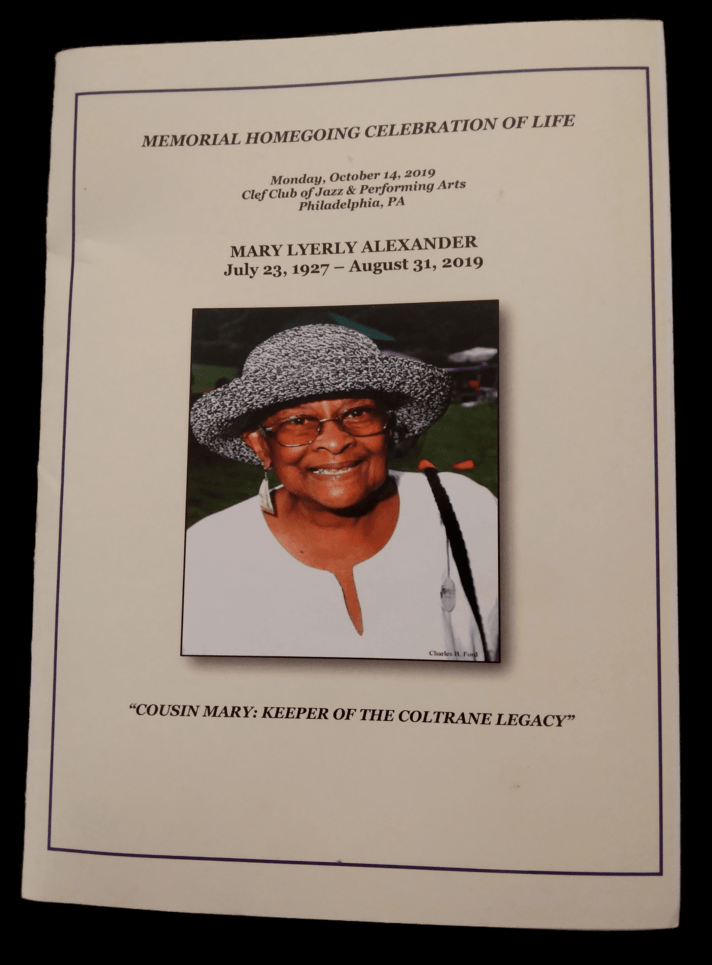
I vowed at Cousin Mary’s homecoming celebration that I would do everything I could to save the National Historic Landmark.
Little did I know my successful nomination of the John Coltrane House for listing on 2020 Pennsylvania At Risk would set in motion this family feud.
Ravi and Oran have cast aspersions on Cousin Mary. The court will decide who owns the Strawberry Mansion rowhouse. But for nearly 40 years, Cousin Mary devoted her life to preserving John Coltrane’s legacy in public memory. On July 6, 2004, she agreed to sell the property to Norman Gadson, a friend and jazz enthusiast who shared her vision for a Coltrane Museum and Cultural Center. Three months earlier, random Coltrane aficionados, preservationists and local officials saved from demolition Ravi and Oran’s childhood home in Dix Hills, NY. The place where their father composed A Love Supreme.










 All That Philly Jazz