Category Archives: Cultural Heritage

The Apollo Theater@90

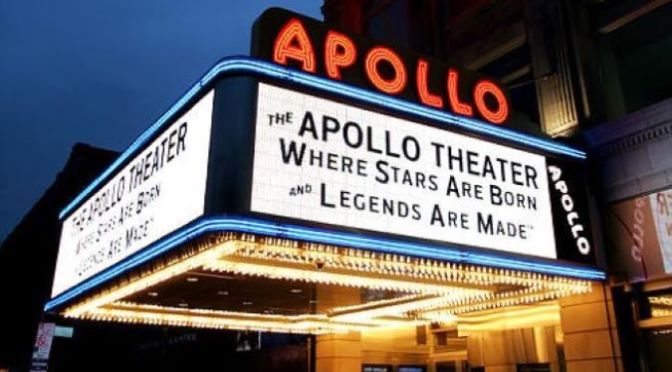
The Apollo Theater turned 90 this year. Opened in 1914 as a burlesque house, by 1934 the theater was transformed into a venue primarily for African American performers and audiences.

A stop on the Chitlin’ Circuit, the now historic landmark was the place “where stars are born and legends are made.” Legends like Billie Holiday and Ella Fitzgerald. Jazz, blues and soul artists who graced The Apollo’s stage include Count Basie, Art Blakey, James Brown, Ruth Brown, Ray Charles, Miles Davis, Duke Ellington, Aretha Franklin, Etta James, Louis Jordan, Otis Redding, Nina Simone, Jimmy Smith, Sarah Vaughan and Dinah Washington.

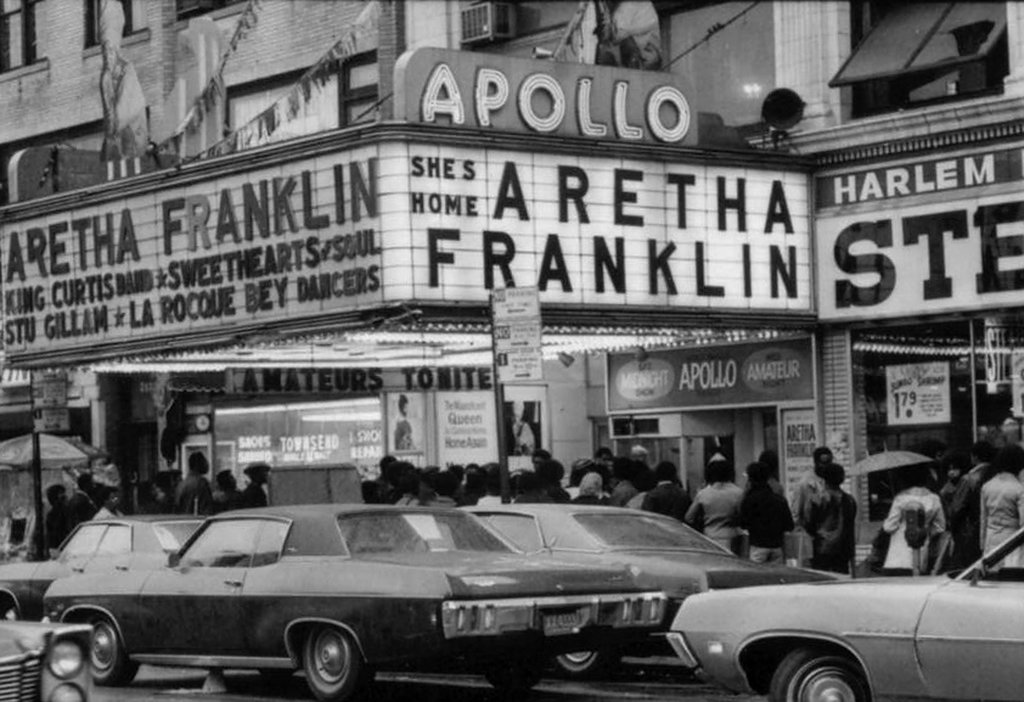
The Apollo is, again, making history. It is the first organization to receive the Kennedy Center Honor. Michelle Ebanks, President & CEO of The Apollo, said:

We are thrilled to be the first organization honored in the history of the Kennedy Center Awards, emphasizing The Apollo’s impact on the past, present, and future of American culture and the performing arts. From the longest-running talent show in America with Amateur Night at The Apollo, which launched the careers of icons like Ella Fitzgerald and Lauryn Hill, to performances from beloved legends like Smokey Robinson and Lil’ Kim and today’s biggest stars like Drake, The Apollo has always been a home for artists to create and a home for audiences to see incredible music and art from legendary artists.

The 47th Kennedy Center Honors, hosted by Queen Latifah, will be broadcast on CBS on Sunday, December 22, 2024, from 8:30–11 pm ET/PT.

Soundtrack to a Coup d’Etat

During the Cold War, racial segregation was the law and practice in much of the country. With the backdrop of the Montgomery Bus Boycott, the U.S. Department of State launched the Jazz Ambassadors program, a cultural diplomacy initiative to promote American values abroad through music.

The program began in 1956 and was part of a broader effort by the U.S. government to counter Soviet propaganda. Jazz diplomacy was intended to win hearts and minds and promote a positive view of America as the land of freedom. Jazz Ambassadors included Louis Armstrong, Art Blakey, Dave Brubeck, Duke Ellington, Dizzy Gillespie, Lee Morgan and Nina Simone. Quincy Jones was the music director for the first tour.

A new documentary, “Soundtrack to a Coup d’Etat,” shows how unwitting jazz musicians were used by the CIA to cover their geopolitical machinations in the 1950s and ‘60s. Jazz musicians were unknowing decoys in the CIA’s plot to assassinate Patrice Lumumba, the first democratically-elected leader of the newly independent Republic of the Congo.

From the New York Times review of “Soundtrack to a Coup d’Etat”:

This film, though, treads less optimistic territory. One of its major threads is the C.I.A.’s use of unwitting Black musicians to not just spread soft power abroad during the Cold War but also, potentially, provide a smoke screen for the agency’s more covert dealings. Archival footage and audio of interviews with agents, in some cases many years later, underline the point: Art was art, but it was also a useful tool for machinations the artists quite publicly opposed.

[…]

That’s why “Soundtrack” lands on a coda. Each of these historical threads, in some way, led to the Feb. 15, 1961 demonstration at the United Nations protesting Lumumba’s assassination, organized by a group called the Cultural Association of Women of African Heritage and led by Lincoln, Rosa Guy and Maya Angelou. But the story didn’t end there. “Soundtrack” makes an explicit connection between what happened in Congo in 1960 and ongoing conflict today. These events occurred a while ago, but they’re not really history, “Soundtrack” argues. The past, one might say, is never dead. It’s not even past.

Read more

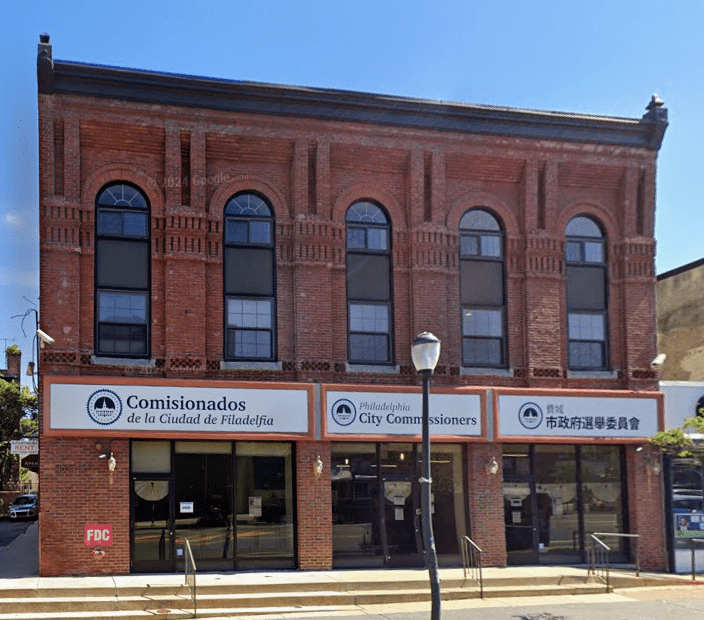
As a long-time voting rights advocate, it was a joy to drop off my mail-in ballot at the City Commissioners satellite election office on Saturday during a pop-up party organized by Joy to the Polls.

The satellite office is in the former Fays Theatre, a storied venue where jazz greats, including Duke Ellington, performed. City officials likely don’t know the history of the building.

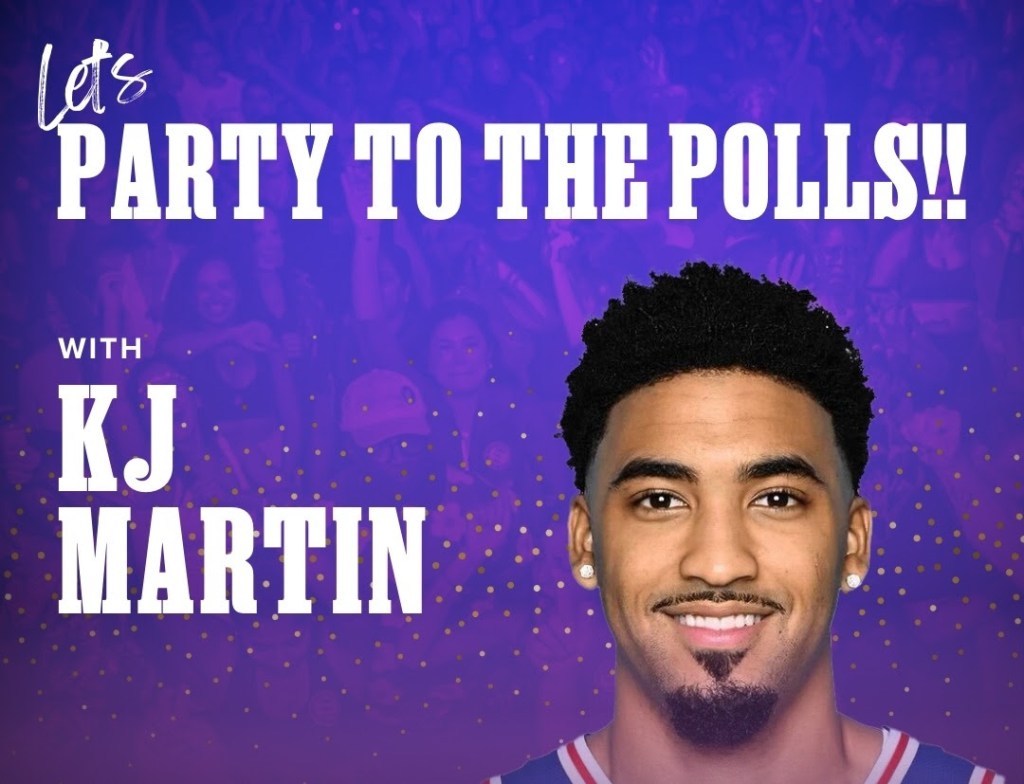
The party will continue on Tuesday, October 29 with Party to the Polls Purple Tour in City Hall Courtyard. The get-out-the-vote event is presented by Daybreaker. There will be yoga, breakfast and pole dancers, as well as Bill Nye, the Science Guy, and KJ Martin of the Philadelphia 76ers.

Voters can drop off their ballot at the official drop box or vote on a voting machine in City Hall, Room 140.

From now until Election Day, voters will “form a big strong line” at polling places around the country. In battleground states, they will be dancing in the street in Philadelphia, PA and the Motor City.

Cultural Week of Action on Race and Democracy

The first annual Cultural Week of Action on Race and Democracy will be held September 27 through October 5, 2024. Organized by Race Forward and Americans for the Arts, the initiative will harness the transformative power of arts and culture to spark dialogue, inspire action, and build community.

All That Philly Jazz’s walking tour, West Philly’s Main Street: A Walk Through Time, is one of the inaugural projects. We will stroll the historic 52nd Street corridor and uncover lost and hidden history. For event details and tickets, please go here.

The walking tour culminates at the former site of the Red Rooster, the jazz club where John Coltrane and McCoy Tyner first crossed paths. Today, the building is home to Steve’s Sports Lounge but the history lives on.

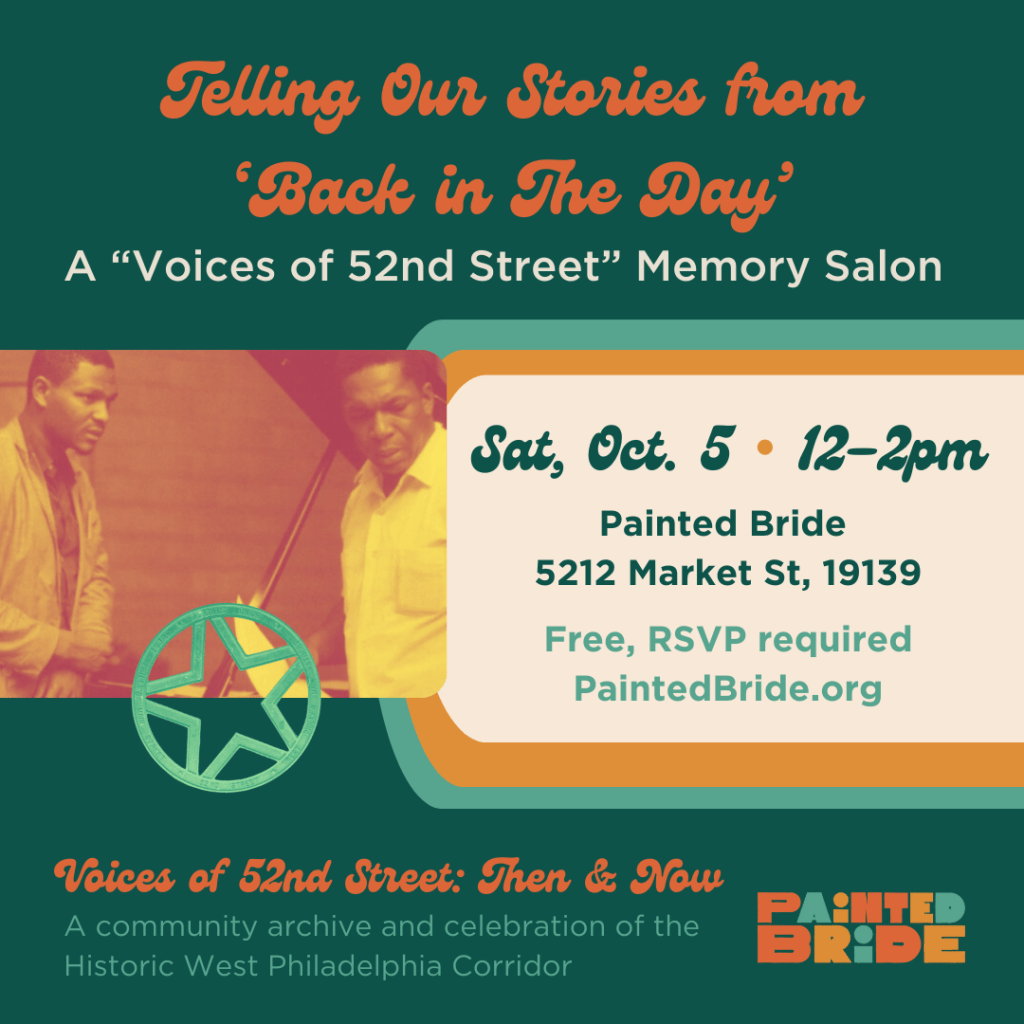
Immediately after the Red Rooster stop, we will gather at the Painted Bride Art Center for a community conversation, Telling Our Stories from “Back in the Day”: A Voices of 52nd Street Memory Salon.

The afternoon will be filled with joy, remembering, and light refreshments. The Memory Salon is free and open to the public. Space is limited so be sure to reserve your spot.

West Philly’s Main Street: A Walk Through Time

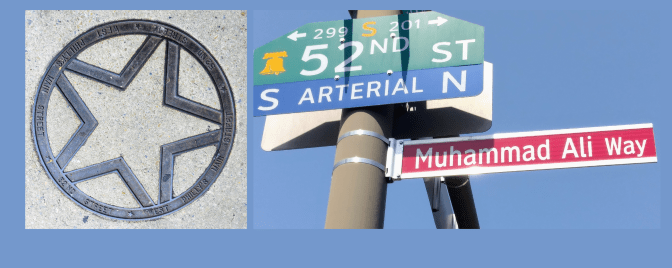
Join us in October and November for a walking tour of West Philadelphia’s 52nd Street, aka “the Strip,” a historic commercial and cultural corridor. The 52nd Street Stroll will uncover the Strip’s hidden past as an entertainment destination for African Americans.

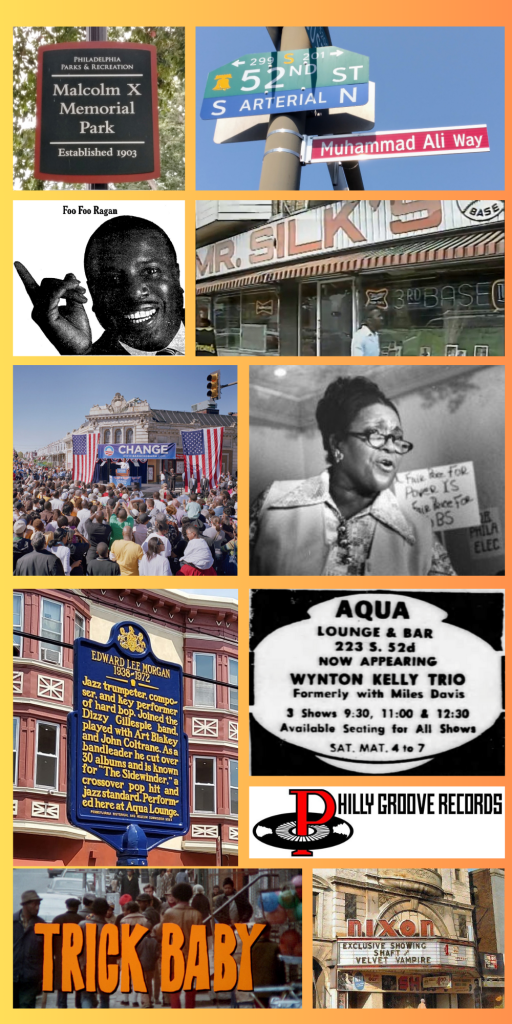
Points of interest along the Strip include:

  • Nightclub frequented by celebrities such as Muhammad Ali, Cab Calloway, Joe Frazier, Teddy Pendergrass and Stevie Wonder;
  • Restaurant where President Bill Clinton ordered soul food;
  • Historic landmark where then-candidate Barack Obama held a campaign rally;
  • First-ever Walk of Fame memorializing African American artists of stage, screen and television;
  • Jazz trumpeter Lee Morgan’s historical marker;
  • Oldest Black-owned bookstore on the East Coast;
  • Free Library branch designed by a Black architect who was also a jazz club proprietor;
  • Sites featured in the 1972 Blaxploitation film “Trick Baby.”

The 52nd Street Stroll will be led by All That Philly Jazz Director Faye Anderson. The walking tour will begin at Malcolm X Memorial Park (52nd and Pine Streets) and end at the Nixon Theatre (.06 mile).

There will be a bonus stop at the jazz club where John Coltrane met McCoy Tyner.

The 52nd Street Stroll was held on October 5, 2024. Check out West Philly’s Forgotten Main Street: A Walking Tour With All That Philly Jazz.

Community Art Festival

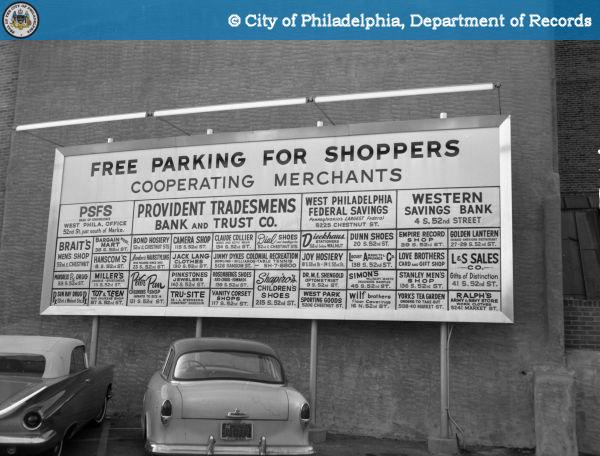
West Philly’s Main Street, 52nd Street, is a historic cultural and commercial corridor. In its heyday, banks, movie theaters, restaurants, bakeries, shoe stores, dress shops, night clubs, jazz venues and other businesses lined “the Strip” from Arch Street to Baltimore Avenue.

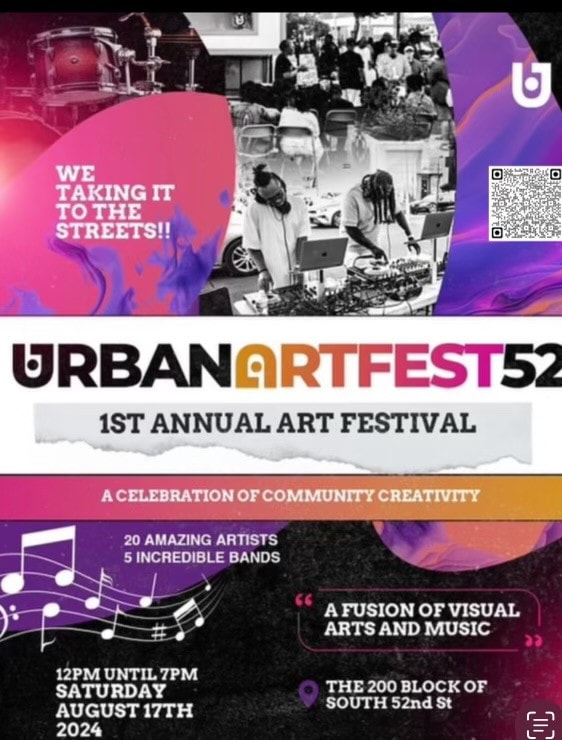
The African Cultural Art Forum, Urban Art Gallery, Family Survival and 52nd St Cultural Art Corridor Coalition will present Community Art Day x Urban Art Fest 52 on Saturday, August 17, 2024. The event will be held on the five-block stretch of 52nd Street from Walnut St. to Spruce St. that was the heart of the Strip back in the day.

The family friendly art festival will feature African art, workshops, fashion show, guest speakers, live performances, including jazz, funk and soul, and a virtual reality game by XVR Lounge.

Zen S, marketing and operations specialist for the African Cultural Art Forum, said:

Community Art Day is a collaboration of businesses on the corridor that want 52nd Street to thrive. Basically, it’s us making noise. We are here. We support each other. We also give back to the community to show the culture and respect that the community values. We want the same thing that Mayor Cherelle Parker wants: a cleaner, greener and safer 52nd Street.

Community Art Day x Urban Art Fest 52 is free and open to the public.

Newport Jazz Festival

I last attended the Newport Jazz Festival, then known as the JVC Jazz Festival, in 2007. The lineup included Dave Brubeck, Jack DeJohnette, Al Green, B.B. King, Christian McBride, Branford Marsalis, Marcus Miller, Joshua Redman and Susan Tedeschi.

The 2024 Newport Jazz Festival kicks off on Friday, August 2.

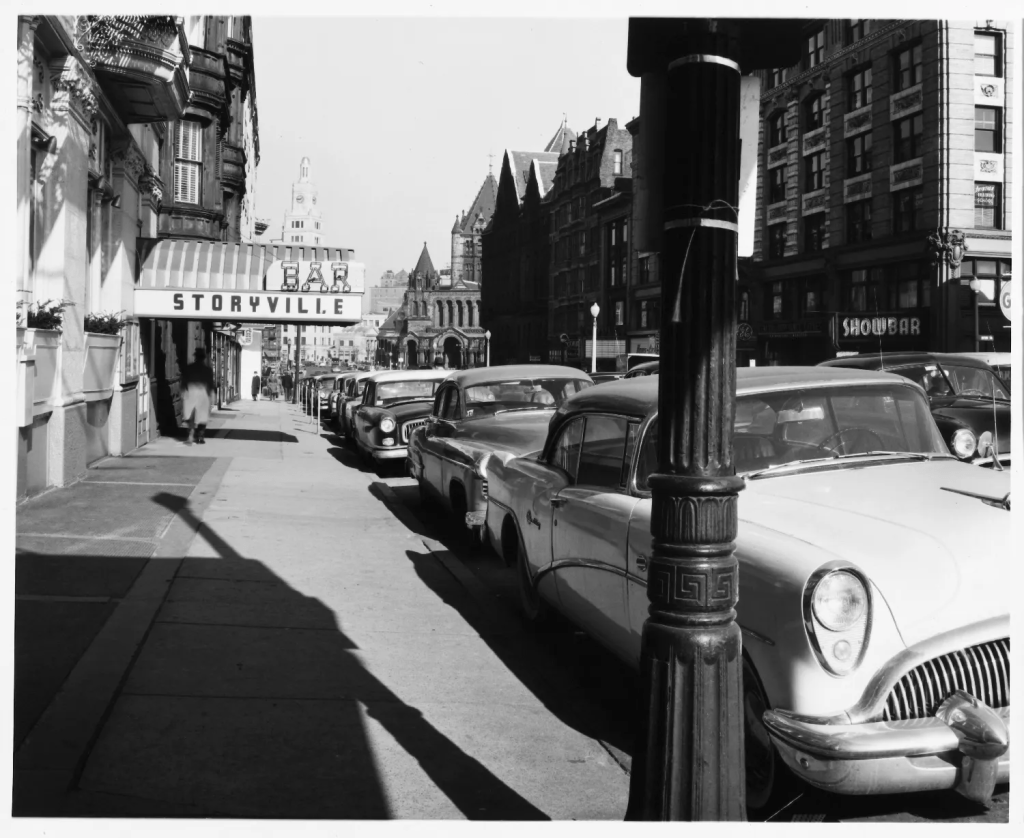
The event is sold out so let’s look at the iconic festival’s origin story, the Storyville jazz club in Boston.

In the Newport Jazz Festival’s monthly newsletter, fittingly titled “Storyville,” John Peabody writes:

To go back to the very beginning of Newport Jazz— and really Newport Folk as well— get on Boston’s Green Line and take it to Copley Plaza. Walk one block south on Exeter past the public library to the Copley Plaza Hotel.

Long before Miles played Newport Jazz and said, “I wasn’t real popular at this time, but that began to change after I played at the Newport Jazz Festival in 1955.”

Before there was Nina playing Porgy to a hushed audience in 1960, or Duke, who declared, “I was born at Newport in 1956.” Well before Dizzy, Monk, Mingus, Aretha, Frank Zappa, and Led Zeppelin in 1969 and before Common, Norah Jones, Christian McBride, The Roots, and Jon Batiste, there was George Wein, standing in front of the Copley Plaza Hotel in 1950 with dreams of a jazz club he’d call Storyville.

Read more

Black Music Month: Disco Inferno

The three-part series, Disco: Soundtrack of a Revolution, debuts on PBS this week.


The first episode focuses on the roots of disco. Philadelphia native, drummer Earl Young, is the architect of disco.


Young is the founder and leader of The Trammps which had a No. 1 hit with “Disco Inferno.”


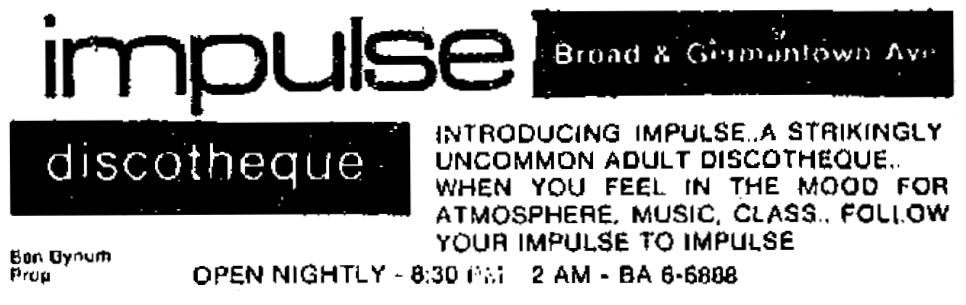
The Trammps used to perform at North Philly’s Impulse Discotheque (the building still stands).

Disco: Soundtrack of a Revolution will premiere Tuesday, June 18 at 9pm ET on PBS (check local listings), PBS.org and the PBS App.