Category Archives: Cultural Heritage

Muhammad Ali Honored with Forever Stamps

Muhammad Ali (1942-2016) was the greatest heavyweight boxer of all time. Known for his courage inside and outside the ring, Ali was an outspoken advocate for racial equality and religious freedom.

Ali didn’t just star in the boxing ring. He also starred in the Broadway musical “Buck White.”
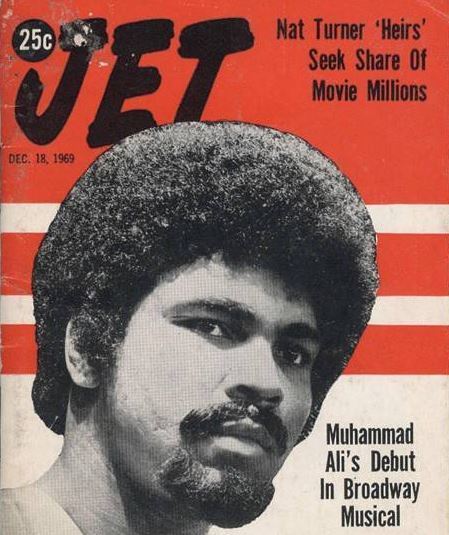
Game recognizes game.

The three-time World Heavyweight Boxing Champion was a cultural icon and global humanitarian. Ali’s honors include the Presidential Medal of Freedom (2005); Sports Illustrated Sportsman of the Century (1999); BBC Sports Personality of the Century (1999); and United Nations Messenger of Peace (1998).

Visibly affected by Parkinson’s disease, Ali lit the Olympic flame at the 1996 Atlanta Summer Olympics.

Ali once said, “I should be a postage stamp, because that’s the only way I’ll ever get licked.”

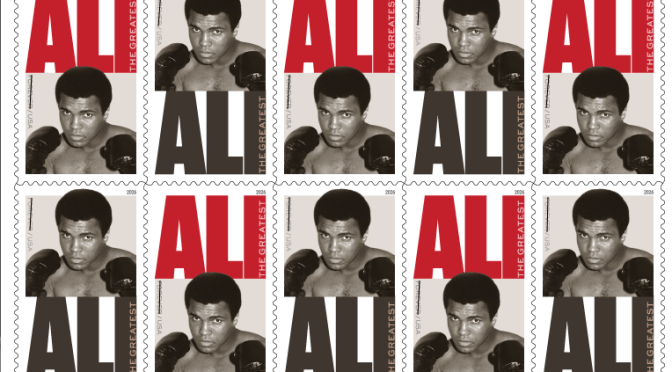
The U.S. Postal Service will honor Ali with two stamps. The first-day-of-issue ceremony for the Muhammad Ali Forever stamps will be held on January 15, 2026 in Ali’s hometown, Louisville, Kentucky.
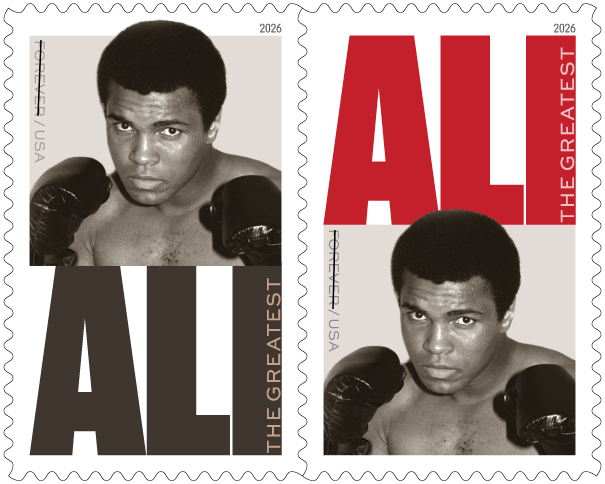
Ali will forever be remembered as “The Greatest.”


Visit a Cemetery Day 2025

The last Sunday in October is Visit a Cemetery Day. It’s an annual observance to promote a connection with the past, honor the memories of those who came before us, and appreciate the historical and cultural significance of cemeteries.

Before cities built public parks, cemeteries were the first green spaces open to everyone. In the 19th century, rural cemeteries were designed as peaceful, landscaped grounds where people could walk, picnic and reflect. Their winding paths, trees, and gardens offered an escape from crowded urban life. These “cities of the dead” influenced the design of public parks. Historic cemeteries like Laurel Hill in Philadelphia and Green-Wood in New York City remain vital, beautiful green spaces.

That history was lost on me in my youth. When I was in high school, I avoided taking the shortcut to school because I did not want to walk through a cemetery. Fast forward to today, St. Peter’s Churchyard is a stop on my Moses Williams’ Philadelphia walking tour. St. Peter’s is the final resting place of Moses’ enslaver, Charles Willson Peale.

Master silhouette artist Moses Williams was interred in Northwest Burial Ground on December 20, 1830.

At the time, the cemetery was located at 16th and Fairmount. Sometime between 1860 and 1875, the Northwest Burial Ground was sold, the bodies disinterred, and the land developed. The bodies were reinterred in Mount Moriah Cemetery in West Philadelphia. So presumably that’s where Moses’ remains are located.

I’m digging in the archives to confirm that Mount Moriah is indeed Moses’ final resting place. I want to find his remains so that I can see that Moses’ grave is kept clean.

A Stroll Through North Broad’s Jazz History

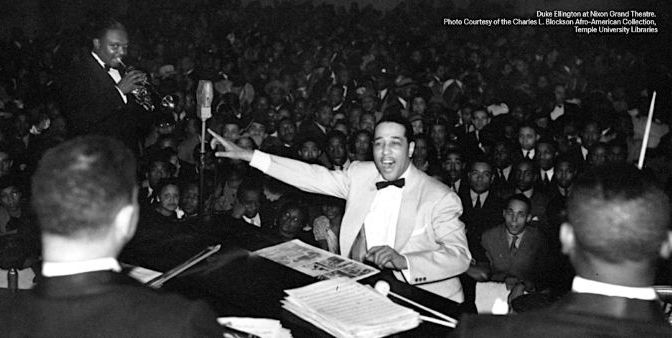
Join All That Philly Jazz Director Faye Anderson for a stroll through North Broad’s storied jazz history. We will walk the streets of North Philly and stop at places that hold the stories of legends-in-the-making like Louis Armstrong, Clifford Brown, James Brown, Dave Brubeck, John Coltrane, Miles Davis, Duke Ellington, Ella Fitzgerald, Patti LaBelle, Lee Morgan and Grover Washington Jr.

Our journey will take us to such sites as the Hotel Carlyle, Pyramid Club, Heritage House/Freedom Theatre, Cameo Room, Barber’s Hall, Flamingo Apartments, Nixon Grand Theater and Mitten Hall.

📅 Saturday, October 25, 2025
🕙 10:00 a.m. – 12:00 p.m.
💬 Free and open to the public (space is limited)

Registration is required. Reserve your spot here.

“A Stroll Through North Broad’s Jazz History” is organized by Scribe Video Center. The North Philadelphia History Festival is supported by the William Penn Foundation.

September was designated Gospel Music Heritage Month in 2008 following the passage of House Joint Resolution 90 sponsored by the late Representative Sheila Jackson Lee. The resolution highlighted gospel music’s deep roots in the African American experience and acknowledged its influence on other genres, including jazz, blues, soul, R&B and rock.

Gospel music is how African Americans got over during the Jim Crow era.

Formed in 1928, the Dixie Hummingbirds were one of the most popular and influential gospel groups. Their best-known recordings include “Thank You For One More Day,” “I’ve Been Born Again,” and “Loves Me Like a Rock” which won the 1973 Grammy Award for Best Soul Gospel Performance.

On Wednesday, September 24, 2025, the Charles L. Blockson Afro-American Collection will host a talk with Dr. Lynn Peterson, author of “Flying with the Birds: Rev. Joe Williams, The Last Original Member of the Iconic Dixie Hummingbirds.”

Also on September 24, I will give a gallery talk about the exhibit that I curated for the Historical Society of Pennsylvania, “Message In Our Music.” I will highlight objects in the exhibit related to gospel music, including Bishop Richard Allen’s collection of hymns and spirituals, a program from the Jubilee Singers’ 1873 concert at the Academy of Music, and a reel-to-reel tape of a live performance by Sister Rosetta Tharpe.

The gallery talk is free and open to the public. To register, go here.

The inaugural North Philadelphia History Festival, a celebration of African American and Puerto Rican heritage through art, music, film, history and culture, will be held July 24-27, 2025.

Events and activations will take place throughout North Philly. The festival will feature photo exhibitions, visual installations, film screenings, panel discussions, a walking tour, and live performances curated by scholars, artists, cultural workers and community members, including Diane Turner, PhD, Leslie Willis Lowry, Jacqueline Wiggins, Christopher R. Rogers, PhD, and 1838 Black Metropolis.

All events are free but space is limited. To learn more and RSVP, go here.

Hometown Hero Stanley Clarke

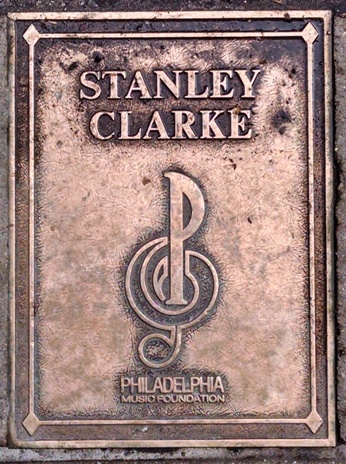
I want to close out Black Music Month with hometown hero Stanley Clarke. Born in Philadelphia on June 30, 1951, Clarke is a groundbreaking acoustic and electric bassist known for revolutionizing the role of the bass in contemporary music. His virtuosic technique, whether on acoustic upright or electric bass, helped elevate the instrument from its traditional supporting role to a dynamic lead instrument.

Clarke was inducted into the Philadelphia Walk of Fame in 1989.

Clarke recently played NPR’s Tiny Desk Concert.

Message In Our Music

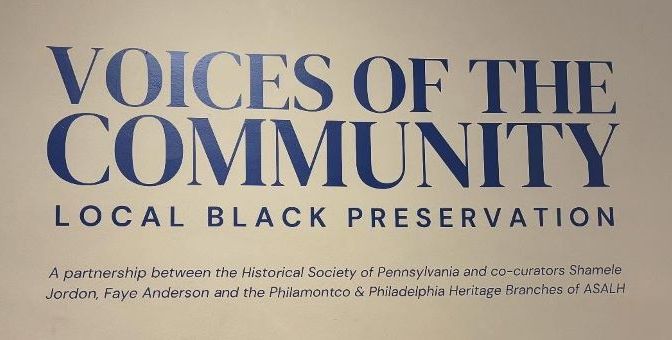
To celebrate Black Music Month, I will give a gallery talk highlighting some of the items in the Historical Society of Pennsylvania’s exhibit, “Message In Our Music.” The items span the 1770s to the 1970s.

It was illegal for the enslaved to learn how to read or write. Stories and cultural practices were passed down from generation to generation in the music. In the prelude to gospel legend Bobby Jones’ “Just A Closer Walk with Thee,” Maya Angelou said, “They sung us all the way out of slavery.”

Music was the first draft of Black history.

One of the items in the exhibit is a collection of spirituals sung before the Civil War, including Free At Las’, compiled by Edward Avery McIlhenny whose family enslaved hundreds of Black people.

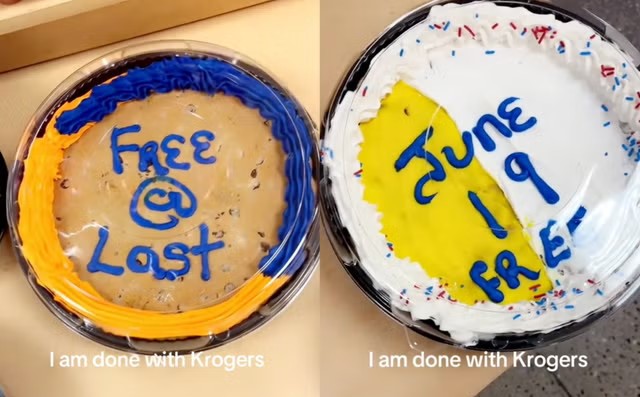
“Free at last” has resonated with African Americans for hundreds of years. The significance of the phrase was lost on Kroger. The supermarket chain came under fire for selling Juneteenth cakes decorated with AI slop.

TikToker Blaq Monalisa posted images of the cakes saying:

Y’all decorate everything else around here cute, everything else around here cute. But for Juneteenth, you wanna just throw something on a freaking cookie cake and expect someone to buy it.

The video went viral. After the backlash, Kroger said the “products have been removed” from the store.

This is a teachable moment. NBC News reported:

The phrase “free at last” is known for being a prominent part of Martin Luther King’s “I Have A Dream” speech, borrowed from the title of a Negro-Spiritual song. And now the phrase, which represents a hard-fought struggle, is being featured on a supermarket cake, casually scribbled in internet shorthand.

As you will see in the “Message In Our Music” exhibit, the phrase predates Julia Perry’s 1951 composition.

My gallery talk is free and open to the public. To register, please go here.

UPDATE: Check out 6abc Action News’ report about the exhibition.