There are new documentaries (here, here and here) and a hip-hop tribute.
On June 2, the National Museum of African American History and Culture and Smithsonian magazine will hold a virtual panel discussion, “Historically Speaking: In Remembrance of Greenwood,” focusing on the development of Black Wall Street, the events leading up to the one of the worst episodes of racial violence in U.S. history, and the Black community’s resilience. The event is free but registration is required. To register, go here.
May is Preservation Month, a time to celebrate historic places that matter to you. The former Douglass Hotel matters to me. Built in 1926, the Douglass Hotel was first listed in the Green Book in 1938. The property was added to the Philadelphia Register of Historic Places in 1995. The historical marker out front notes that when Billie Holiday was “[i]n this city, she often lived here.”
The Douglass Hotel was a safe haven for Black travelers. While the hotel rooms were basic, the lower level was magical. For nearly four decades, and several ownership and name changes, the basement space played host to jazz greats from Cannonball Adderley to Joe Zawinul. In the 1950s it was known as the Rendezvous Club. In the 1960s, it was renamed the Showboat. In the 1970s, it was the Bijou Café. This door leads down to the lower level where John Coltrane and Grover Washington Jr. recorded live albums.
The future Queen of Soul performed in the lower level of the Douglass Hotel on January 2, 1961. In Higher Ground: Stevie Wonder, Aretha Franklin, Curtis Mayfield, and the Rise and Fall of American Soul, John Wilson, a pianist for the legendary Clara Ward and the Ward Singers, recalled:
Aretha Franklin came to Philly to sing at the Showboat Club on Lombard Street. After checking in at the hotel upstairs over the club, she took a cab over to Mom Ward’s house to get connected to familiar souls. She was a little nervous about breaking into pop singing. That night Clara, me, and Rudy (the Wards’ chauffeur) went to the Showboat to catch Aretha’s performance. The only people familiar with the name Aretha Franklin were gospel people, who weren’t about to show up. They were angry at her crossing over to pop. When we went in the door we heard that wonderful voice and saw that it was being wasted on an almost empty house.
Sixty years later, there will be full houses to see the movie RESPECT starring Academy Award® Winner Jennifer Hudson as Aretha Franklin.
RESPECT will be in theaters in August. If the movie lives up to the trailer, a second Oscar might be in Jennifer Hudson’s future.
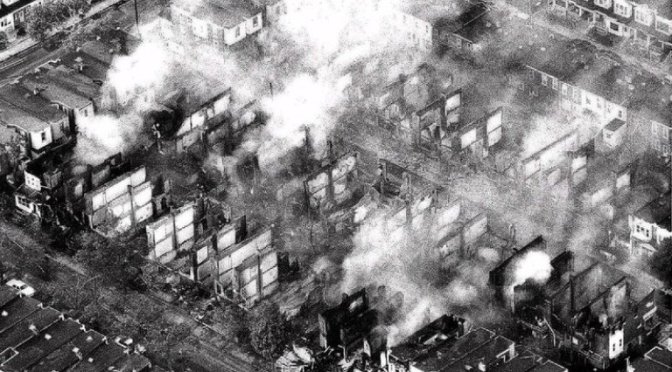
On Mother’s Day 1985, the City of Philadelphia, under the “leadership” of Mayor W. Wilson Sr., dropped a bomb in a residential neighborhood, killing 11 Black people, including five children. Wilson stood by as his police commissioner and fire commissioner decided to let the fire burn.
Adding fuel to the fire, we now know the remains of at least one of the children, Katricia “Tree” Africa, were stored at University of Pennsylvania Museum of Archaeology and Anthropology and shuttled back and forth between UPenn and Princeton University for research without the consent of the family. A week ago, retired anthropology professor Alan Mann said he had not seen the remains in more than a decade. Mann told The Philadelphia Inquirer:
I would’ve given them back years ago, if anyone had asked me. There’s absolutely no reason for us to keep them. They should be given back.
The “body snatcher” lied. Mann has turned the remains of Tree Africa over to a Black-owned funeral home. The Inquirer reports:
The remains of a young girl killed in the MOVE bombing were delivered to a West Philadelphia funeral home on Friday by an anthropologist who had been in possession of them.
Alan Mann, a former University of Pennsylvania anthropology professor hired by a city commission to identify the remains in the 1980s, confirmed Friday that he gave the remains — a pelvic bone and part of a femur believed to be from Tree Africa — to the Terry Funeral Home.
Gregory Burrell, the chief executive of the funeral home, said Friday morning he picked up the remains from Mann’s home in New Jersey.
In “A Message to Our Community,” University of Pennsylvania Provost Wendell Pritchett and Penn Museum Director Christopher Woods wrote:
The Penn Museum and the University of Pennsylvania apologize to the Africa Family and the members of our community for allowing human remains recovered from the MOVE house to be used for research and teaching, and for retaining the remains for far too long.
Reuniting the remains with the Africa Family is our goal, and I am in direct conversation with them. The Africa Family and our community have experienced profound emotional distress as a result of the news that human remains from the horrific 1985 bombing of the MOVE house were at the Penn Museum and this fact has urgently raised serious questions: Why were the remains at the Museum in the first place? Why were they used for teaching purposes? And, most importantly, what are we going to do to resolve this situation?
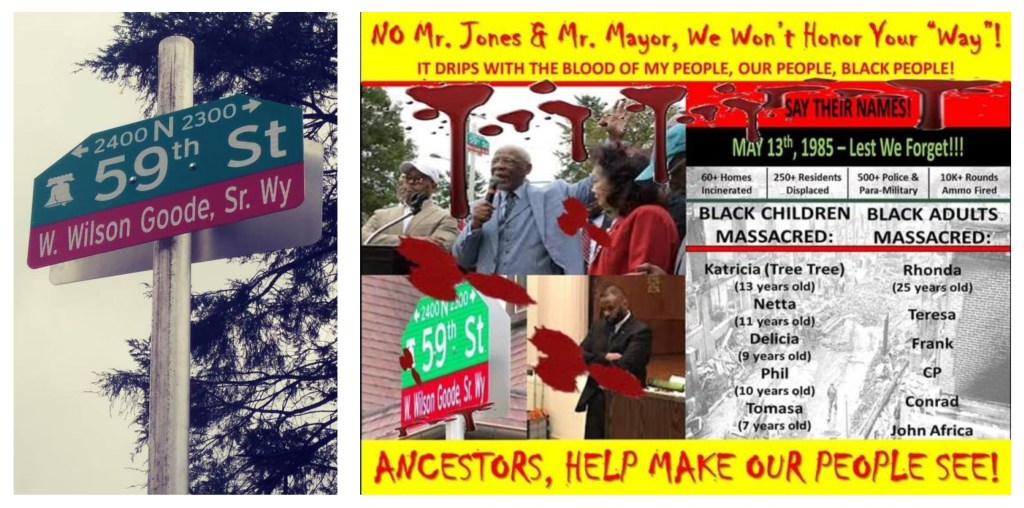
In 2018, Philadelphia named a street after the mayor who set in motion the MOVE bombing and the still unfolding dehumanization of Black lives.
On May 7, 2021, Philadelphia City Council Committee on Parks, Recreation, and Cultural Affairs will hold a hearing on the city’s landmarks and monuments review process.
Street names are also reminders of anti-Black racism and bigotry. Goode is forever associated with the wanton disregard of Black lives. In this moment of racial reckoning and restorative justice, the City of Philadelphia should erase W. Wilson Goode Sr.’s name from public memory.
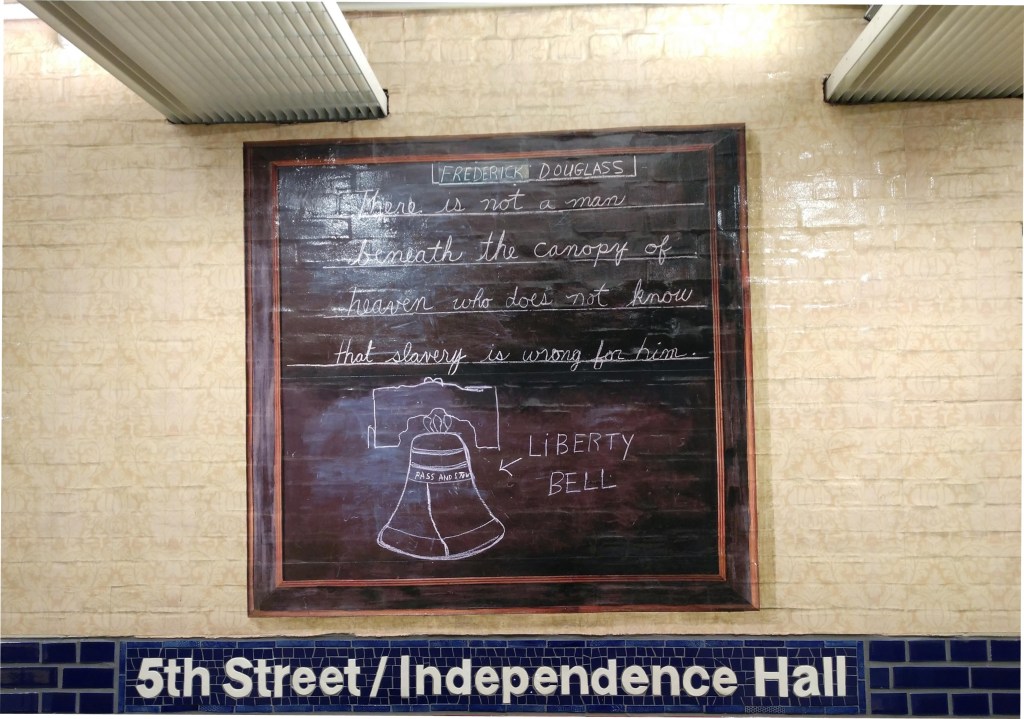
I recently checked out SEPTA’s “Portal to Discovery” art installation on view at the subway station closest to Independence Hall. When it is safe to go maskless outdoors, I will lead walking tours to commemorate the 200th anniversary of the birth of William Still, the Father of the Underground Railroad. The starting point is right above SEPTA’s 5th Street/Independence Hall station so I was eager to see whether any of the historic figures that I talk about are depicted. I was happy to see many are, including Still, Jane Johnson, Frances E.W. Harper and Frederick Douglass.
My happiness turned to dismay when I noticed Douglass’ first name is spelled “Fredrick.”
Why didn’t anyone notice the misspelling before the mural was installed? As it turns out, Tom Judd learned about the misspelling in February. Judd then concocted a story that the misspelling was intentional so that he would not have to admit his mistake. In the midst of the national reckoning on race, a white artist effectively said eff it. The Philadelphia Inquirer reports:
Judd said he was upset about it. But he decided to let it go at that point because the error could be explained as “fitting into” a narrative that the chalkboard display had been written by a school student.
He voiced regrets for that decision. “I can see how it landed, like [it was] white people’s entitlement thinking that it [the misspelling] doesn’t matter,” Judd said.
For his “narrative” to make sense, the student’s teacher would not have caught the spelling error. To save face, Judd was willing to cast aspersions on Philadelphia’s teachers. This is white privilege in action. The real narrative is a story of indifference to Black history and the lack of diversity at the Philadelphia Art Commission which approved the design.
The misspelling has been corrected but “Frederick” sticks out like a sore thumb.
I recognize that 99.9% of those who view the mural will not notice the patch. But for me, it will remain a sore point. From the New York Times to student newspapers, misspelled names are routinely corrected. Yet a white artist, who was paid $200,000 in taxpayers’ money, apparently thought it was no big deal that he misspelled the name of a Black icon and seminal figure in American history.
This year marks the 200th anniversary of the birth of William Still, father of the Underground Railroad. Still’s last place of residence was 244 S. 12th Street.
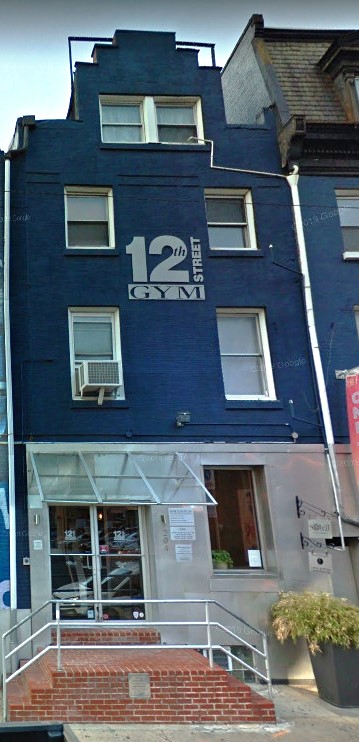
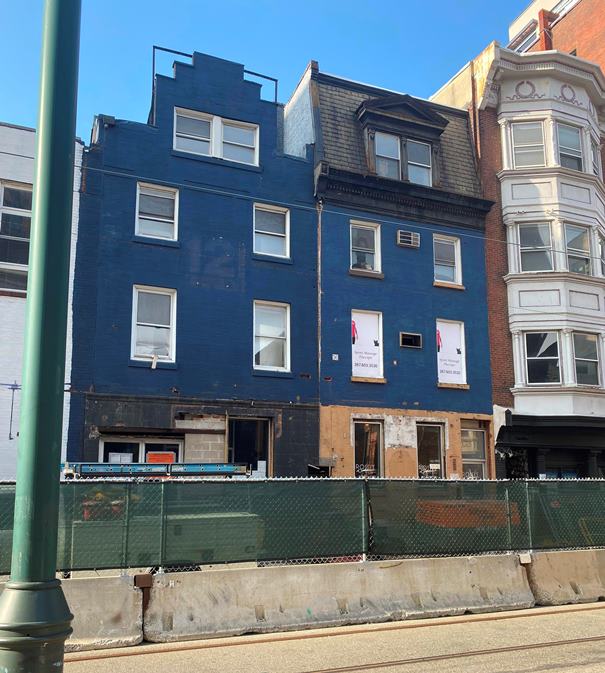
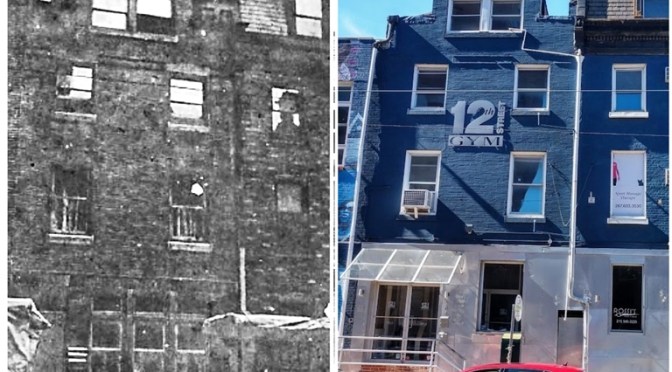
Still’s neighbors included abolitionist Henry Minton who lived at 204 S. 12th Street. While Still’s residence has been demolished, Minton’s former residence and place of business is still standing, for now.
In the coming weeks, New York City-based Midwood Investment & Development will demolish one of the few extant buildings associated with the Underground Railroad. The road to demolition was paved by the Philadelphia Historical Commission which for an “inexplicable” reason ignored the unanimous recommendation of its Committee on Historic Designation. The sole vote for designating the Henry Minton House was cast by the representative of City Council President Darrell Clarke, the only Black man with a seat at the table.
Critics like Faye M. Anderson, the director of a public history project to document Philadelphia’s golden age of jazz, maintain that the commission and its staff, which are predominantly white, do not advocate enough on behalf of preserving overlooked sites, such as Doctors Row, that are rich with Black history.
Consider the inexplicable 2019 decision to reject a register nomination for a 12th Street building once occupied by the abolitionist Henry Minton, a member of Philadelphia’s 19th-century Black elite. Anderson and other critics contend the commission gave too much weight to arcane technical specifications or architectural alterations — and paid too little attention to the role of the building in community life.
Demolition of the Henry Minton House is not the end of the story. Midwood has a conditional public art bonus that allows the developer to build more cookie-cutter apartments for “the demographic moving to Philly.” The zoning density bonus is site-specific and must be approved by the Philadelphia Art Commission. If the developer erases the history of the specific site, 204 S. 12th Street, the community will fight the issuance of a Certificate of Occupancy. Without a CO, Midwood’s shiny new high-rise will sit empty.
While we’re at it, we also can’t wait for a long-term solution to protect the house and restaurant of abolitionist and star caterer Henry Minton at 204 South 12th Street. The developers of the generic 36-story residential tower planned for that site have agreed to pay for a replacement for the mural honoring LBGTQ activist Gloria Casarez that they have already painted over. That’s welcome news. But they should also preserve the distinctive 19th-century façade of the Minton house. That will make their project more attractive—and it’s the right thing. It’s a win-win.
On the eve of Dr. Martin Luther King Jr.’s birthday, Midwood Investment & Development began to demolish the Henry Minton House. The developer unwittingly exposed the lie that the alterations to the façade were irreversible. With little effort, the façade could have been restored to its period of significance. But properties associated with Black history must pass a Jim Crow historic integrity test that the Betsy Ross House and other properties designated “historic” could not pass.
George Bernard Shaw famously said, “Youth is wasted on the young.” In my youth, I took the long way to my high school rather than the short-cut through the nearby cemetery. Fast forward to today, when I pass a burial ground, I often think of Johnny Taylor who sang “people in the cemetery, they’re not all alone.”
Eden Cemetery is a 53-acre historic district listed on the National Register of Historic Places. It is a site on the National Park Service’s Underground Railroad Network to Freedom, and a member of the Pennsylvania Hallowed Grounds Project. A stroll through Eden is “like walking through a book of Black history.” The lives of those interred span from 1721 to the present.
Under the CARES Act, taxpayers who don’t itemize their deductions are allowed to deduct an additional $300 for cash contributions to public charities thisyear. You can help protect Eden’s legacy and preserve African American memory by making an end-of-year donation here.
Your tax-deductible donation will ensure the graves of Father of the Underground Railroad William Still, Letitia Still, Henry Minton, Octavius V. Catto, Frances Ellen Watkins Harper, Marian Anderson, among others, will be kept clean.
From the colonial era to the Civil War, Philadelphia was a center of organized resistance to slavery. The city was also home to the largest and wealthiest African American population in the country. Philadelphia’s Black elite included Henry Minton (1811-1883), a caterer and abolitionist whose guests included John Brown, Frederick Douglass, and William Still, the Father of the Underground Railroad. But this history is largely absent from the properties listed on the Philadelphia Register of Historic Places.
Last year the Philadelphia Historical Commission ignored the unanimous recommendation of its Committee on Historic Designation and rejected the nomination of the Henry Minton House for listing on the local register because its façade has been altered. Midwood Investment & Development plans to demolish one of the few extant buildings associated with the Underground Railroad in Philadelphia.
Midwood CEO John Usdan signaled his biased view of history in 2017. In an interview with The Philadelphia Inquirer Usdan said:
Because the city’s so rich in history and has all these great historic buildings and amazing places where you want to congregate, it’s exactly what the demographic moving to Philly wants (emphasis added).
That is what systemic racism in historic preservation sounds like. This is what it looks like. The Historical Commission applied a Jim Crow-like test of historic integrity that the Betsy Ross House and “historic” properties in Society Hill could not pass.
Easter Sunday marked the 81st anniversary of Marian Anderson’s performance at the Lincoln Memorial before an audience of 75,000. She sang outdoors because the Daughters of the American Revolution, an organization of white descendants of Revolutionary War veterans, banned African Americans from performing at Constitution Hall which DAR owns.
Five days earlier, the National Endowment for the Humanities announced $22.2 million in new grants including $650,000 for a documentary about Marian Anderson. Michael Kantor, executive producer of American Masters, is the project director.
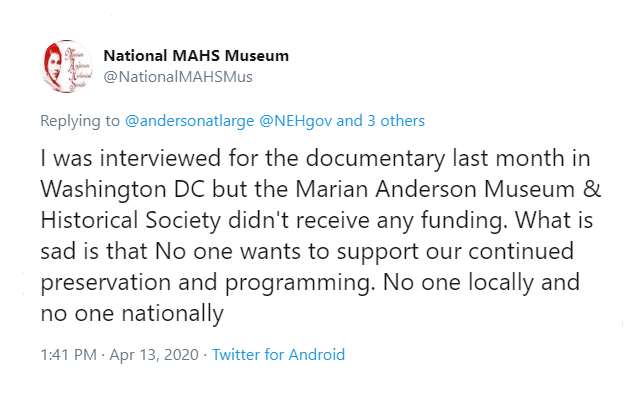
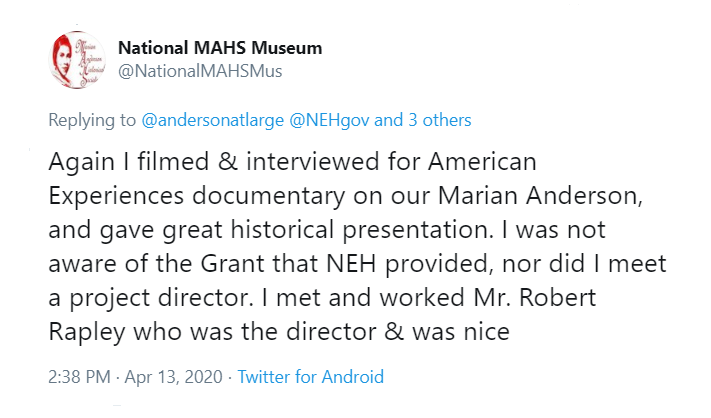
I was thrilled the civil rights icon was finally getting the American Masters treatment. The thrill was gone when I found out the Marian Anderson Museum & Historical Society is not included in the grant.
Jillian Patricia Pirtle, CEO and President of the Marian Anderson Museum & Historical Society, was interviewed by Robert Rapley, a producer and writer for The American Experience. It is ironic the producer of The Abolitionists thinks it’s cool to pick a black woman’s brain for free.
This is Kantor’s second helping of taxpayers’ money for the same project. In 2018, NEH awarded him $75,000 for the “development of a script and trailer for a sixty-minute documentary film on the popular singer Marian Anderson.” This video is the grant product.
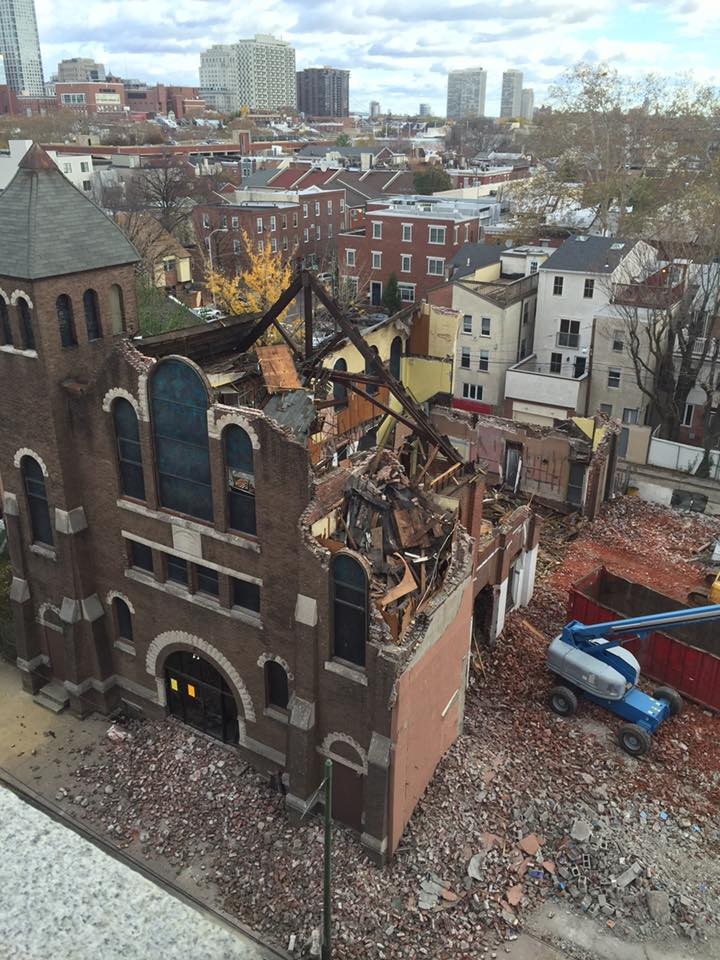
Marian Anderson was born and nurtured in Philadelphia. She first performed at Union Baptist Church. When her family couldn’t afford private lessons, members of the congregation pitched in and raised money for a voice teacher. I spoke up in support of preservationist Oscar Beisert’s effort to save the church. In 2015, the historic church was demolished to make way for luxury condos for gentrifiers.
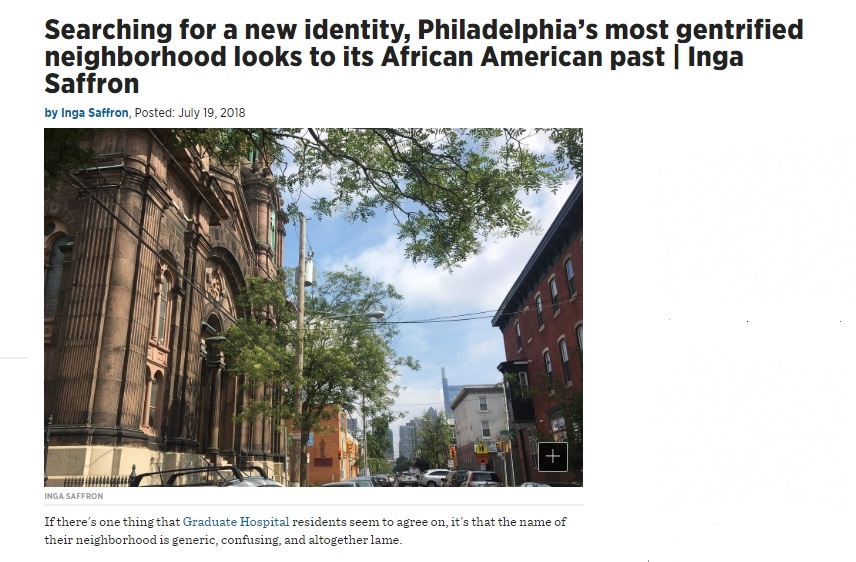
I spoke up when residents of Graduate Hospital, the most gentrified neighborhood in Philadelphia, floated the idea of renaming their community “Marian Anderson Village.” African Americans have been displaced but gentrifiers want the cultural cachet of the internationally renowned contralto without the people who look like her.
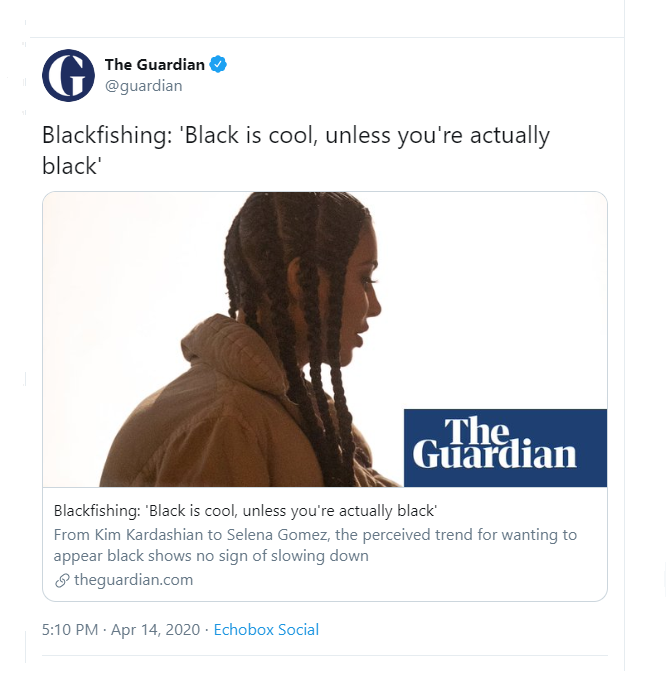
Cultural appropriation or blackfishing has no bounds. Karen Attiah, global opinions editor for The Washington Post, observed, “It’s America’s obsession with blackness, and black culture – without black people.”
Michael Kantor is awarded $725,000 for a documentary. Meanwhile, the cultural institution that preserved Marian Anderson’s South Philly rowhouse and keeps her story in public memory is starving for resources.
Legendary conductor Arturo Toscanini once said, “Hers is a voice heard once in a hundred years.” Sadly, blackfishing Marian Anderson is an all too common occurrence.













 All That Philly Jazz