
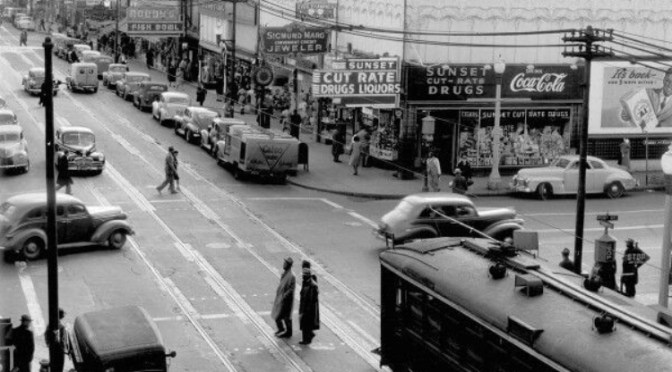
June is Black Music Month. This June marks the 95th anniversary of the Tulsa Race Riot of 1921. For two days (May 31-June 1), white vigilantes massacred black residents, looted and burned to the ground the most prosperous black community in the United States.
The riot took place in the Greenwood District, known as the Black Wall Street, the heart of which was bounded by Greenwood Avenue, and Archer and Pine streets. Tulsa natives, brothers Charlie, Ronnie and Robert Wilson’s group — The GAP Band — pays tribute to one of the worst race riots in U.S. history.
Black Wall Street, a hotbed for jazz and blues, was a stop on the famed Chitlin’ Circuit. Bandleader Walter Barnes was one of the most colorful characters on “the stroll.”
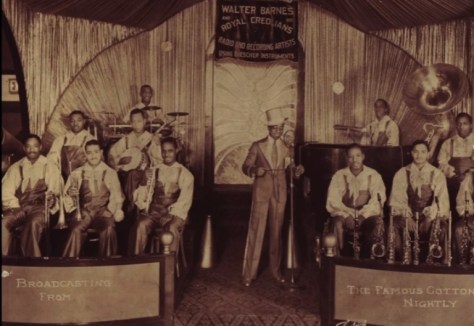
In his book, The Chitlin’ Circuit: and the Road to Rock ‘n’ Roll, Preston Lauterbach writes:
The tour [Walter Barnes and his Royal Creolians] kicked off in Tulsa, Oklahoma, the week before Thanksgiving, where Barnes found “Black Wall Street” bustling. “Greenwood is the name of the colored district of Tulsa, and one can get anything here from a shoe shine up.” Barnes highlighted the stroll’s musicians, dance promoters, dance halls, and its dentists, barbers, pharmacies, cafes, cab companies, and lodgings, always stressing the up-to-date. “I stopped with my entire orchestra at the modern and exclusive Small Hotel” in Tulsa, “one of the best equipped in the country, having newest electrical fixtures, telephone in each room, bath in every room, and modernistic furniture.” The Kings of Swing played the Crystal Palace Ballroom, “the last word in beauty,” and hung around the Goodie Goodie Club, Cotton Club, and Del Rio. “There’s plenty niteries here.”
In 1940, Barnes was killed in a fire while performing at the Rhythm Club in Natchez, Mississippi. The tragedy was memorialized in tribute songs by blues musicians, including Howlin’ Wolf and John Lee Hooker.

 All That Philly Jazz