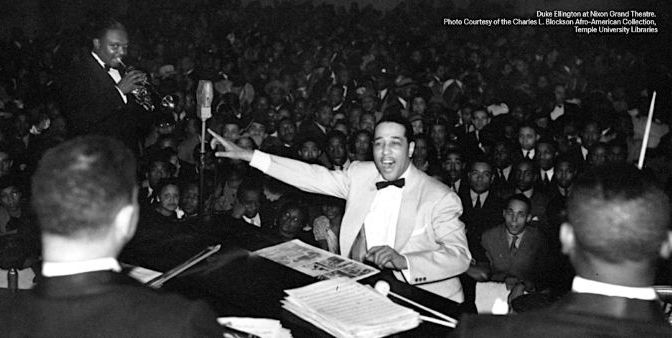
Join All That Philly Jazz Director Faye Anderson for a stroll through North Broad’s storied jazz history. We will walk the streets of North Philly and stop at places that hold the stories of legends-in-the-making like Louis Armstrong, Clifford Brown, James Brown, Dave Brubeck, John Coltrane, Miles Davis, Duke Ellington, Ella Fitzgerald, Patti LaBelle, Lee Morgan and Grover Washington Jr.
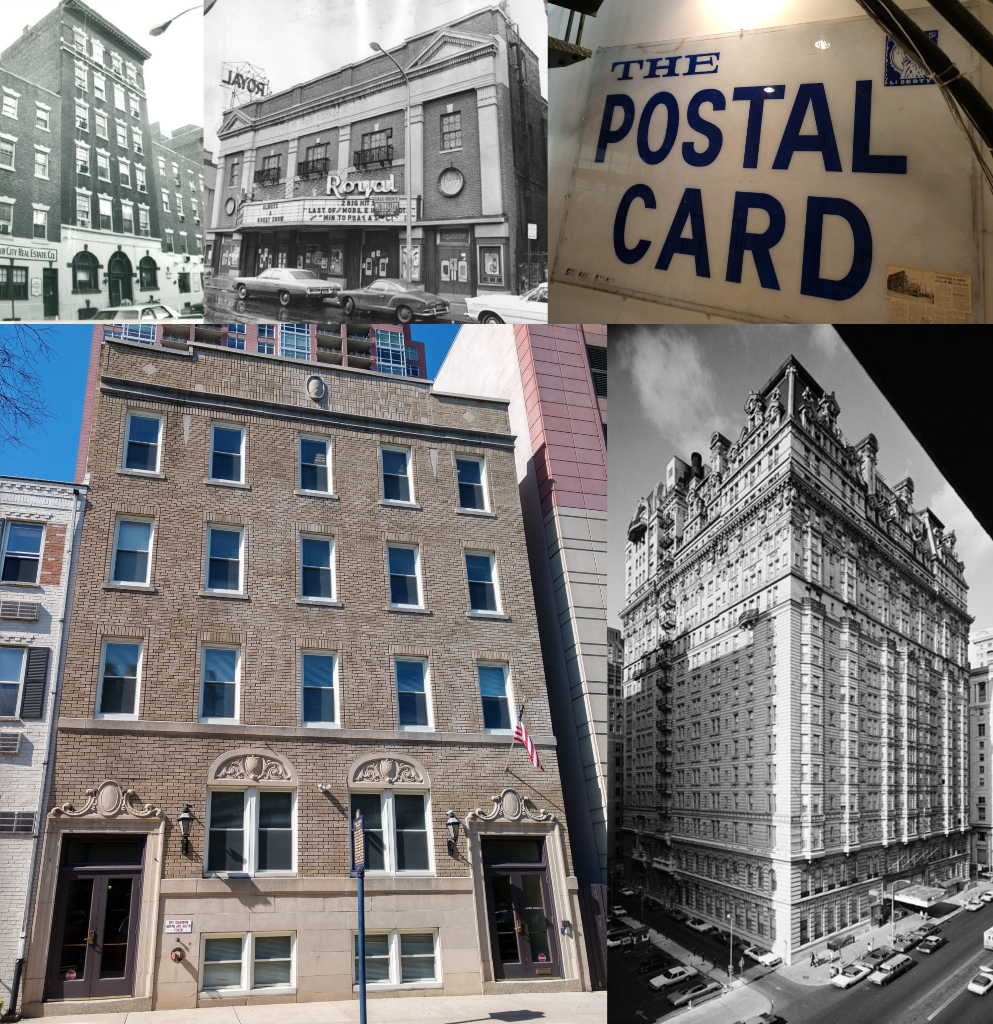
Our journey will take us to such sites as the Hotel Carlyle, Pyramid Club, Heritage House/Freedom Theatre, Cameo Room, Barber’s Hall, Flamingo Apartments, Nixon Grand Theater and Mitten Hall.
📅 Saturday, October 25, 2025 🕙 10:00 a.m. – 12:00 p.m. 💬 Free and open to the public (space is limited)
“A Stroll Through North Broad’s Jazz History” is organized by Scribe Video Center. The North Philadelphia History Festival is supported by the William Penn Foundation.
The first National Park Week was observed in 1991 to commemorate the 75th anniversary of the National Park Service. National Park Week has been an annual celebration since 1994. The 2025 celebration will be held April 19 to April 26.
This year’s theme of the National Park Playlist “celebrates musical connections to national parks and the American story.”
The Hotel Lorraine, where Dr. Martin Luther King Jr. was assassinated, is included in the NPS African American Civil Rights Network. So my playlist includes Otis Spann’s “Hotel Lorraine.”
Rev. Richard Allen, founder of Mother Bethel AME Church, produced the first compilation of hymns for an African American congregation, “A Collection of Hymns and Spiritual Songs,” published in 1801. The hymns include “Am I a Soldier of the Cross?” I will play a 20th century version of the hymn.
Lee Morgan’s homegoing ceremony was held at the Church of the Advocate. Needless to say, “The Sidewinder” will be on repeat.
John Coltrane composed “Giant Steps” while living in the Strawberry Mansion rowhome that is now a National Historic Landmark.
This was a banner year for Lee Morgan. From listing of “The Sidewinder” in the National Recording Registry, dedication of his historical marker, publication of my essay about his masterpiece by the Library of Congress, and federal, state and city citations, Lee is finally getting the recognition he deserves. There are more accolades to come in 2025.
The only discordant note was the resurfacing of misinformation. The Philadelphia Inquirer published a false claim that Lee Morgan’s gravesite had “vanished.”
Shaun Brady did not interview Lee’s family. If he had, they would have told him about White Chapel Memorial Park’s troubling history. If Brady had bothered to read the Google reviews, he would know that poor maintenance of the grounds is a chronic problem. The story wasn’t just rehashed fake news. It was a missed opportunity to shed light on the broader issue of accountability that impacts families whose loved ones are interred at White Chapel.
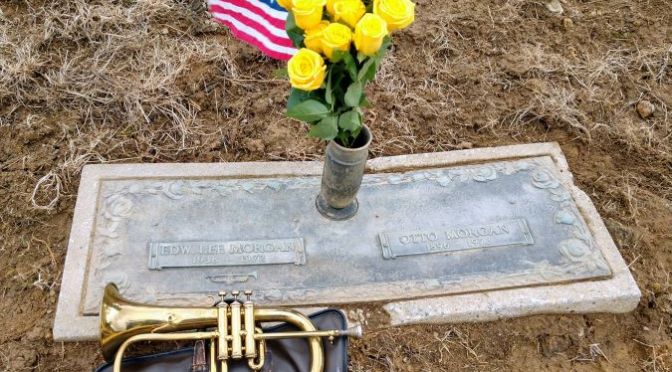
Putting aside the news article for now, Lee Morgan’s gravestone is in disrepair and fading. Please make a donation to preserve this endangered cultural resource. Donations will fund the restoration of Lee’s gravestone and the installation of a memorial bench, complete with a QR code linking to a digital tribute wall where donors can leave text, audio, or video tributes.
Lee Morgan was not just a jazz innovator; he was an advocate for racial justice. Now, it’s up to us to do him justice. Together, we can transform Lee’s gravesite into a place of reflection and inspiration.
During the Cold War, racial segregation was the law and practice in much of the country. With the backdrop of the Montgomery Bus Boycott, the U.S. Department of State launched the Jazz Ambassadors program, a cultural diplomacy initiative to promote American values abroad through music.
The program began in 1956 and was part of a broader effort by the U.S. government to counter Soviet propaganda. Jazz diplomacy was intended to win hearts and minds and promote a positive view of America as the land of freedom. Jazz Ambassadors included Louis Armstrong, Art Blakey, Dave Brubeck, Duke Ellington, Dizzy Gillespie, Lee Morgan and Nina Simone. Quincy Jones was the music director for the first tour.
A new documentary, “Soundtrack to a Coup d’Etat,” shows how unwitting jazz musicians were used by the CIA to cover their geopolitical machinations in the 1950s and ‘60s. Jazz musicians were unknowing decoys in the CIA’s plot to assassinate Patrice Lumumba, the first democratically-elected leader of the newly independent Republic of the Congo.
From the New York Times review of “Soundtrack to a Coup d’Etat”:
This film, though, treads less optimistic territory. One of its major threads is the C.I.A.’s use of unwitting Black musicians to not just spread soft power abroad during the Cold War but also, potentially, provide a smoke screen for the agency’s more covert dealings. Archival footage and audio of interviews with agents, in some cases many years later, underline the point: Art was art, but it was also a useful tool for machinations the artists quite publicly opposed.
[…]
That’s why “Soundtrack” lands on a coda. Each of these historical threads, in some way, led to the Feb. 15, 1961 demonstration at the United Nations protesting Lumumba’s assassination, organized by a group called the Cultural Association of Women of African Heritage and led by Lincoln, Rosa Guy and Maya Angelou. But the story didn’t end there. “Soundtrack” makes an explicit connection between what happened in Congo in 1960 and ongoing conflict today. These events occurred a while ago, but they’re not really history, “Soundtrack” argues. The past, one might say, is never dead. It’s not even past.
The first annual Cultural Week of Action on Race and Democracy will be held September 27 through October 5, 2024. Organized by Race Forward and Americans for the Arts, the initiative will harness the transformative power of arts and culture to spark dialogue, inspire action, and build community.
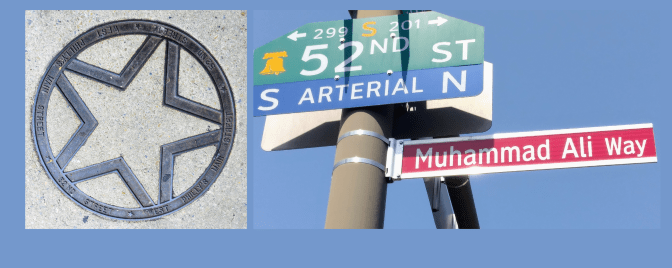
All That Philly Jazz’s walking tour, West Philly’s Main Street: A Walk Through Time,is one of the inaugural projects. We will stroll the historic 52nd Street corridor and uncover lost and hidden history. For event details and tickets, please go here.
The walking tour culminates at the former site of the Red Rooster, the jazz club where John Coltrane and McCoy Tyner first crossed paths. Today, the building is home to Steve’s Sports Lounge but the history lives on.
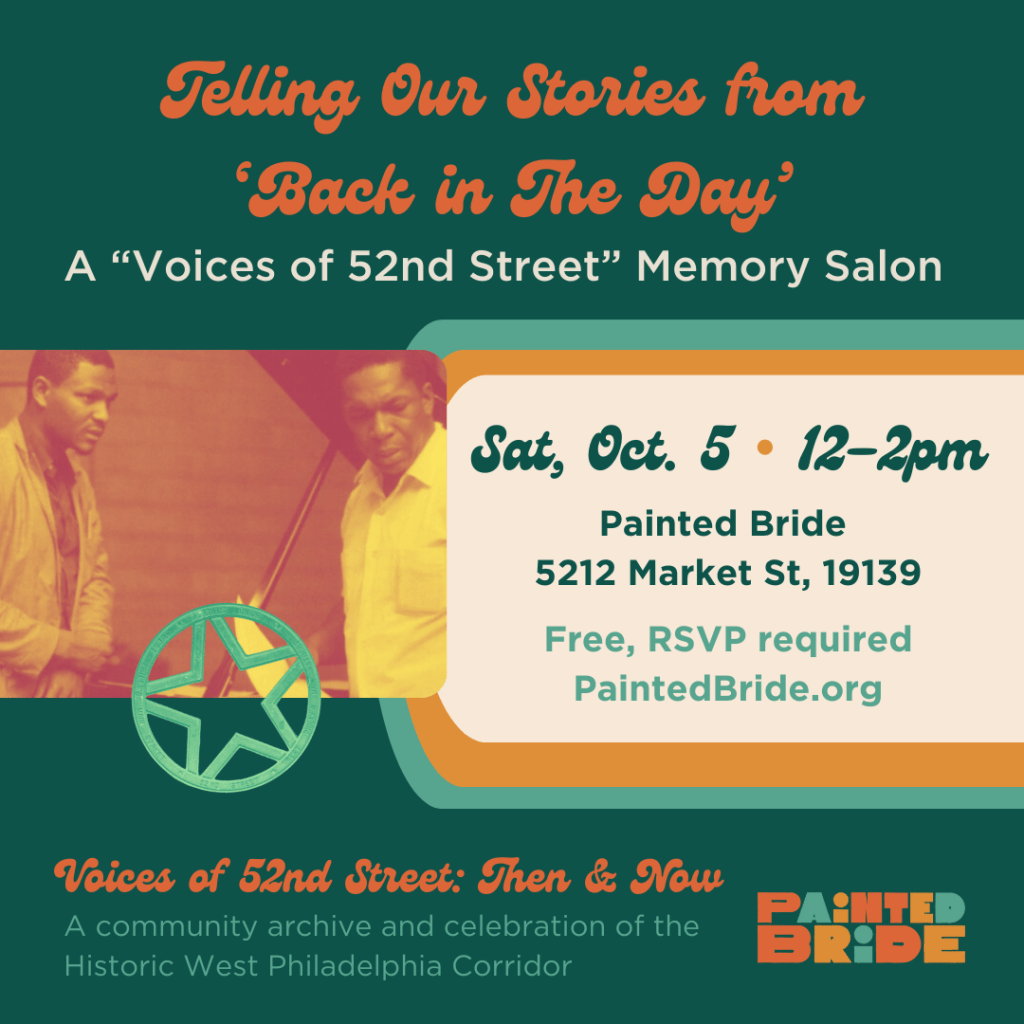
The afternoon will be filled with joy, remembering, and light refreshments. The Memory Salon is free and open to the public. Space is limited so be sure to reserve your spot.
Join us in October and November for a walking tour of West Philadelphia’s 52nd Street, aka “the Strip,” a historic commercial and cultural corridor. The 52nd Street Stroll will uncover the Strip’s hidden past as an entertainment destination for African Americans.
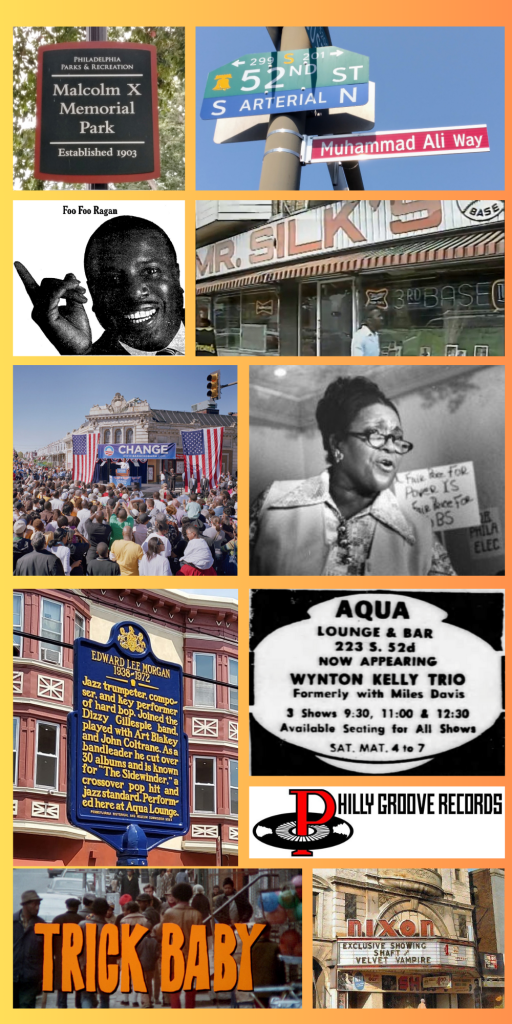
Points of interest along the Strip include:
Nightclub frequented by celebrities such as Muhammad Ali, Cab Calloway, Joe Frazier, Teddy Pendergrass and Stevie Wonder;
Restaurant where President Bill Clinton ordered soul food;
Historic landmark where then-candidate Barack Obama held a campaign rally;
First-ever Walk of Fame memorializing African American artists of stage, screen and television;
Jazz trumpeter Lee Morgan’s historical marker;
Oldest Black-owned bookstore on the East Coast;
Free Library branch designed by a Black architect who was also a jazz club proprietor;
Sites featured in the 1972 Blaxploitation film “Trick Baby.”
The 52nd Street Stroll will be led by All That Philly Jazz Director Faye Anderson. The walking tour will begin at Malcolm X Memorial Park (52nd and Pine Streets) and end at the Nixon Theatre (.06 mile).
There will be a bonus stop at the jazz club where John Coltrane met McCoy Tyner.
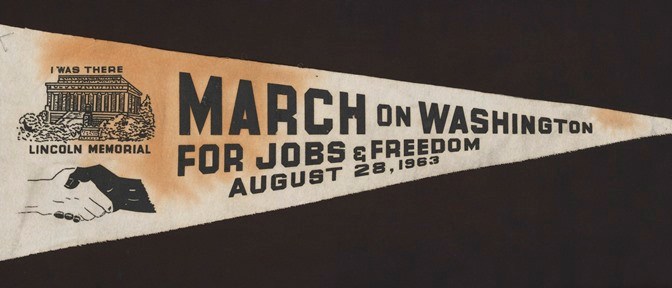
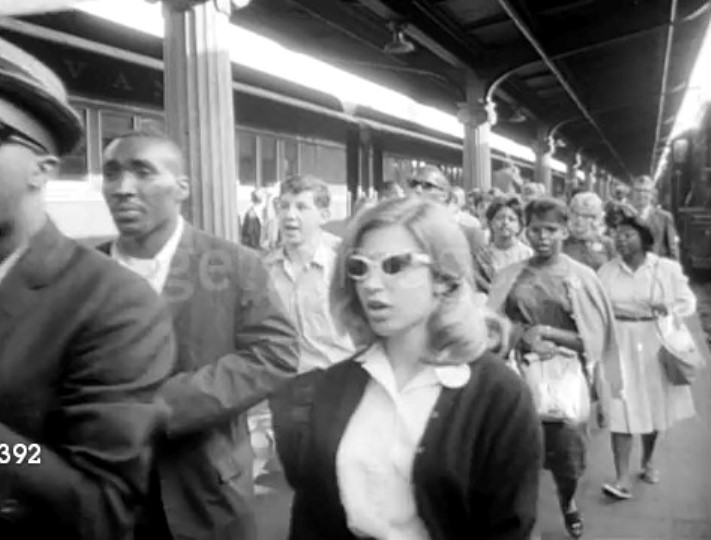
Sixty-one years ago on August 28, 1963, more than 250,000 people gathered for the March on Washington for Jobs and Freedom. Jazz musicians were the vanguard of the movement for freedom and civil rights, a fact acknowledged by Dr. Martin Luther King Jr. at the 1964 Berlin Jazz Festival.
Long before Beyoncé was born, tenor saxophonist Sonny Rollins recorded “The Freedom Suite” which featured Oscar Pettiford on bass and Max Roach on drums.
From Louis Armstrong’s “Black and Blue” to Charles Mingus’ “Fables of Faubus,” jazz musicians talked the talk and walked the walk. Trumpeter Lee Morgan and Max Roach were among the musicians on board the Freedom Train from New York City to the March on Washington for Jobs and Freedom.
Edward “Lee” Morgan was born in Philadelphia on July 10, 1938. Since his last heavenly birthday, Lee has been honored with a Pennsylvania historical marker.
At the dedication ceremony, Lee received commendations from Governor Josh Shapiro, Senator Bob Casey, Representatives Brendan Boyle and Dwight Evans, state Senator Vincent Hughes, City Councilmember Jamie Gauthier and Mayor Cherelle L. Parker.
Lee’s masterpiece, “The Sidewinder,” was added to the Library of Congress’ National Recording Registry on April 16, 2024.
To celebrate Lee’s 86th birthday, I proposed the legendary trumpeter for a Google Doodle. If Google accepts my proposal, Lee will join his former bandleader, Dizzy Gillespie, who was honored with a Google Doodle on October 21, 2010.












 All That Philly Jazz