Memorial Day is a time to remember and honor military personnel who paid the ultimate sacrifice to protect the nation’s freedoms and democratic ideals.
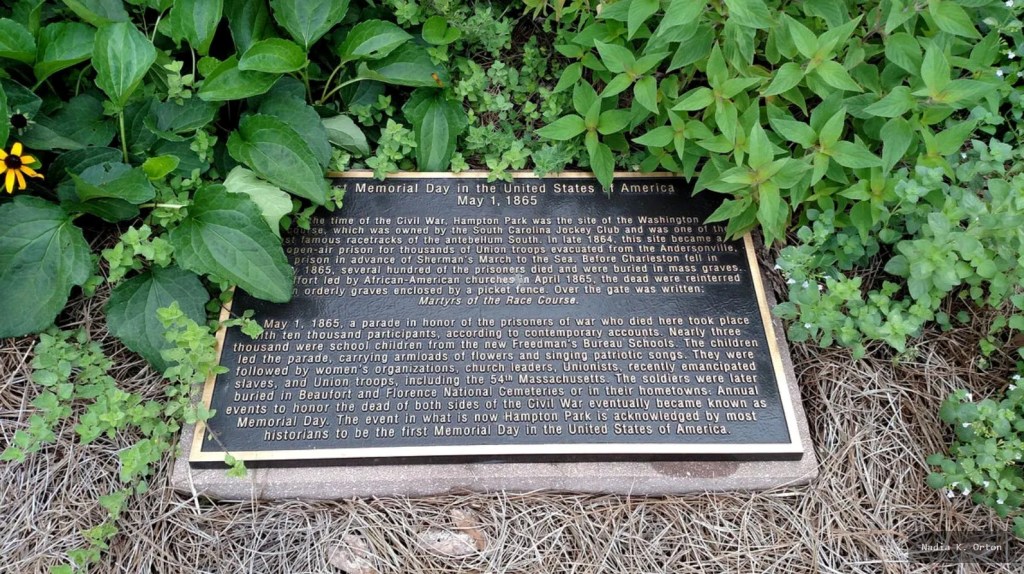
The DEI – Didn’t Earn It – crowd that’s attacking diversity, equity and inclusion likely doesn’t know the origin of Memorial Day. Originally called Decoration Day, Memorial Day was first observed on May 1, 1865 in Charleston, South Carolina.
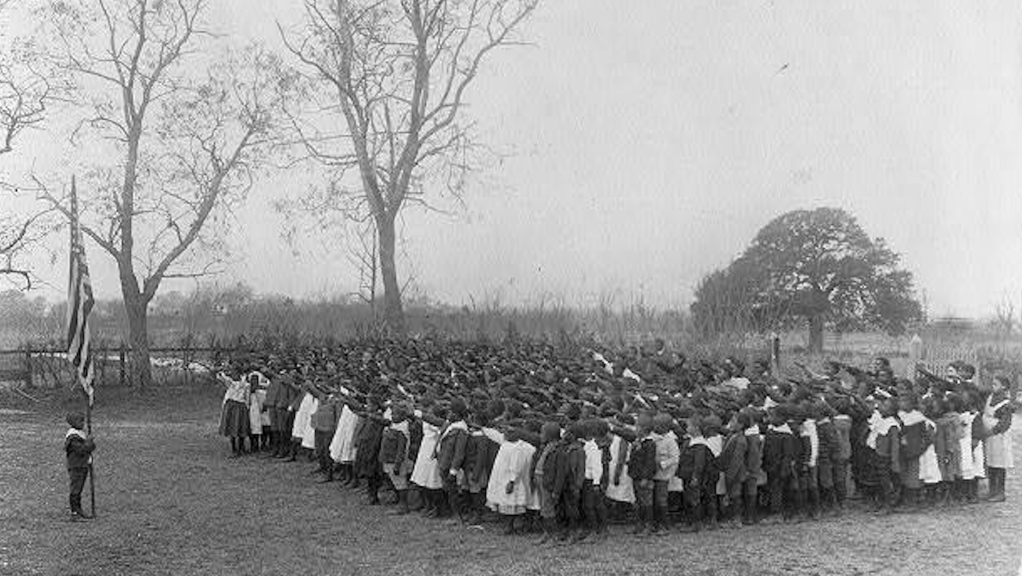
Thousands of African Americans, including formerly enslaved, the 54th Massachusetts Infantry Regiment, and the 34th and 104th United States Colored Troops, were led by children as they gathered to honor 257 Union soldiers who were buried in a mass grave behind the grandstand of the city’s Washington Race Course. The ancestors exhumed the mass grave, reburied the bodies and decorated their graves; hence, Decoration Day.
Check out the history of Memorial Day that President Trump wants to erase.
The Historical Society of Pennsylvania will unveil a new exhibit, Voices of the Community: Local Preservation in Philadelphia, on June 12, 2025. The exhibit explores the history and preservation of Black communities in Philadelphia and Lawnside, New Jersey. I am one of the community curators, along with Shamele Jordon.
The exhibit focuses on four themes:
Black Joy: Development of Lawnside, the only historically African-American incorporated municipality in the Northern United States
Sounds of Freedom, Resistance and Resilience
Fulfilling America’s Promise: Founding of the Association for the Study of African-American Life and History (ASALH)
All Power to the People: Local community efforts to preserve and restore Black Philadelphia
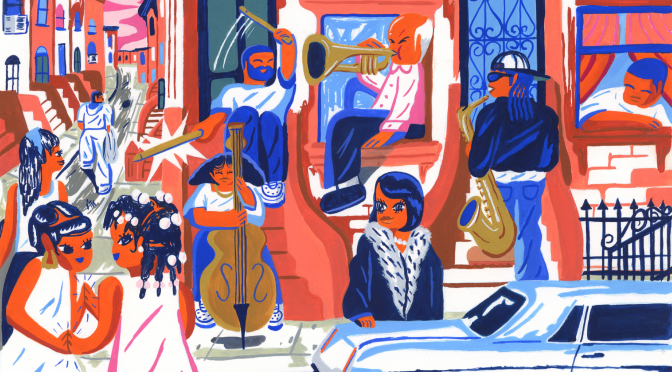
With the “Sounds of Freedom, Resistance and Resilience,” I use archival materials to tell the story of Black music from the 1770s to the 1970s.
Voices of the Community: Local Preservation in Philadelphia will be on view June 12, 2025 to September 26, 2025. To be added to the mailing list for the exhibit opening and my gallery talk, send your name and email address to phillyjazzapp@gmail.com.
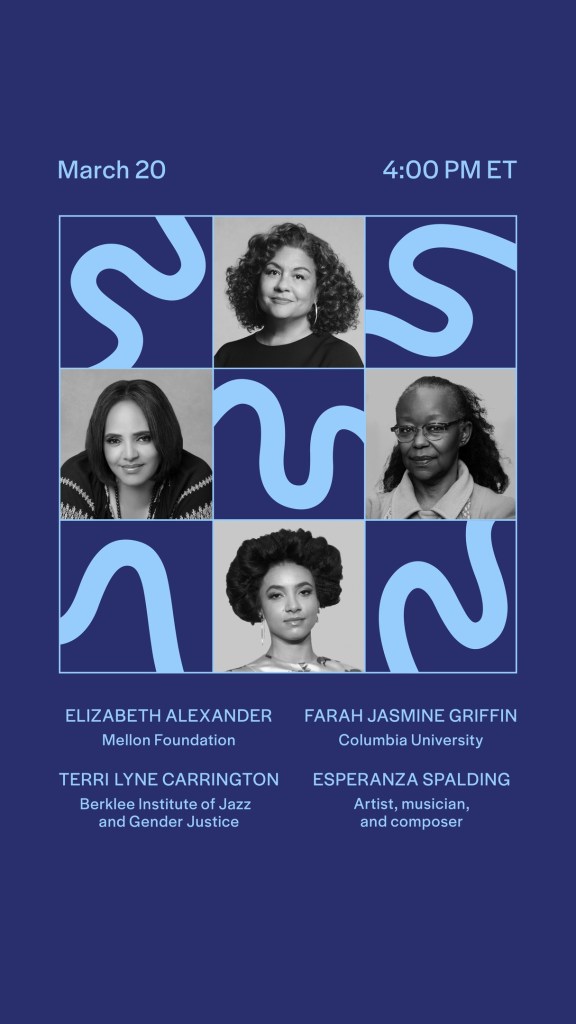
March is Women in Jazz Month, a time to celebrate the contributions of women to jazz. Truth be told, those contributions are often unheralded and overlooked. But as the National Museum of African American History and Culture notes, women were “present from its [jazz] inception”:
Jazz evolved from ragtime, an American style of syncopated instrumental music. Jazz first materialized in New Orleans, and is often distinguished by African American musical innovation. Multiple styles of the genre exist today from the dance-oriented music of the 1920s big band era to the experimental flair of modern avant-garde jazz. The radically new genre of music, originally seen as socially unacceptable, often called “the Devil’s music,” grew into an expression of high art, and as a result of many pioneering African American women. And while present from its inception, African American women are often omitted from the larger narrative in the history of the genre. Black women musicians fought harsh stereotypes levied against their gender, race, and musical abilities.
The Mellon Foundation is hosting a virtual discussion about jazz creativity and innovation featuring two women in jazz — Terri Lyne Carrington and esperanza spalding.
The event is free and open to the public. To register for the livestream, visit the Mellon Foundation.
My parents were part of the first wave of the Great Migration. They left North Carolina and moved to Brooklyn, NY. “Great Migrations: A People on the Move” is a docuseries hosted by Dr. Henry Louis Gates Jr. The series examines the migrations of African Americans throughout the 20th and 21st centuries, and their lasting impact on American culture and society.
“Great Migrations” features interviews with historians, scholars, artists and everyday people.
The four-part series premieres on PBS on January 28, 2025 at 9/8c.
Jimmy Carter has joined the ancestors at age 100. Former President Carter was a humanitarian, and a tireless champion of democracy and human rights. The late president will be honored with a state funeral at Washington National Cathedral.
I do further appoint January 9, 2025, as a National Day of Mourning throughout the United States. I call on the American people to assemble on that day in their respective places of worship, there to pay homage to the memory of President James Earl Carter, Jr. I invite the people of the world who share our grief to join us in this solemn observance.
Along with former First Lady Rosalynn Carter, President Carter co-founded The Carter Center. The Democracy Program was a pioneer in election observation. The Carter Center established the criteria for free and fair elections, and paved the way for ordinary citizens to get involved in the global democracy movement. I observed elections in Ethiopia and Nigeria, and led voter education workshops in Angola and Kazakhstan.
It is widely known that President Carter hosted the first Black Music Month celebration at the White House.
Less well known is that a year earlier on June 18, 1978, President Carter held the first White House concert devoted to jazz to commemorate the 25th anniversary of the Newport Jazz Festival. Performers included Pearl Bailey, Louis Bellson, George Benson, Eubie Blake, Ron Carter, Ornette Coleman, Roy Eldrige, Stan Getz, Dexter Gordon, Lionel Hampton, Herbie Hancock, Max Roach, Zoot Sims, McCoy Tyner and Mary Lou Williams.
President Carter provided the vocals on Dizzy Gillespie’s “Salt Peanuts.”
As noted in his remarks, President Carter’s appreciation of jazz dates back to his early youth:
I began listening to jazz when I was quite young—on the radio, listening to performances broadcast from New Orleans. And later when I was a young officer in the navy, in the early ’40s, I would go to Greenwich Village to listen to the jazz performers who came there. And with my wife later on, we’d go down to New Orleans and listen to individual performances on Sunday afternoon on Royal Street, sit in on the jam sessions that lasted for hours and hours.
[…]
Twenty-five years ago, the first Newport Jazz Festival was held. So this is a celebration of an anniversary and a recognition of what it meant to bring together such a wide diversity of performers and different elements of jazz in its broader definition that collectively is even a much more profound accomplishment than the superb musicians and the individual types of jazz standing alone.
And it’s with a great deal of pleasure that I—as president of the United States—welcome tonight superb representatives of this music form. Having performers here who represent the history of music throughout this century, some quite old in years, still young at heart, others newcomers to jazz who have brought an increasing dynamism to it, and a constantly evolving, striving for perfection as the new elements of jazz are explored.
The concert was broadcast live on a special edition of NPR’s Jazz Alive! hosted by Billy Taylor.
The sequence of events for Jimmy Carter’s state funeral is available here.
I was a consultant on a project in Egypt in the 1990s. As I walked around Cairo, I was struck that Egyptians look like “high yellow” Africans. I later read that when Frederick Douglass visited Egypt in 1887, he observed, “The great mass of the people I have yet seen would in America be classified as mulattoes and negroes.”
Here I leave our learned authorities, as to the resemblance of the Egyptians to negroes.
It is not in my power, in a discourse of this sort, to adduce more than a very small part of the testimony in support of a near relationship between the present enslaved and degraded negroes, and the ancient highly civilized and wonderfully endowed Egyptians. Sufficient has already been adduced, to show a marked similarity in regard to features, hair, color, and I doubt not that the philologist can find equal similarity in the structures of their languages. In view of the foregoing, while it may not be claimed that the ancient Egyptians were negroes,—viz:—answering, in all respects, to the nations and tribes ranged under the general appellation, negro; still, it may safely be affirmed, that a strong affinity and a direct relationship may be claimed by the negro race, to THAT GRANDEST OF ALL THE NATIONS OF ANTIQUITY, THE BUILDERS OF THE PYRAMIDS.
We were stripped of our origin story by enslavers. So from activists to artists, ancient Egypt has fueled the imagination of African Americans.
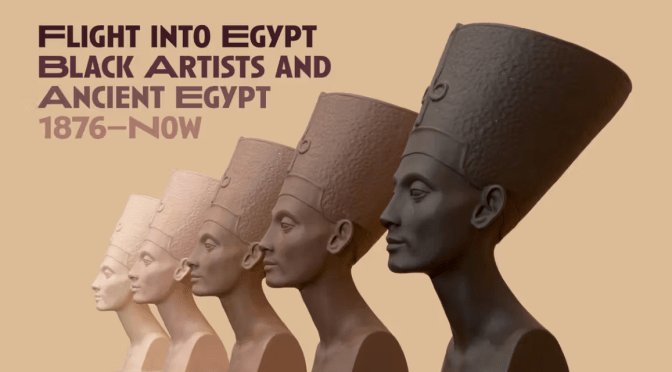
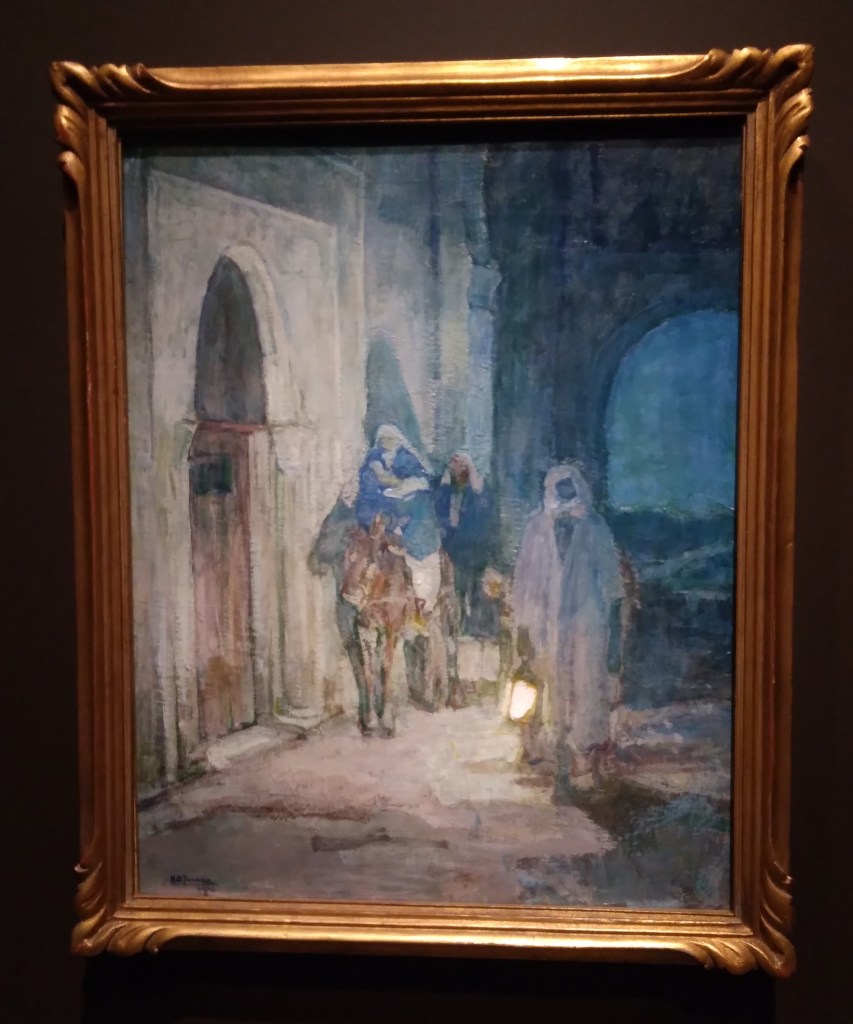
I recently checked out a new exhibition at the Metropolitan Museum of Art, “Flight into Egypt: Black Artists and Ancient Egypt, 1876–Now,” a multimedia exploration of how Black artists have drawn inspiration from Egypt. The exhibition features 200 works of art, including the Sun Ra documentary, “Space is the Place,” John W. Mosely photographs taken at the Philadelphia Pyramid Club, and Henry O. Tanner’s “Flight into Egypt.”
On the day of my visit, there was a creative convening of some of the artists included in the exhibition.
The program closed with a live performance of “Egypt, Egypt” by rapper and DJ The Egyptian Lover.
“Flight into Egypt: Black Artists and Ancient Egypt, 1876–Now” is on view through February 17, 2025.










 All That Philly Jazz