I am director of All That Philly Jazz, a place-based public history project that is documenting and contextualizing Philadelphia’s golden age of jazz. The project is at the intersection of art, public policy, and cultural heritage preservation.
The inaugural North Philadelphia History Festival, a celebration of African American and Puerto Rican heritage through art, music, film, history and culture, will be held July 24-27, 2025.
In the summer of 1964, the Council of Federated Organizations (COFO) launched the Mississippi Freedom Summer Project. In addition to voter education, COFO organized 41 Freedom Schools where Black children were taught reading, writing and arithmetic, as well as Black history and culture.
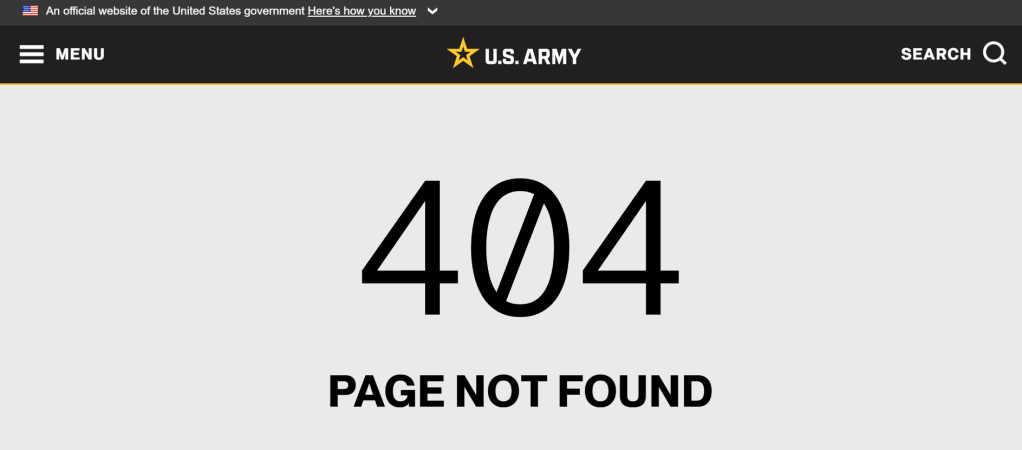
In the winter of 2025, President Donald Trump signed an executive order to whitewash American history. Federal agencies are deleting webpages.
In a memorandum, Assistant to the Secretary of Defense for Public Affairs Sean Parnell wrote:
By March 5, 2025, Components must take all practicable steps, consistent with records management requirements, to remove all DoD news and feature articles, photos, and videos that promote Diversity, Equity, and Inclusion (DEI). All articles, photos, and videos removed from DoD websites and social media platforms must be archived and retained in accordance with applicable records management policies/
[…]
Social Media Content: Components must remove and follow records management requirements for DEI content removed from all official DoD social media accounts. If Components cannot remove DEI content from DoD social media accounts by March 5, 2025, they must temporarily remove from public display all news articles, photos and videos published between January 20, 2021, and January 19, 2025, until the content is fully reviewed and DEI content removed. While DBI-related content outside of this date range must also be removed, articles, photos, and videos from the last four years are the immediate priority to align DoD communication with the current Administration.
Federal agencies plan to decommission hundreds of websites. We must be intentional and fight the erasure of webpages related to Black history and culture.
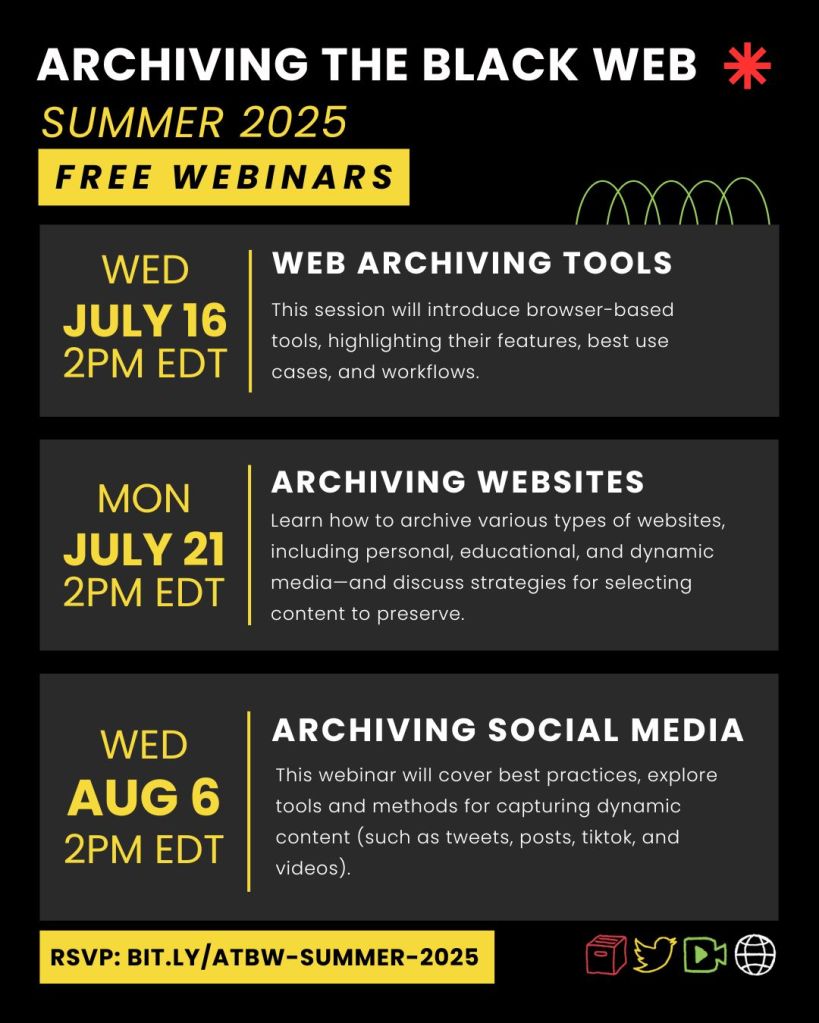
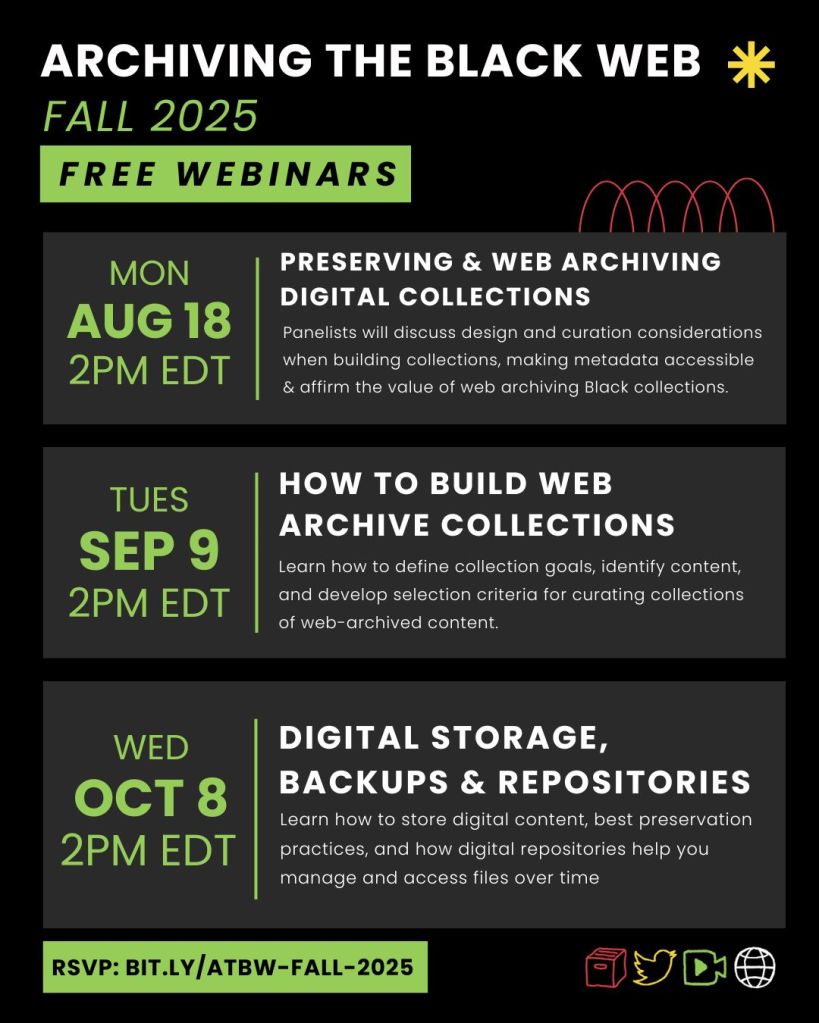
Inspired by the freedom schools of the Civil Rights Movement, Archiving the Black Web (ATBW) has organized the Freedom School for Web Archiving, a series of webinars that will train “new generations of memory workers to preserve and steward online content that reflects the Black experience… Participants will gain foundational skills in web archiving—whether for personal, community, or institutional use—and explore how this work resists erasure, disinformation, and historical revisionism.”
The Freedom School for Web Archiving is free and open to the public. To register for a webinar, go here.
As the descendant of enslaved people, I mourn the Fourth of July.
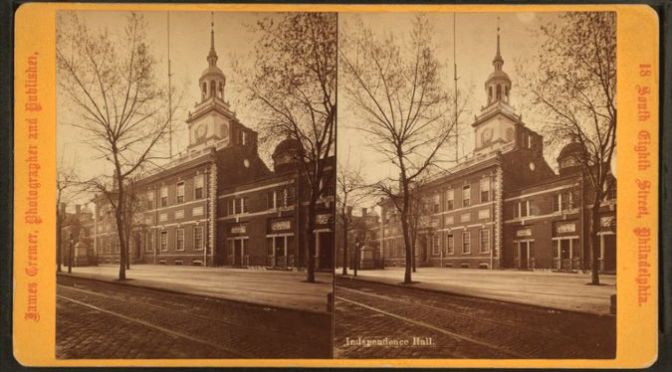
That said, Independence Hall has a prominent place in Black history.
Independence Hall is the place where the Second Continental Congress unanimously adopted the Declaration of Independence on July 4, 1776; 34 of the 56 signers, including Thomas Jefferson, enslaved Black people.
Independence Hall is the place where the U.S. Constitution, which counted enslaved people as three-fifths of a person and mandated that freedom seekers be returned to bondage, was signed.
Independence Hall is the place where, from 1850 to 1854, hearings were held to return the self-emancipated to slavery under the Fugitive Slave Act of 1850.
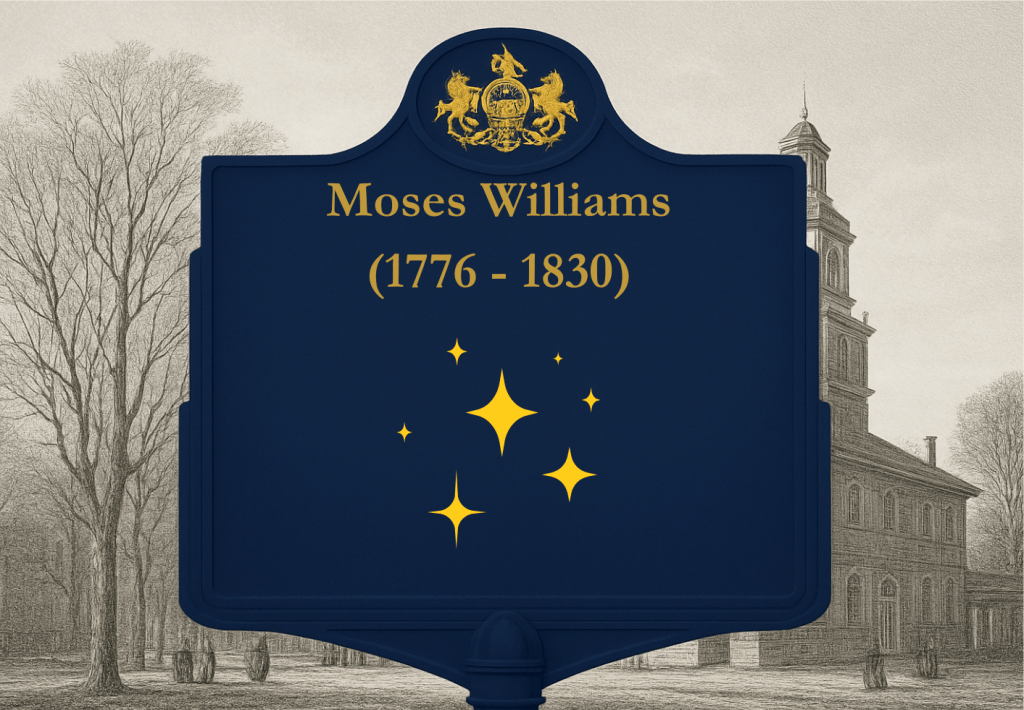
Independence Hall is the place where master silhouette artist Moses Williams worked “every day and evening.”
I have nominated Moses for a Pennsylvania historical marker. If the nomination is approved, the marker will be installed near Independence Hall in 2026.
UPDATE: My nomination was approved. Moses Williams’ historical marker will be dedicated in 2026, the 250th anniversary of his birth.
In the meantime, All That Philly Jazz Founding Director Faye Anderson will lead a walking tour, Moses Williams’ Philadelphia.
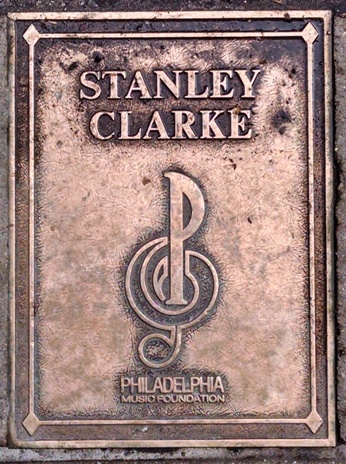
I want to close out Black Music Month with hometown hero Stanley Clarke. Born in Philadelphia on June 30, 1951, Clarke is a groundbreaking acoustic and electric bassist known for revolutionizing the role of the bass in contemporary music. His virtuosic technique, whether on acoustic upright or electric bass, helped elevate the instrument from its traditional supporting role to a dynamic lead instrument.
To celebrate Black Music Month, I will give a gallery talk highlighting some of the items in the Historical Society of Pennsylvania’s exhibit, “Message In Our Music.” The items span the 1770s to the 1970s.
It was illegal for the enslaved to learn how to read or write. Stories and cultural practices were passed down from generation to generation in the music. In the prelude to gospel legend Bobby Jones’ “Just A Closer Walk with Thee,” Maya Angelou said, “They sung us all the way out of slavery.”
Music was the first draft of Black history.
One of the items in the exhibit is a collection of spirituals sung before the Civil War, including Free At Las’, compiled by Edward Avery McIlhenny whose family enslaved hundreds of Black people.
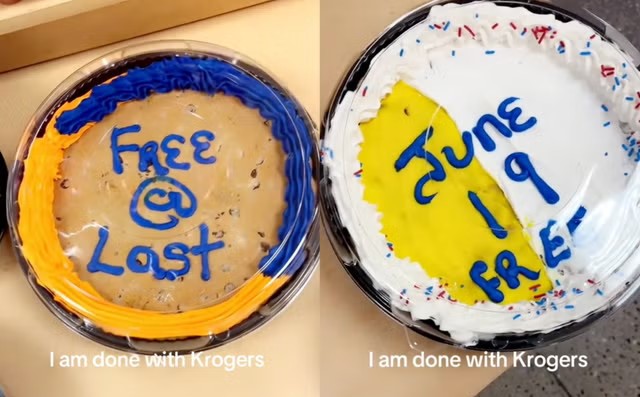
“Free at last” has resonated with African Americans for hundreds of years. The significance of the phrase was lost on Kroger. The supermarket chain came under fire for selling Juneteenth cakes decorated with AI slop.
TikToker Blaq Monalisa posted images of the cakes saying:
Y’all decorate everything else around here cute, everything else around here cute. But for Juneteenth, you wanna just throw something on a freaking cookie cake and expect someone to buy it.
The video went viral. After the backlash, Kroger said the “products have been removed” from the store.
The phrase “free at last” is known for being a prominent part of Martin Luther King’s “I Have A Dream” speech, borrowed from the title of a Negro-Spiritual song. And now the phrase, which represents a hard-fought struggle, is being featured on a supermarket cake, casually scribbled in internet shorthand.
As you will see in the “Message In Our Music” exhibit, the phrase predates Julia Perry’s 1951 composition.
My gallery talk is free and open to the public. To register, please go here.
UPDATE: Check out 6abc Action News’ report about the exhibition.
In his 1697 play “The Mourning Bride,” William Congreve wrote: “Music has charms to soothe a savage breast, to soften rocks, or bend a knotted oak.”
Ever since the ancestors were brought here in the bowels of a slave ship, songs gave voice to their suffering and longing for freedom.
The experience of the enslaved is “the wellspring of Black music” (h/t Amiri Baraka).
From Black Suffering to Black Joy, there is a message in our music.
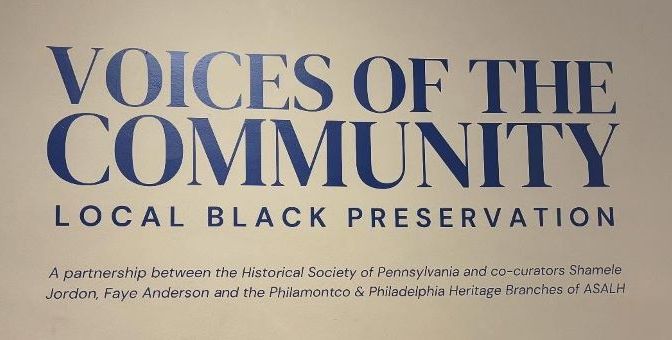
It was an honor and pleasure to tell the story of Black music using music scores, documents, photographs, books and ephemera in the archives of the Historical Society of Pennsylvania for their new exhibit, Voices of the Community: Local Black Preservation.
The exhibit “explores the history, migration, and preservation” of African American communities in Philadelphia, and Lawnside, New Jersey.
The opening reception will be held on Thursday, June 12, 2025, from 6pm to 8pm. The event is free and open to the public. To register for the reception, please go here.
Memorial Day is a time to remember and honor military personnel who paid the ultimate sacrifice to protect the nation’s freedoms and democratic ideals.
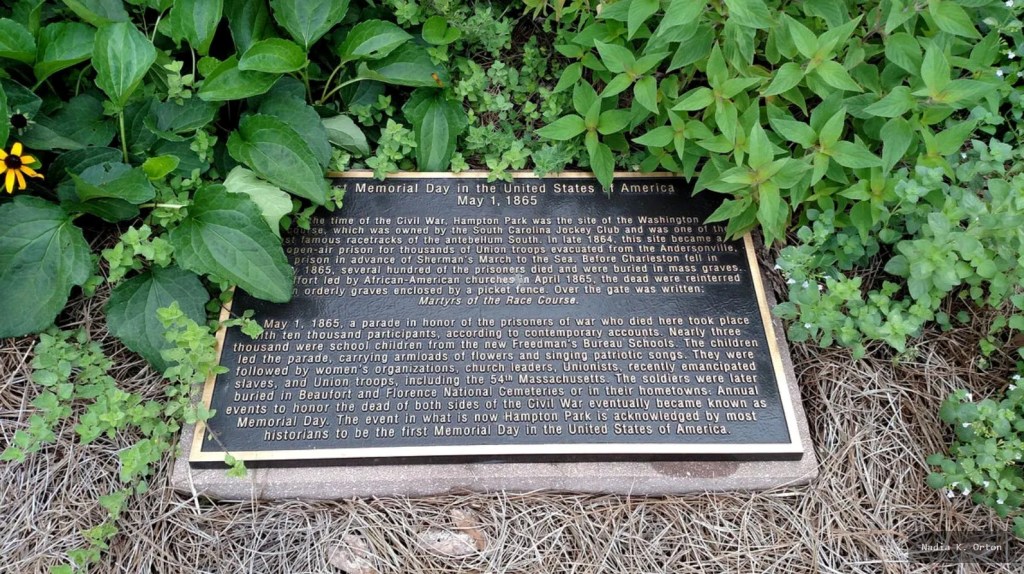
The DEI – Didn’t Earn It – crowd that’s attacking diversity, equity and inclusion likely doesn’t know the origin of Memorial Day. Originally called Decoration Day, Memorial Day was first observed on May 1, 1865 in Charleston, South Carolina.
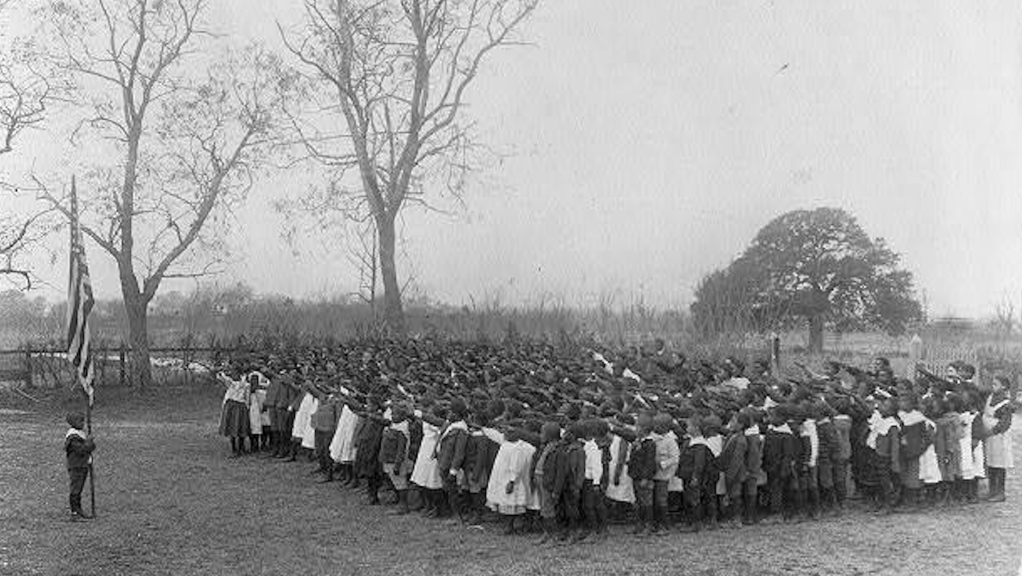
Thousands of African Americans, including formerly enslaved, the 54th Massachusetts Infantry Regiment, and the 34th and 104th United States Colored Troops, were led by children as they gathered to honor 257 Union soldiers who were buried in a mass grave behind the grandstand of the city’s Washington Race Course. The ancestors exhumed the mass grave, reburied the bodies and decorated their graves; hence, Decoration Day.
Check out the history of Memorial Day that President Trump wants to erase.
The Historical Society of Pennsylvania will unveil a new exhibit, Voices of the Community: Local Preservation in Philadelphia, on June 12, 2025. The exhibit explores the history and preservation of Black communities in Philadelphia and Lawnside, New Jersey. I am one of the community curators, along with Shamele Jordon.
The exhibit focuses on four themes:
Black Joy: Development of Lawnside, the only historically African-American incorporated municipality in the Northern United States
Sounds of Freedom, Resistance and Resilience
Fulfilling America’s Promise: Founding of the Association for the Study of African-American Life and History (ASALH)
All Power to the People: Local community efforts to preserve and restore Black Philadelphia
With the “Sounds of Freedom, Resistance and Resilience,” I use archival materials to tell the story of Black music from the 1770s to the 1970s.
Voices of the Community: Local Preservation in Philadelphia will be on view June 12, 2025 to September 26, 2025. To be added to the mailing list for the exhibit opening and my gallery talk, send your name and email address to phillyjazzapp@gmail.com.










 All That Philly Jazz