Located in Center City, Just Jazz hosted jazz and blues greats, including George Benson, McCoy Tyner, Morgana King, Bobbi Humphrey, Esther Phillips, Arthur Prysock, Les McCann, Lou Rawls, Jimmy Smith and Al Grey.
Ray Bryant and [Benny] Golson played regularly in late 1946 with bassist Gordon “Bass” Ashford. They performed one night a week at Joe Pitt’s Musical Bar, and weekends at the Caravan Republican Club, for as long as six months at a stretch.
The Red Rooster Cafe opened circa 1952. The West Philly jazz club had a seating capacity of 350. Drummer Coatesville Harris led the house band. Coatesville’s 1953 recording, “Strange Things All The Rage,” features an uncredited solo by John Coltrane.
According to the radio documentary “Tell Me How Long Trane’s Been Gone,” in 1957 Coltrane kicked his heroin habit cold turkey by day and played at the Red Rooster at night.
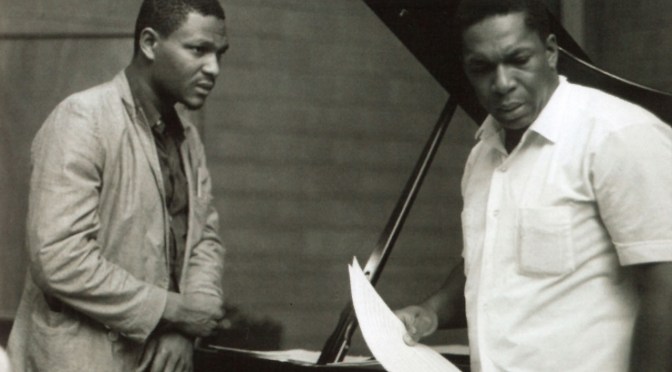
McCoy Tyner met Coltrane at the Red Rooster when he was working a gig with the Cal Massey Band. It was here that Tyner played with Trane for the first time. From a 1997 news article:
It was at the Red Rooster, a now defunct jazz club on 52nd and Market streets in West Philadelphia, where Massey, a long-time Coltrane friend, introduced Tyner to the saxophonist. Later that afternoon, the club owner asked Coltrane if he would play the next week at the club. Coltrane didn’t have a rhythm section — in fact, he didn’t have a working band — so, with Massey’s blessing, he borrowed Massey’s band, which included Tyner and Garrison.
In an essay in “Lost Shrines of Jazz,” noted author and scholar James G. Spady wrote:
Saxophonist and Coltrane collaborator Archie Shepp, hailed in the ‘60s as one of the jazz purveyors of the so-called “new thing,” reflected on Philly’s importance to him:
I don’t want to leave out Clarence “C” Sharp, who was a tremendous influence and has helped me off and on. He was one of the main teachers in the Philadelphia school. . . . The first time I heard Trane, I was with Reggie Workman. We went to hear Coltrane at the Red Rooster out in West Philly. McCoy Tyner was playing with Trane that night. He [Coltrane] had a lot of problems with his teeth. (I didn’t know this until much later.) He didn’t play much. But what he played was so unusual. I was a bit frustrated by that. I had no idea at that time just how enormous this man’s capabilities were. One of my friends said, “That’s Philly Joe, the cat that went on to play with Miles.” He played drums that night.
The Red Rooster has long since closed its doors. The building is still there. It’s the last stop on the walking tour, 52nd Street Stroll.
Watts’ Zanzibar was located on the “Golden Strip.” In the 1940s, the house band was led by tenor saxophonist Jimmy Oliver who later played with Bootsie Barnes, the Heath Brothers and John Coltrane, and recorded with Dizzy Gillespie.
In an essay in “Lost Shrines of Jazz,” noted author and scholar James G. Spady wrote:
Perhaps no institution in the city was more responsible for Philly’s bop revolution than a North Philly club named Watts’ Zanzibar, located at 1833 W. Columbia Avenue (now named Cecil B. Moore Avenue, in honor of a black attorney and 1960s Civil Rights leader in Philadelphia). It was recognized as the bop spot, the home of modern African American culture. Sonically and sartorially hip, it both nurtured and reflected bop ethics and aesthetics. The very name reflected the old and the new: Africa and America, Watts’ Zanzibar. The proprietors were brothers Richard and Robert Watts.
From 1979 to 1989, Jewel Mann-Lassiter operated her eponymous jazz club, Jewel’s, on Broad Street in North Philly. Both local and national artists played here, including Trudy Pitts and Mr. C, Kevin Eubanks, Jimmy Scott, Bootsie Barnes, Evelyn Simms, Joey DeFrancesco and Pieces of a Dream.
In 1986, the PhiladelphiaInquirer reported:
She brought in past and current greats Betty Carter, Gloria Lynne, Jimmy McGriff, Arthur Prysock, Dakota Staton, Herbie Mann. She tried out newcomers Nancy Kelly, Janice McClain. And the customers came, with Jewel’s attracting the city’s black movers and shakers as well as professional people, students from nearby Temple University and others seeking good music and good times.
Herbie Mann played there, tenor sax player Al Cohn and organist Jack McDuff. The “new Cotton Club,” Jewel likes to call her place.
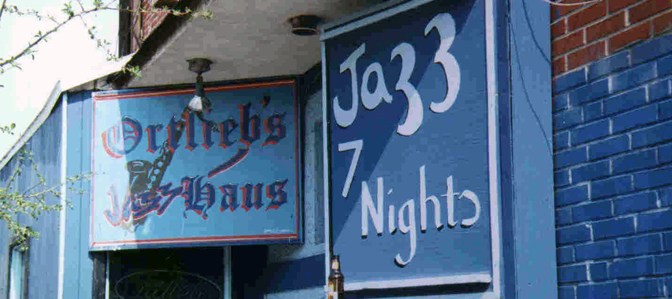
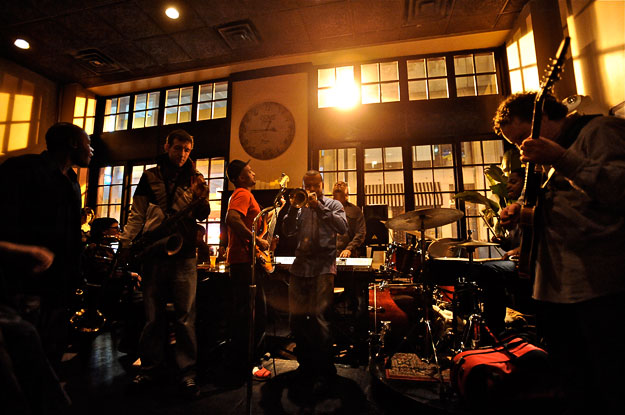
Ortlieb’s Jazzhaus was opened in September 1987 by jazz musician Pete Souders, who ran it until 2007. Under the new owner, they’re still holding their Tuesday night jam session
In a post for Hidden City Philadelphia, Bart Everts wrote:
The bar became a mainstay of the Philadelphia jazz scene, with musicians such as Bootsie Barns, Shirley Scott, Duane Eubanks, Farrid Barron, Cecil Payne and other notables taking residency. Tuesday nights featured an open jam where lesser known musicians might get to play with a legend. Throughout the 1990s, Ortlieb’s thrived as one of the few venues in the region offering jazz seven nights a week, a distinction that continued through the next decade.
Located in Old City, The Five Spot hosted Black Lily, a weekly live music showcase founded by Mercedes Martinez and Tracey Moore of the Jazzyfatnastees which ran from 2000-2005. Many local and national artists performed here, including Jill Scott, Jaguar Wright and Floetry.
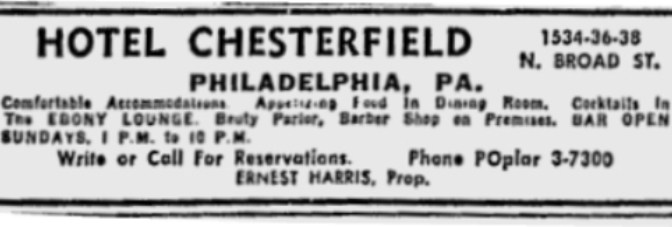
The Ebony Lounge was located in the lower level of the Chesterfield Hotel which was owned by Ernest and Evelyn Harris. Alonzo Kittrels of the Philadelphia Tribune reminisced:
[T]he Chesterfield Hotel, a landmark that deserves its own back-in-the-day column, given its significance in the lives of Black people. It was particularly important in the lives of the performers at the nearby Uptown Theater. This hotel was where many performers stayed while appearing at this venue.
In a March 28, 1960 conversation with celebrated jazz journalist Ralph J. Gleason, bassist Percy Heath reminisced about his start as a professional musician:
But I remember when Red Garland did come to Philadelphia he was singing and playing “Billie’s Bounce” and “Now’s the Time” and we hadn’t heard those things, and he was sort of an authority on Charlie Parker tunes at that time. But there were an awful lot of promising musicians around Philadelphia. I really started with a trio. At that time we used to play in little cocktail bars and there was hotel there, the Philadelphia Chesterfield Hotel, they had a lounge. We played in there quite a bit and then we’d go around to Wilmington, Delaware, and play some club down there.
Conversations in Jazz: The Ralph J. Gleason Interviews is available on Amazon.com.
The Philadelphia Clef Club dates back to the golden age of Philly jazz. In 1966, it was formally organized as the social arm of Union Local 274, the black musicians union, whose members included Dizzy Gillespie, John Coltrane, Benny Golson, Bill Doggett, the Heath Brothers, Jimmy Smith and Nina Simone.
Over the years, the Clef Club has had five locations, including Broad and Carpenter Streets, and 13th Street and Washington Avenue. The Philadelphia Clef Club of Jazz and Performing Arts moved into its current location on the Avenue of the Arts in 1995. This construction fence told part of the story of the house that jazz built.
For information about the 20th anniversary schedule of events, visit www.clefclubofjazz.org.








 All That Philly Jazz