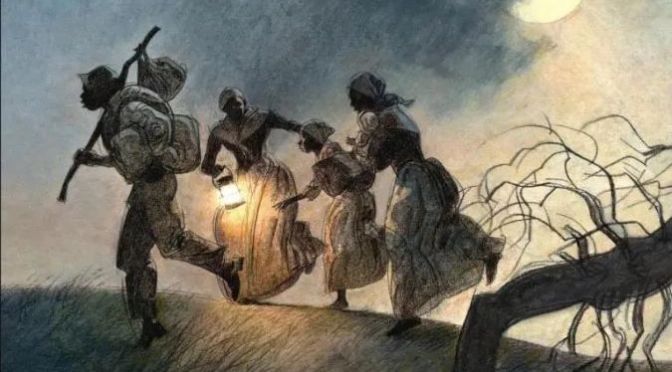
September is International Underground Railroad Month, a celebration of the history and legacy of the Underground Railroad. Events highlight stories of the self-emancipators who used a covert network of antislavery activists and safe havens to escape bondage.
Frederick Douglass embarked on his journey to freedom on September 3, 1838. Harriet Tubman began her escape on September 17, 1849.
Archival records show that William Still, Father of the Underground Railroad, held meetings at the Johnson House, an Underground Railroad station in Philadelphia. The Johnson House Historic Site is a National Historic Landmark, the highest designation for a historic property.
This International Underground Railroad Month, the Johnson House will host a party with a purpose, Jammin’ in the Garden 2025: A Celebration of Music and Community, on Saturday, September 20, 2025, from 4:00pm to 7:00pm. The fundraiser will support their preservation work and the Center for Social Advocacy.
In my recent opinion piece published in the Philadelphia Inquirer, I wrote: “The review of content at the President’s House is an Orwellian descent into censorship. It’s interpretive panels and books today. Will it be National Park Service videos and trading cards tomorrow?
Two days later, President Trump applied new pressure on Smithsonian interpretive texts and exhibitions. The Washington Post reported that White House officials are conducting a comprehensive review of Smithsonian museums:
The White House will launch a sweeping review of Smithsonian exhibitions, collections and operations ahead of America’s 250th-birthday celebrations next year — the first time the Trump administration has detailed steps to scrutinize the institution, which officials say should reflect the president’s call to restore “truth and sanity” to American history.
The vetting process would include reviewing public-facing and online content, curatorial processes and guidelines, exhibition planning and collection use, according to a letter sent to Smithsonian Secretary Lonnie G. Bunch III on Tuesday and signed by White House senior associate Lindsey Halligan, Domestic Policy Council Director Vince Hale and White House Office of Management and Budget chief Russell Vought.
[…]
The letter states that the initial review will focus on eight museums: the National Museum of American History, the National Museum of Natural History, the National Museum of African American History and Culture, the National Museum of the American Indian, the National Air and Space Museum, the Smithsonian American Art Museum, the National Portrait Gallery and the Hirshhorn Museum and Sculpture Garden.
For nearly two centuries, the Smithsonian has served as a globally renowned model of scholarship and public engagement. Smithsonian museums and sites are beloved, trusted destinations for millions of visitors annually looking to gain knowledge, spark curiosity, and find connection. The administration is maligning the expertise and autonomy of an institution that represents the pinnacle of museum and scholarly practice.
This pressure on Smithsonian history museums, in particular, reveals the administration’s ambition to delegitimize the work of the history field and to rob the public of its ability to learn from the past. Sound historical practice depends upon meticulous research of a wide array of sources, open-minded embrace of complexity and ambiguity, and a willingness to update understandings as new information arises. Time and again, Americans have said that they want our country’s full story. Censoring and manipulating content to fit a predetermined, triumphalist narrative is the antithesis of historical practice and a disservice to us all.
Smithsonian exhibitions are grounded in scholarly research. The ahistorical, willfully ignorant Trump wants to impose his interpretation of American history.
Truth is, Trump knows little, if anything, about Black history. He thought Frederick Douglass was still alive in 2017.
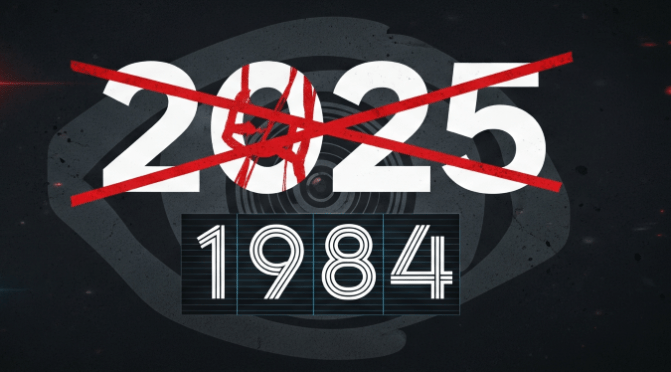
While gleaning clues from Project 2025, Trump’s whitewashing of American history is foretold in George Orwell’s 1984:
The Party told you to reject the evidence of your eyes and ears. It was their final, most essential command.
[…]
And if all others accepted the lie which the Party imposed—if all records told the same tale—then the lie passed into history and became truth.
Trump’s Big Lie that the Smithsonian had “come under the influence of a divisive, race-centered ideology” is straight out of the dictator’s playbook.
I was a consultant on a project in Egypt in the 1990s. As I walked around Cairo, I was struck that Egyptians look like “high yellow” Africans. I later read that when Frederick Douglass visited Egypt in 1887, he observed, “The great mass of the people I have yet seen would in America be classified as mulattoes and negroes.”
Here I leave our learned authorities, as to the resemblance of the Egyptians to negroes.
It is not in my power, in a discourse of this sort, to adduce more than a very small part of the testimony in support of a near relationship between the present enslaved and degraded negroes, and the ancient highly civilized and wonderfully endowed Egyptians. Sufficient has already been adduced, to show a marked similarity in regard to features, hair, color, and I doubt not that the philologist can find equal similarity in the structures of their languages. In view of the foregoing, while it may not be claimed that the ancient Egyptians were negroes,—viz:—answering, in all respects, to the nations and tribes ranged under the general appellation, negro; still, it may safely be affirmed, that a strong affinity and a direct relationship may be claimed by the negro race, to THAT GRANDEST OF ALL THE NATIONS OF ANTIQUITY, THE BUILDERS OF THE PYRAMIDS.
We were stripped of our origin story by enslavers. So from activists to artists, ancient Egypt has fueled the imagination of African Americans.
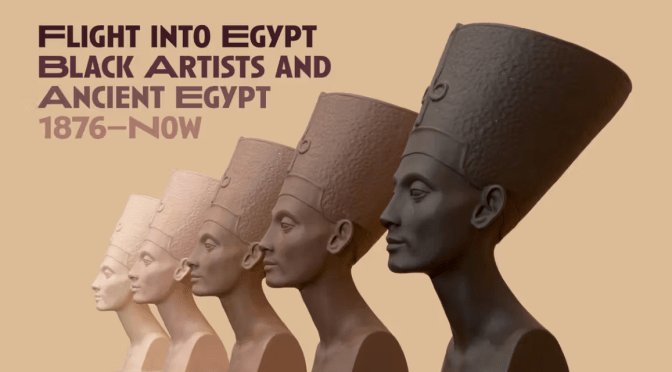
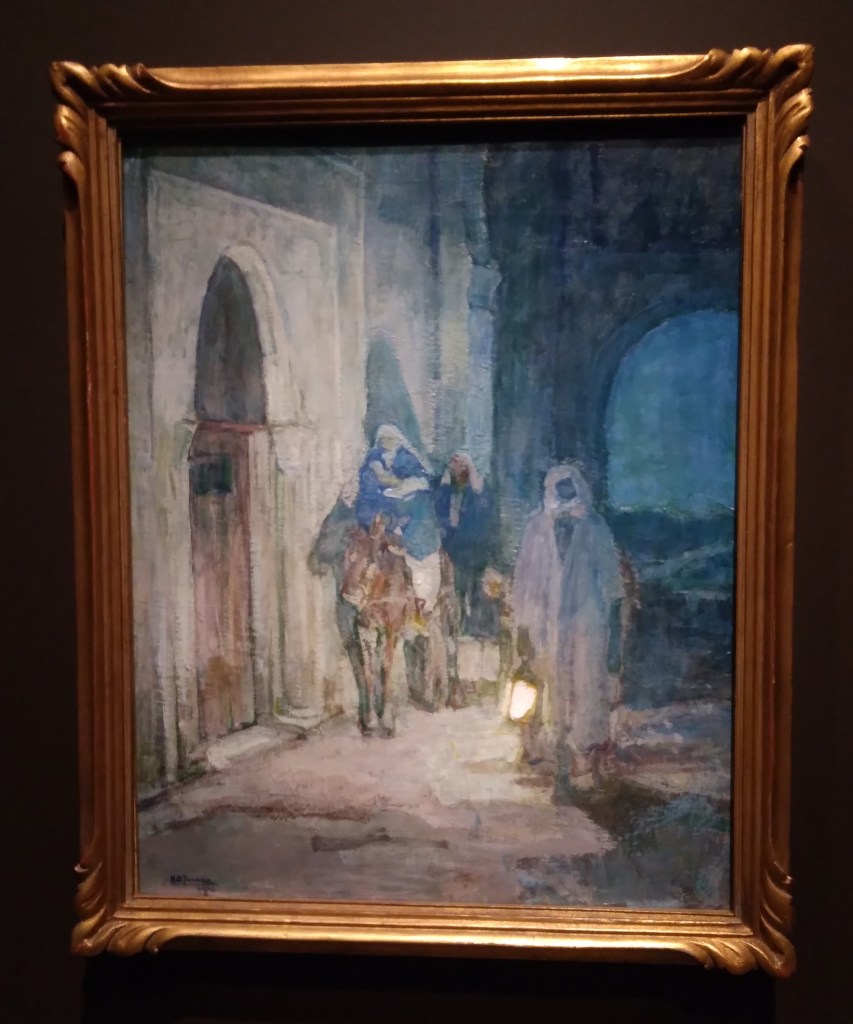
I recently checked out a new exhibition at the Metropolitan Museum of Art, “Flight into Egypt: Black Artists and Ancient Egypt, 1876–Now,” a multimedia exploration of how Black artists have drawn inspiration from Egypt. The exhibition features 200 works of art, including the Sun Ra documentary, “Space is the Place,” John W. Mosely photographs taken at the Philadelphia Pyramid Club, and Henry O. Tanner’s “Flight into Egypt.”
On the day of my visit, there was a creative convening of some of the artists included in the exhibition.
The program closed with a live performance of “Egypt, Egypt” by rapper and DJ The Egyptian Lover.
“Flight into Egypt: Black Artists and Ancient Egypt, 1876–Now” is on view through February 17, 2025.
International Underground Railroad Month is a designated time to celebrate the history and legacy of the Underground Railroad. Observed annually in September, the month highlights the courage and resilience of the enslaved who used a covert network of antislavery activists and safe havens to escape bondage.
The State of Maryland proclaimed September as International Underground Railroad Month in 2019:
Governor Larry Hogan today proclaimed September as International Underground Railroad Month, which recognizes Maryland as the most powerful destination for authentic Underground Railroad history. It also commemorates all those involved in the Underground Railroad, including Maryland’s courageous Harriet Tubman, the brilliant orator Frederick Douglass, and thousands of freedom seekers
Frederick Douglass embarked on his journey to freedom on September 3, 1838. Harriet Tubman began her escape on September 17, 1849.
Like most enslaved people, Frederick Douglass did not know his date of birth. He assumed he was born in 1818. Douglass chose to celebrate his birthday on February 14. The first Douglass Day was observed in 1897.
In December, Philadelphia250 announced the winners of its “Leave a Legacy” competition. The three finalists will each receive $250,000. The projects focus on immigrants, Special Olympics, and toys for children. Philadelphia250, without a single historian on its staff or board of directors, claims they are “setting the stage for Philly’s most high-profile event in decades.” African Americans make up 40 percent of the City’s population but they will play a bit part in official celebrations.
Philadelphia250 whitewashing the country’s origin story is of a piece with Florida Gov. Ron DeSantis’ rejection of the College Board’s Advanced Placement course in African American studies. To honor Douglass’ legacy of resistance and agitation, I will file Right-to-Know requests to try to find out why the organization that is planning Philadelphia’s Fourth of July semiquincentennial celebration excluded Thomas Jefferson’s enslaved valet, Robert Hemings, who was with him at Declaration (Graff) House where Jefferson wrote the nation’s founding document. The nonprofit is not subject to Pennsylvania’s open records law but some of its board members are.
Still in his early teens, James Forten was a powder boy during the Revolutionary War. The Museum of the American Revolution’s new exhibition, “Black Founders: The Forten Family of Philadelphia,” chronicles the life of this revolutionary figure who was present at the first public reading of the Declaration of Independence on July 8, 1776.
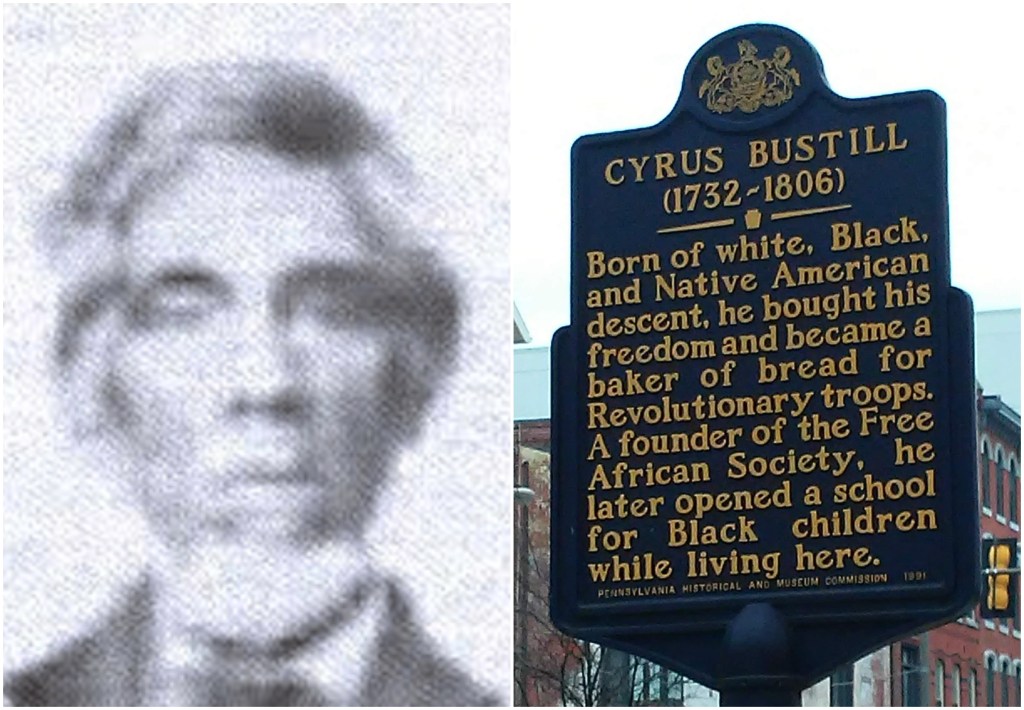
Like Forten, Crispus Attucks, the first person to die in the American Revolution, and Cyrus Bustill, who served in the Continental Army, are invisible to Philadelphia250.
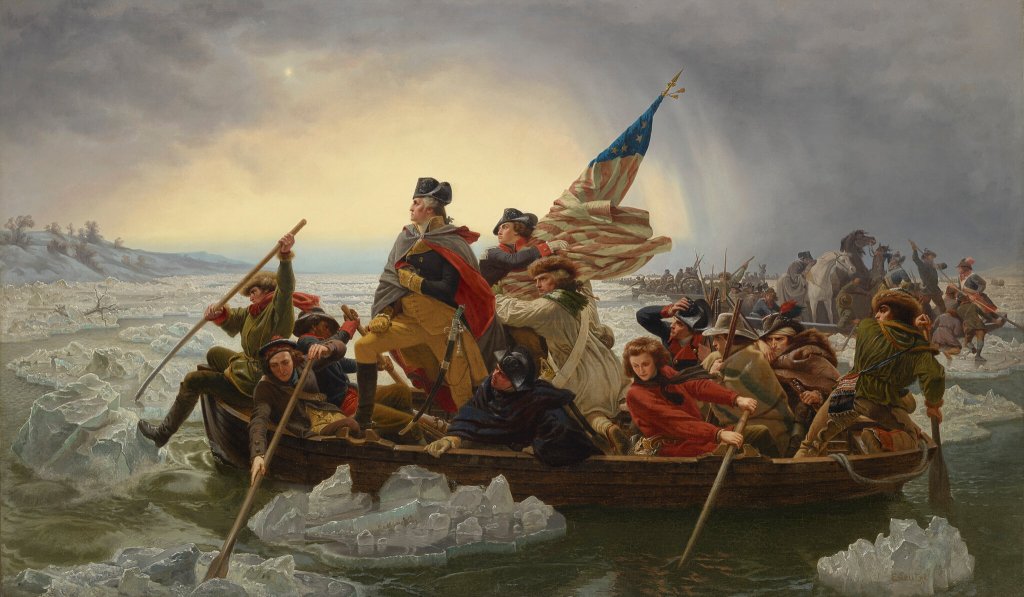
George Washington’s enslaved valet and aide-de-camp, William Lee, who is depicted in Emanuel Leutze’s painting, “Washington Crossing the Delaware,” is not represented.
Black Revolutionary War patriots are not honored by Philadelphia250. Instead, they awarded Smith Memorial Playground & Playhouse $250,000 to teach children about “revolutionary action figures.” The action figures include wannabe political candidate Ya Fav Trashman.
You can’t make this stuff up. The struggle continues.
The world will come to Philadelphia in 2026 to commemorate the 250th anniversary of the Declaration of Independence. In an op-ed published in The Philadelphia Inquirer, I wrote that rather than celebrate slaveholders (34 of the 56 Signers, including Thomas Jefferson, owned slaves), we should celebrate resistance to slavery as personified by Douglass.
The renowned orator’s presence in Philadelphia dates back to his escape from bondage. He arrived by steamboat from Wilmington in 1838. We can bring Frederick Douglass to life by staging public readings of his iconic speech at places and sites associated with the abolitionist, including Independence Hall, Mother Bethel AME Church, Concert Hall, the Union League of Philadelphia and Camp William Penn. Douglass was delivering a lecture at National Hall when the news came about John Brown’s raid on Harpers Ferry.
At the same time, we should heed the advice that Douglass gave a Black activist shortly before his death: “Agitate! Agitate! Agitate!” Agitation means we resist Philadelphia insiders who presume to tell us how the United States Semiquincentennial should be commemorated. We should follow the blueprint of the July 4th Coalition which, in 1976, rallied between 30,000 and 40,000 people to protest the lack of diversity in official celebrations and the whitewashing of history.








 All That Philly Jazz