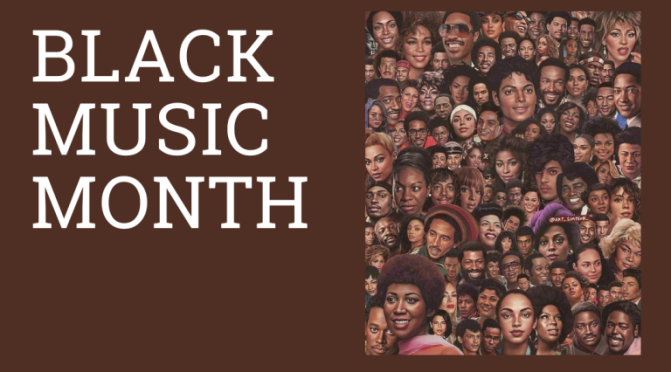
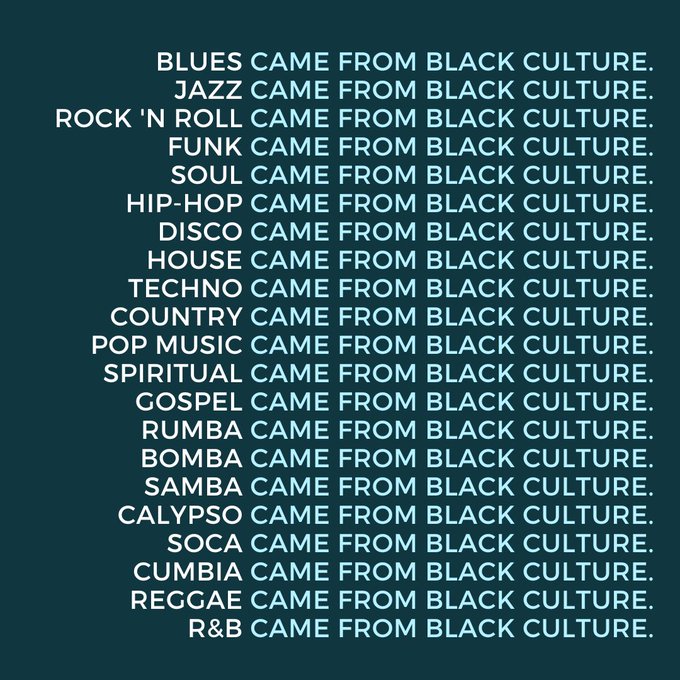
Countless books, dissertations, studies, news articles and social media posts have been written about Black culture and Black music. It is said a picture is worth 1000 words. In an era when 1000 words are TL;DR, this image says it all: Black culture is the root; every popular music genre is the fruit.
Black Music Month is the brainchild of music mogul and Rock and Roll Hall of Fame inductee Kenny Gamble, radio personality and media coach Dyana Williams and Cleveland DJ Ed Wright.
The first celebration was held on June 7, 1979. President Jimmy Carter and First Lady Rosalynn Carter hosted a dinner and concert on the White House’s South Lawn. Performers included Chuck Berry, Andraé Crouch, Billy Eckstine, Evelyn “Champagne” King and Max Roach.
Every president since Carter has issued a proclamation recognizing the contributions of African American musicians. In his 2024 proclamation, President Joe Biden said:
During Black Music Month, we celebrate the Black artists and creatives whose work has so often been a tidal wave of change — not only by defining the American songbook and culture but also by capturing our greatest hopes for the future and pushing us to march forward together.
Our Nation has only recognized Black Music Month for 45 years, but its legacy stretches back to our country’s earliest days. Black music began when enslaved people, who were cruelly prohibited from communicating in their native languages, found ways to express themselves through music. Set to the sound of African rhythms, they captured the inhumanity, tragedy, and toll that America’s original sin took on their lives while also telling the stories of their hopes and dreams, faith and spirituality, and love and purpose. Ever since, Black performers have carried on that tradition of using art to break down barriers, create sacred spaces for expression, and give voice to the promise of America for all Americans. They have created and shaped some of our most beloved genres of music — like folk, blues, jazz, hip-hop, country, rock and roll, gospel, spirituals, and R&B. Black music has set the beat of the Civil Rights Movement; expressed the inherent dignity and captured the pride and power of Black communities; and held a mirror to the good, the bad, and the truth of our Nation.
NPR is celebrating Black Music Month with an all-women lineup of Tiny Desk concerts. Featured performers include Chaka Khan, Lakecia Benjamin, Meshell Ndegeocello, Tems, Tierra Whack, SWV and Flo Milli.
Tiny Desk host and series producer Bobby Carter said:
This Black Music Month, we’re giving the ladies their flowers! We’re releasing nine Tiny Desk concerts from Black women who’ve paved the way for what we hear today in Black music and others who are carving out their own paths. All of them are queens in their own right who represent a beautiful array of genres, generations and walks of life.
If you hear any noise, it ain’t the boys. It’s the ladies at NPR’s Tiny Desk Concert.
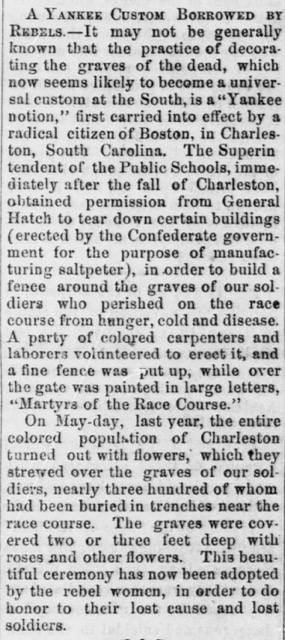
Originally called Decoration Day, Congress established Memorial Day as the last Monday in May in 1968. The undertold history of Memorial Day dates back to the Civil War.
First observed in Charleston, South Carolina on May 1, 1865, thousands of African Americans, including the formerly enslaved, 54th Massachusetts Infantry Regiment, and 34th and 104th United States Colored Troops, were led by children as they gathered to honor 257 Union soldiers who were buried in a mass grave on Washington Race Course which was used as a Confederate prison camp.
The ancestors exhumed the mass grave, reburied the bodies and decorated their graves; hence, Decoration Day.
Women in Jazz Month is celebrated annually in March. It is a time to recognize and honor the contributions of female vocalists, composers, bandleaders, and instrumentalists. Ella Fitzgerald and Sarah Vaughan are jazz icons who are ensconced in the GRAMMY Hall of Fame.
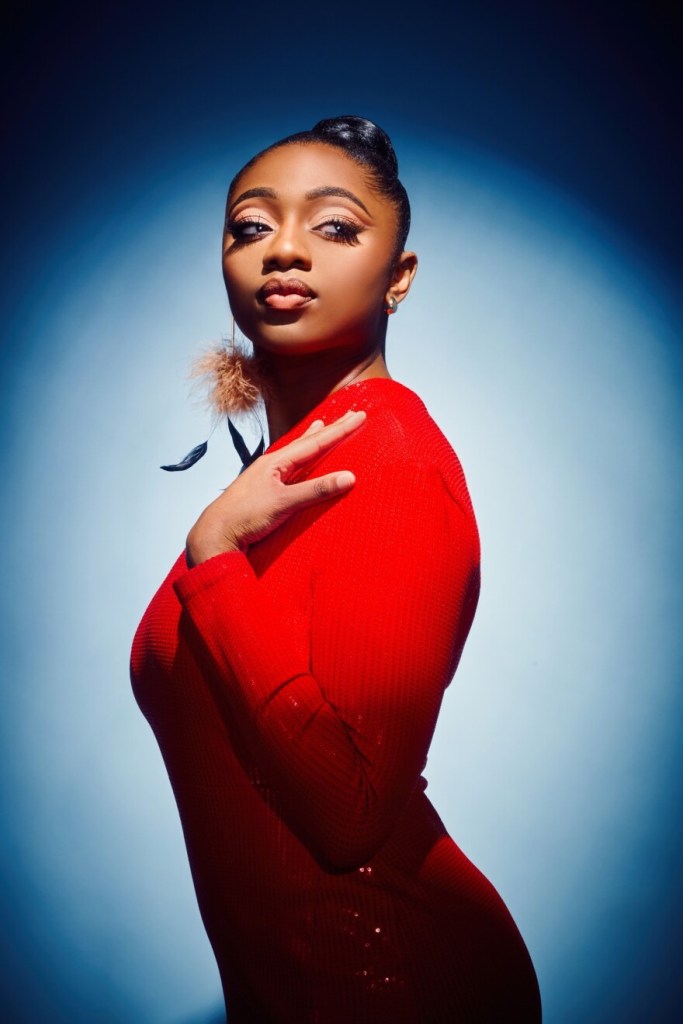
With a voice that evokes Ella and Sarah, 24-year-old Samara Joy McLendon has already achieved GRAMMY recognition.
Samara Joy won the 2023 GRAMMY awards for Best Jazz Vocal Album and Best New Artist for her second album, “Linger Awhile.”
Samara Joy won the 2024 GRAMMY for Best Jazz Performance for “Tight.”
Samara Joy co-wrote the soulful and defiant “Why I’m Here” featured in the Netflix film “Shirley.”
With a voice that belies her age, listening to Samara Joy is, well, a joy.
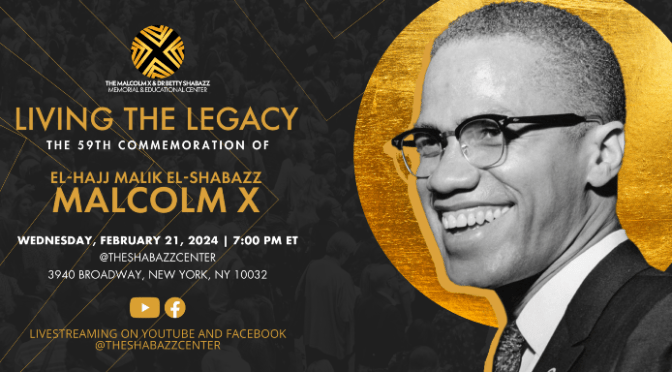
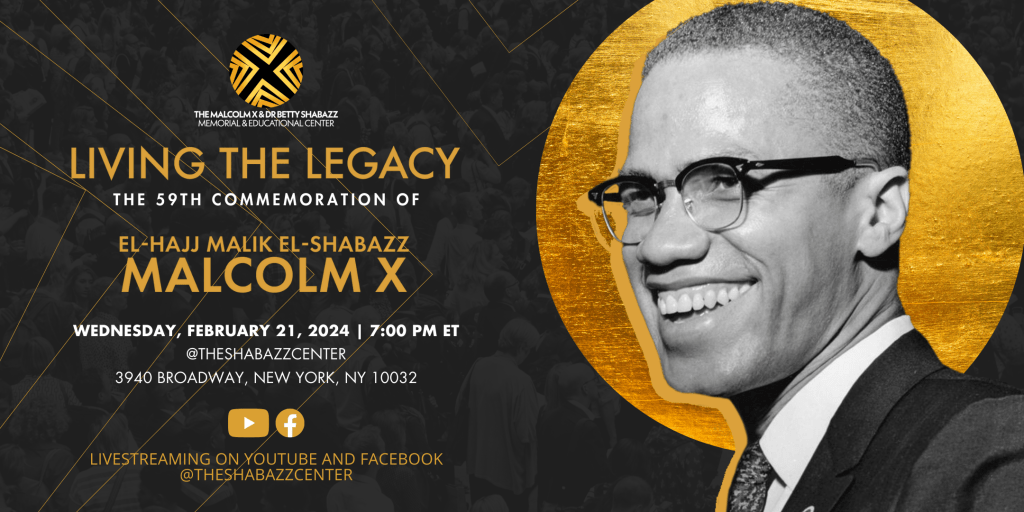
Brother Malcolm X was gunned down at the Audubon Ballroom on February 21, 1965.
The Malcolm X and Dr. Betty Shabazz Memorial and Educational Center is hosting an evening of prayers, performances and reflections to commemorate the 59th anniversary of the assassination of “our own black shining prince,” El-Hajj Malik El-Shabazz.
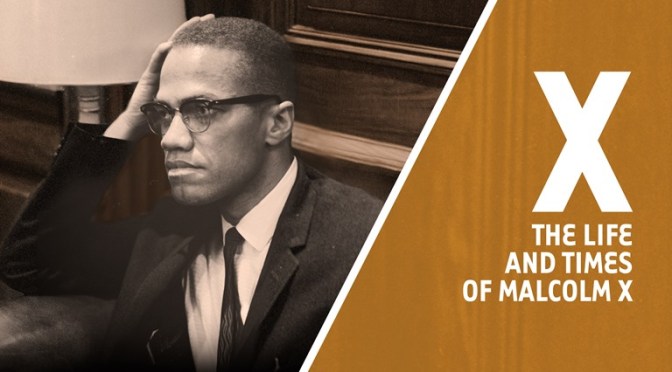
February is the shortest month but it packs a cultural wallop. I cannot think of a better way to kick off Black History Month than with “X: The Life and Times of Malcolm X.” Composed by Anthony Davis (music), Thulani Davis (libretto) and Christopher Davis (story), the groundbreaking opera was workshopped at the Trocadero Theater in 1984 and premiered at the American Music Theater Festival in 1985 (the official premiere was at the New York City Opera in 1986).
The Metropolitan Opera’s staging reimagines Malcolm “as an Everyman whose story transcends time and space.” From the New York Times’ review:
The epigraph of Anthony Davis’s opera “X: The Life and Times of Malcolm X” is a quote from an interview in which, asked about the cost of freedom, Malcolm responds, “The cost of freedom is death.”
That tension — between hope and reality, between liberation and limitation — courses through a new production of “X” that opened at the Metropolitan Opera on Friday, in the work’s company premiere. This staging dreams of a better future, with a towering Afrofuturist spaceship that, at the beginning, appears to be calling Malcolm X home. But the beam-me-up rays of light are pulled away to reveal a floating proscenium, gilded at the edges and decorated with a landscape mural. It is a replica of the podium at the Audubon Ballroom in Manhattan, where he was assassinated on Feb. 21, 1965.
Presented by Great Performances at the Met, “X: The Life and Times of Malcolm X” premieres beginning February 4, 2024 (check local listings) on PBS and PBS App.
Martin Luther King Jr. was born on January 15, 1929 in Atlanta, Georgia.
The Apollo Theater is hosting its 18th annual celebration of Dr. King’s heavenly birthday, “Uptown Hall: The Inconvenient King,” in partnership with WNYC and March on Washington Film Festival. A panel discussion focusing on Dr. King’s enduring legacy on the culture, and the context and complexity of racial discrimination, will be followed by music, spoken word and other forms of creative expression.
The celebration will be presented live at the Apollo and available via livestream on Sunday, January 14, 2024 at 2:00 pm ET.
It’s beginning to look a lot like Christmas. While this is my least favorite time of the year, I love Christmas blues.
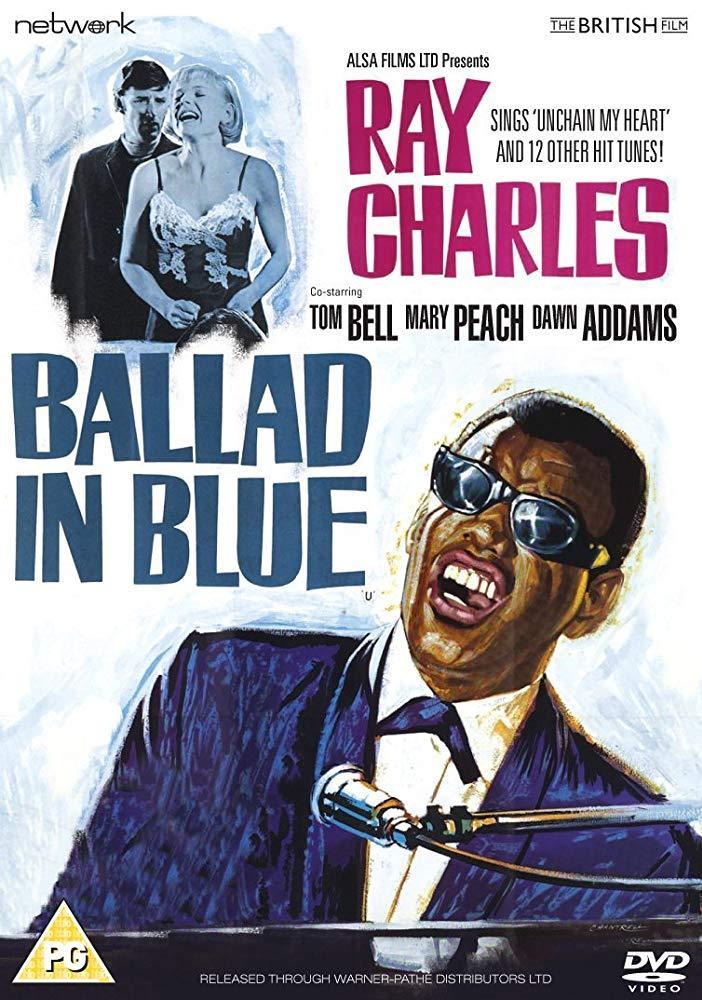
I recently learned that long before the film “Ray.” Ray Charles made his film debut in 1966. Brother Ray starred as himself in the movie “Blues for Lovers” (later retitled “Ballad in Blue”).
Ray Charles and his Orchestra lit up the big screen with 13 numbers, including “I Got a Woman,” “Unchain My Heart” and “What’d I Say.”
If anyone can chase my Christmas blues away, it’s Ray Charles.
Black sacred places matter. From Bishop Richard Allen preaching at Mother Bethel, Denmark Vesey planning a slave rebellion at Mother Emanuel, and Minister Malcolm X teaching at Muhammad’s Temple of Islam No. 12, Black sacred places have been the heart and soul of the African American community.
Dr. Henry Louis Gates Jr., an advisor to the African American Cultural Heritage Action Fund, observed: “No pillar of the African American community has been more central to its history, identity, and social justice vision than the ‘Black Church.’”
Preserving Black Churches is a project of the African American Cultural Heritage Action Fund which is led by National Trust for Historic Preservation Senior Vice President Brent Leggs. In an interview with Robin Givhan of the Washington Post, Leggs said:
It’s critically important that we preserve the physical evidence of our past, that we preserve the historic buildings that are imbued with legacy and memory, that we preserve the profound stories that are embodied in the walls, landscapes, and cemeteries stewarded by African American churches.
Rooted in the Black experience, jazz both has been a sanctuary and found sanctuary in the church. Now a jazz standard, Duke Ellington’s “Come Sunday” is a celebration of the African American religious tradition.
The Ku Klux Klan’s bombing of Birmingham’s 16th Street Baptist Church which killed four Black children moved John Coltrane, the grandson of a prominent African Methodist Episcopal minister, to compose “Alabama.”
Partners for Sacred Places and the Preservation Alliance for Greater Philadelphia recently launched the Philadelphia Fund for Black Sacred Places (PFBSP). The three-year project will expand public access to purpose-built religious properties of architectural, historical or cultural significance, regardless of denomination, that are operated and owned by an active community of faith. PFBSP will provide planning and programming grants, as well as capital grants to support Black congregations’ efforts to maintain their properties.
The public’s response to the murder of George Floyd in June 2020 gave focus to the unanswered needs of our city’s Black communities. Religious properties have space that can be developed to respond to these needs in creative and innovative ways after worship. The houses of worship that are selected to participate in this grant program will provide welcoming and affirming space to the public that will benefit all of our communities.
PFBSP will provide up to $10,000 in planning grants and up to $250,000 in 1:2 matching grants ($2 granted for each $1 raised) for the planning and execution of projects that expand equitable access to Black-led historic sacred places. Eligibility guidelines are available here. The application deadline is January 31, 2024.
Register here for the November 17 info session on completing the application. If you have any questions, contact PFBSP Director Betsy Ivey by email or by phone at (215) 567-3234 x29.










 All That Philly Jazz