Category Archives: Advocacy

March on Washington: 60 Years Later

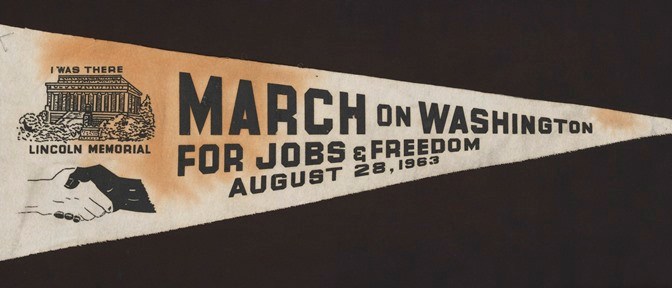
Thousands gathered in the nation’s capitol to mark the 60th anniversary of the March on Washington for Jobs and Freedom. Organizers said the march was “not a commemoration, but a continuation” of the work of Dr. Martin Luther King Jr.
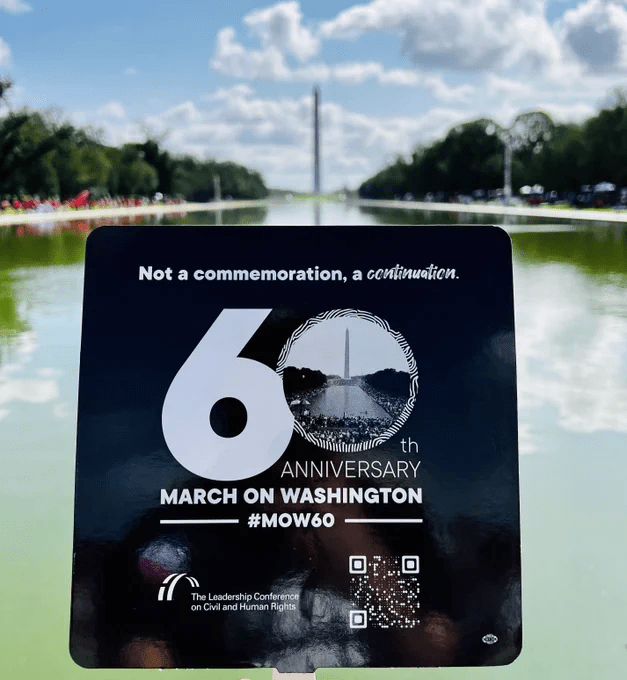
The march was convened by Rev. Al Sharpton, founder and president of the National Action Network and Martin Luther King III, board chairman of the Drum Major Institute. Co-Chairs include the NAACP, Leadership Conference on Civil and Human Rights, National Coalition on Black Civic Participation and the National Urban League.

To commemorate the 60th anniversary of the March on Washington, the Smithsonian’s National Museum of African American History and Culture has on display the original three-page “I Have a Dream” speech that Dr. King delivered on August 28, 1963. NMAAHC Director Kevin Young said:

The words of all its speakers resonate six decades later, and we serve as witnesses to the bravery and dedication of its organizers. To be able to show visitors the copy of the “I Have a Dream” speech King read and improvised from while at the podium is an honor and privilege.

Dr. King’s speech will be on display until September 18, 2023 in NMAAHC’s Defending Freedom, Defining Freedom: The Era of Segregation 1876–1968 Gallery.

Slavery Did Not Benefit Black People

The arrival of the “White Lion” at Point Comfort (Hampton), Virginia on August 20, 1619 marks the beginning of 250 years of chattel slavery in America. The slave ship carried “20 and odd” Africans who were traded to the English colonists for food.

Hungry for attention, Florida Gov. Ron DeSantis pushed through new Black history standards that instruct students that enslaved Africans developed skills that, “in some instances, could be applied for their personal benefit.” DeSantis offered to debate Vice President Kamala Harris on whether slavery benefited Black people. Harris told DeSantis to take a seat.

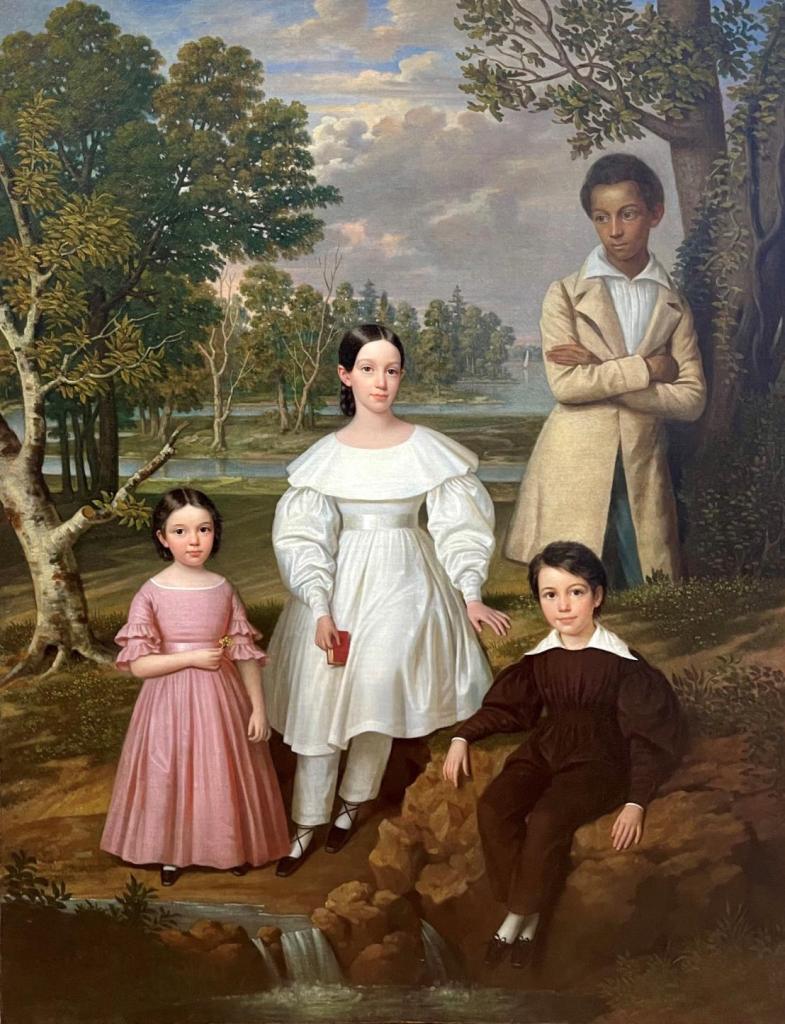
The erasure of Black history is American history. The Metropolitan Museum of Art recently acquired a 19th century portrait from which an enslaved child had been erased. The New York Times reports:

For many years, a 19th century painting of three white children in a Louisiana landscape held a secret. Beneath a layer of overpaint meant to look like the sky: the figure of an enslaved youth. Covered up for reasons that remain unspecified, the image of the young man of African descent was erased from the work around the turn of the last century, and languished for decades in attics and a museum basement.

Through conservation and historical research, the children and their enslaved caretaker have been identified.

“Bélizaire and the Frey Children” will be on view at The Met in the fall.

Vote for Harriet Tubman Statue Design

The Office of Arts, Culture and the Creative Economy (OACCE) has unveiled the proposed designs for the statue honoring Harriet Tubman. As I told the Philadelphia Inquirer, it was a needlessly bumpy process to get to this point, but I think Philadelphia can be proud of the visions presented by the five semi-finalists: Vinnie Bagwell, Richard Blake, Tanda Francis, Alvin Pettit and Basil Watson. Their designs reflect the lived experience of being Black in America and the continuing struggle for racial justice.

More than 100 people attended the virtual public design presentation but it’s not too late to have your voice heard. The public is invited to view, rank and comment on the proposed designs. OACCE will share the comments and rankings with the artists who will have an opportunity to revise their design prior to final review by the Advisory Committee.

I won’t rank the designs but I want to comment on the design that captured my imagination, Tanda Francis’ “Together in Freedom.” I was struck by the monumental scale of Harriet Tubman’s face and the potential of the polished panels.

Harriet did not arrive in Philadelphia fully formed. The panels of “Together in Freedom” could breathe life into the places and people who together helped transform Harriet from a thankful self-emancipated woman to the “Moses of Her People.”

Harriet’s Philadelphia story could be told by incorporating historic documents such as William Still’s journal which includes an entry about Harriet’s family, showing places where she lived and worked, and highlighting financiers and agents of the Underground Railroad, including Robert Purvis, Sarah Buchanan and Henrietta Duterte.

The Public Input Survey is open until September 1, 2023 September 5, 2023 at 11:59pm EST. Click here to view the designs and take the survey.

Harriet Tubman in Public Memory

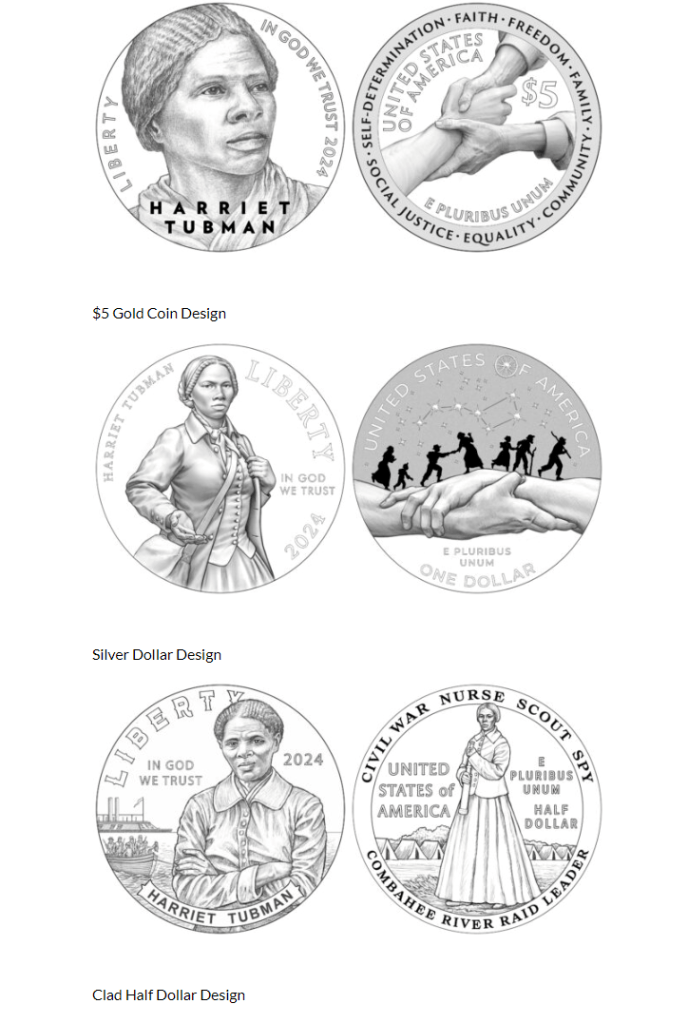
In 2022, Congress passed the ‘‘Harriet Tubman Bicentennial Commemorative Coin Act’’ which required the Secretary of the Treasury to mint and issue commemorative coins in recognition of the 200th anniversary of Harriet Tubman’s birth. Earlier this month, the United States Mint joined representatives from the Harriet Tubman Home and the National Underground Railroad Freedom Center to unveil the designs for the 2024 Harriet Tubman Bicentennial Commemorative Coins.

The designs will be featured on a $5 gold coin, a $1 silver coin and a half-dollar coin. All sales will include a surcharge of $35, $10 and $5, respectively. The surcharges will be paid equally to the National Underground Railroad Freedom Center and the Harriet Tubman Home “for the purpose of accomplishing and advancing their missions.”

Woodrow Keown Jr., president & COO of the National Underground Railroad Freedom Center, said:

Harriet Tubman is one of the most revered figures in American history and now she is being rightly enshrined among our nation’s pantheon of heroes. She will soon be indelibly etched into our collective heritage as a triumphant, resilient champion of freedom that reflects the true diversity of those who have contributed so significantly to our nation’s democracy.

In the birthplace of our nation’s democracy, the Office of Arts, Culture and the Creative Economy will hold a Public Design Presentation Meeting for Philadelphia’s permanent Harriet Tubman statue. The public is invited to join the virtual meeting during which the five semi-finalist artists will “present their design images, renderings, and/or models and hear them describe their vision for the Harriet Tubman statue.”

Harriet Tubman will be the first statue of a Black female historical figure in the City’s vast public art collection. RSVP here for the Zoom meeting on Thursday, August 3 from 5:30pm to 7:30pm.

Pops is Still Tops

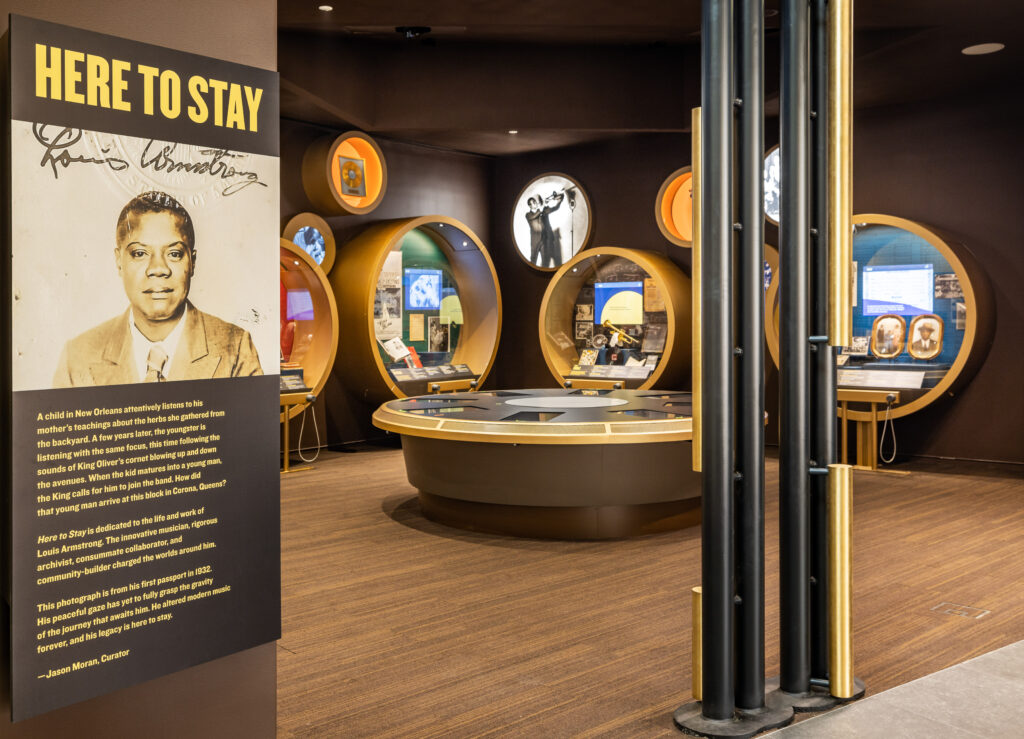
This year marks the 20th anniversary of the opening of the Louis Armstrong House Museum, a National Historic Landmark that housed the archive that was lovingly curated by Lucille Wilson Armstrong.

With over 60,000 items, the Louis Armstrong Archive is the largest for one jazz musician. On July 6, the Louis Armstrong Center opened across from the house in Corona, Queens where Pops lived from 1943 until his death on July 6, 1971.

Check out CBS Sunday Morning’s tour of the Louis Armstrong Center.

Black Music is Black History

During Black Music Month, Herb Spivak, co-owner of two of Philadelphia’s legendary jazz clubs, the Showboat and Bijou Café, and I lamented how the annual celebration is increasingly focusing on today’s popular music while ignoring the roots. Like all Black music genres, hip-hop flows from a tree with very deep roots.

I’m a doer so I suggested that we write an opinion piece. We did. Our op-ed was published online and in the print edition of the Philadelphia Inquirer.

Here’s an excerpt:

There was a place outside in Washington Square known as Congo Square, where free and enslaved Black people would gather to sing and dance to the music of West African cultures. Bandleader, composer, and Philly native Francis Johnson performed across the United States and was the first Black musician to tour Europe with a band in the 1800s. Soon after, he was followed by singer Elizabeth Taylor Greenfield, who also lived in Philadelphia.

The flood of Black music out of Philadelphia continued into the 1900s, as Dizzy Gillespie and Charlie Parker improvised bebop at the Down Beat on South 11th Street, Kenneth Gamble and Leon Huff founded Philadelphia International Records, and the Roots played hip-hop on South Street.

[…]

Black music history matters. As Marcus Garvey, founder of the Universal Negro Improvement Association, said, “A people without the knowledge of their past history, origin and culture is like a tree without roots.” Black music has always been more than entertainment. From the “sorrow songs” of the enslaved to the protest songs of the Black Lives Matter movement, Black music is a first draft of history.

Read more

Happy 5th of July

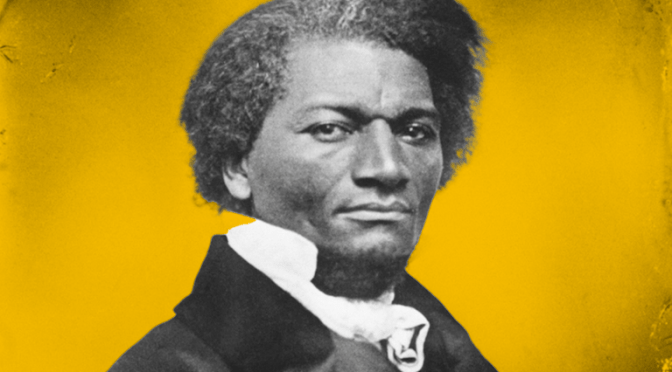
“What, to the slave, is the Fourth of July,” asked Frederick Douglass in a speech at an Independence Day celebration in Rochester, New York on July 5, 1852.

In a 6-to-3 vote, the Supreme Court ended affirmative action. In her dissenting opinion, Associate Justice Ketanji Brown Jackson wrote:

Given the lengthy history of state-sponsored race-based preferences in America, to say that anyone is now victimized if a college considers whether that legacy of discrimination has unequally advantaged its applicants fails to acknowledge the well-documented “intergenerational transmission of inequality” that still plagues our citizenry.

What, to the descendants of the enslaved, is Independence Day? “This Fourth of July is yours, not mine.”

Black Music History

All good things must come to an end and so it is with Black Music Appreciation Month. I closed out the annual celebration with Herb Spivak, co-owner of two of Philadelphia’s legendary jazz clubs, the Showboat and Bijou Café. As a club owner, Herb played host to jazz greats from Cannonball Adderley to Joe Zawinul.

John Coltrane recorded a live album at the Showboat in 1963.

Grover Washington Jr. recorded a live album at the Bijou Café in 1977.

Herb is our special guest at Lee Morgan’s heavenly birthday celebration on July 10, 2023. Click here to register for the free community event.

Lee Morgan Birthday Celebration

Legendary jazz trumpeter Lee Morgan was born in Philadelphia on July 10, 1938. To commemorate Lee’s heavenly birthday, All That Philly Jazz and the Free Library of Philadelphia are cohosting a community celebration.

The community is invited to share memories of Lee Morgan, West Philly’s famed commercial and entertainment district, “the Strip,” and the Aqua Lounge.

The Aqua Lounge is where Lee gave his last hometown performance in October 1971, four months before his tragic death. Lee’s state historical marker will be installed in front of the former location of the jazz club on International Jazz Day 2024.

The community celebration will be held on Monday, July 10, 2-4pm, at the Lucien E. Blackwell West Philadelphia Regional Library, 125 S 52nd St. To register for the free event, please go here.

Black Music Month 2023

In 1979, President Carter proclaimed June as “Black Music Month.” Every president since Bill Clinton has continued the tradition, including President Joe Biden. In his 2023 proclamation, Biden said:

During Black Music Month, we pay homage to legends of American music, who have composed the soundtrack of American life. Their creativity has given rise to distinctly American art forms that influence contemporary music worldwide and sing to the soul of the American experience.

I want to kick off African American Music Month by sharing NEA National Heritage Fellow’s tribute to one such legend, soul singer and songwriter William Bell. The National Heritage Fellowship is a lifetime honor presented to master folk and traditional artists by the National Endowment for the Arts.