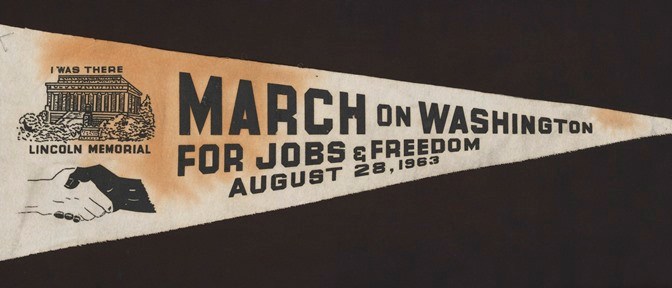
Sixty-one years ago on August 28, 1963, more than 250,000 people gathered for the March on Washington for Jobs and Freedom. Jazz musicians were the vanguard of the movement for freedom and civil rights, a fact acknowledged by Dr. Martin Luther King Jr. at the 1964 Berlin Jazz Festival.
Long before Beyoncé was born, tenor saxophonist Sonny Rollins recorded “The Freedom Suite” which featured Oscar Pettiford on bass and Max Roach on drums.
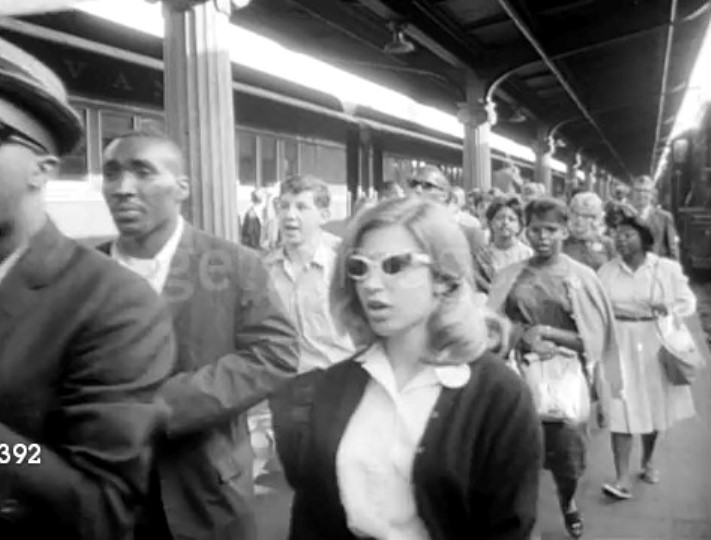
From Louis Armstrong’s “Black and Blue” to Charles Mingus’ “Fables of Faubus,” jazz musicians talked the talk and walked the walk. Trumpeter Lee Morgan and Max Roach were among the musicians on board the Freedom Train from New York City to the March on Washington for Jobs and Freedom.
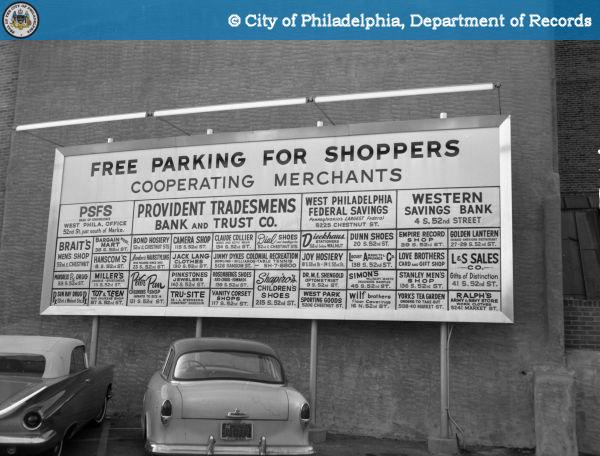
West Philly’s Main Street, 52nd Street, is a historic cultural and commercial corridor. In its heyday, banks, movie theaters, restaurants, bakeries, shoe stores, dress shops, night clubs, jazz venues and other businesses lined “the Strip” from Arch Street to Baltimore Avenue.
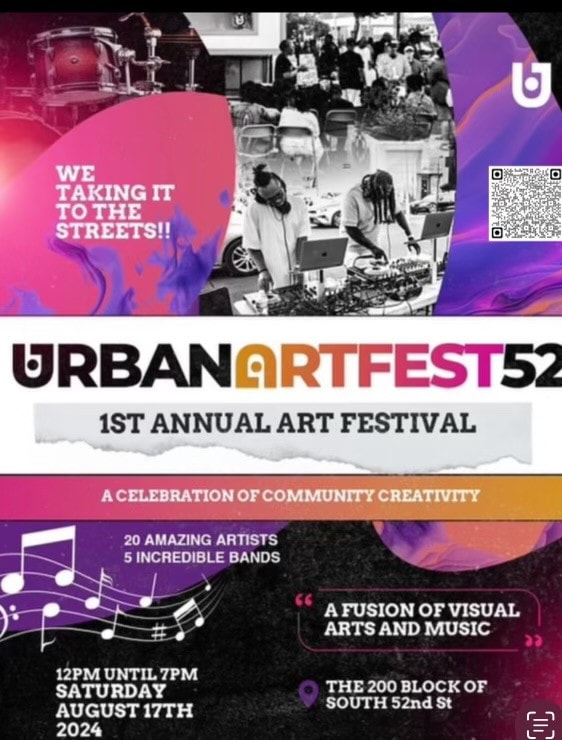
The African Cultural Art Forum, Urban Art Gallery, Family Survival and 52nd St Cultural Art Corridor Coalition will present Community Art Day x Urban Art Fest 52 on Saturday, August 17, 2024. The event will be held on the five-block stretch of 52nd Street from Walnut St. to Spruce St. that was the heart of the Strip back in the day.
The family friendly art festival will feature African art, workshops, fashion show, guest speakers, live performances, including jazz, funk and soul, and a virtual reality game by XVR Lounge.
Zen S, marketing and operations specialist for the African Cultural Art Forum, said:
Community Art Day is a collaboration of businesses on the corridor that want 52nd Street to thrive. Basically, it’s us making noise. We are here. We support each other. We also give back to the community to show the culture and respect that the community values. We want the same thing that Mayor Cherelle Parker wants: a cleaner, greener and safer 52nd Street.
Community Art Day x Urban Art Fest 52 is free and open to the public.
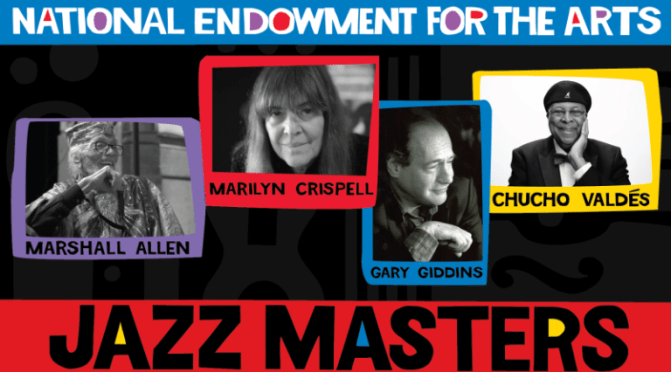
Chucho Valdés is a pianist, bandleader, composer and arranger, and influential figure in modern Afro-Cuban jazz.
Gary Giddins is a jazz critic and biographer, and recipient of the A.B. Spellman NEA Jazz Masters Award for Jazz Advocacy.
NEA Chair Maria Rosario Jackson, PhD, said:
We are delighted to welcome these four luminaries to the ranks of NEA Jazz Masters—they have each in their own way played a crucial role in the nurturing and development of this art form and demonstrate the immense diversity and creativity found in jazz today.
Each honoree will receive an award of $25,000 and celebrated at a free tribute concert held in collaboration with the John F. Kennedy Center for the Performing Arts on April 26, 2025.
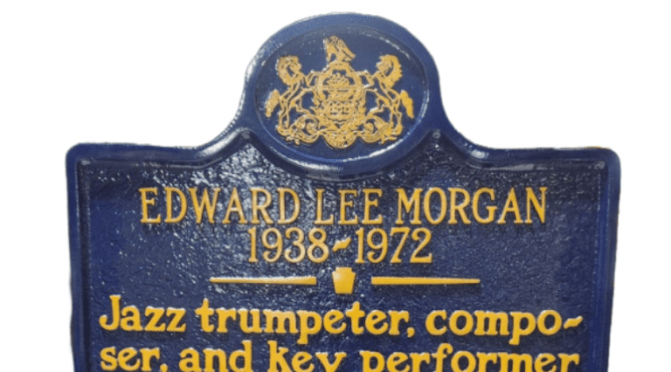
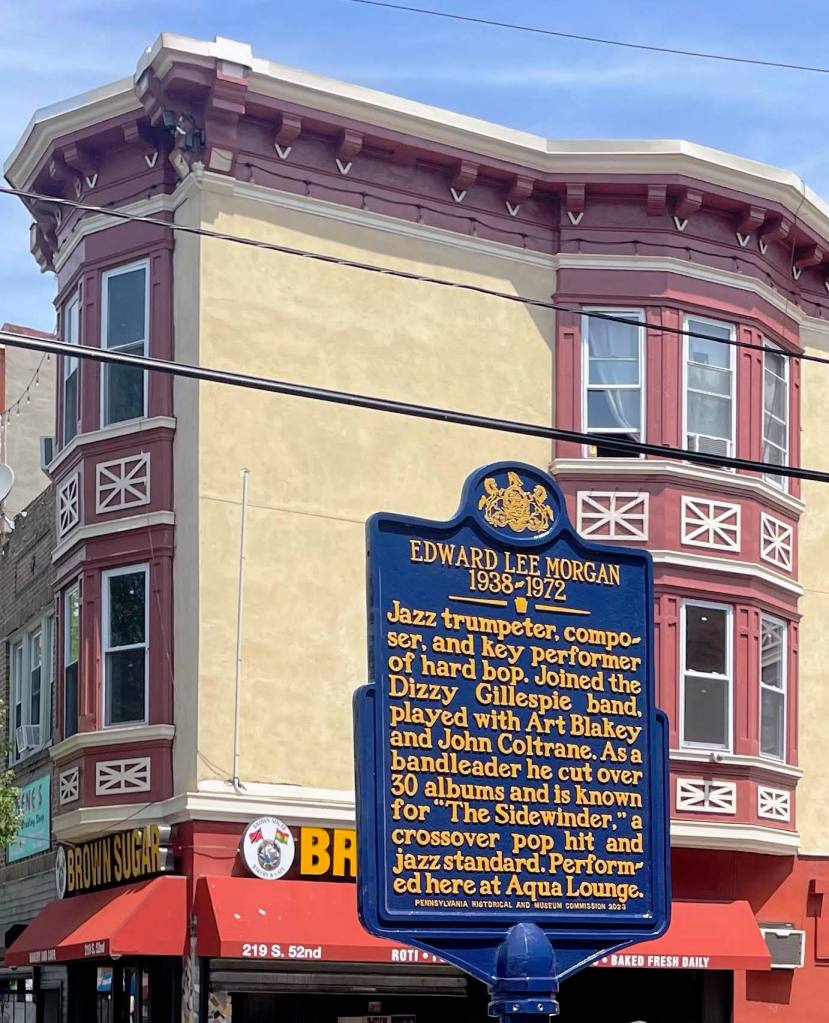
Edward “Lee” Morgan was born in Philadelphia on July 10, 1938. Since his last heavenly birthday, Lee has been honored with a Pennsylvania historical marker.
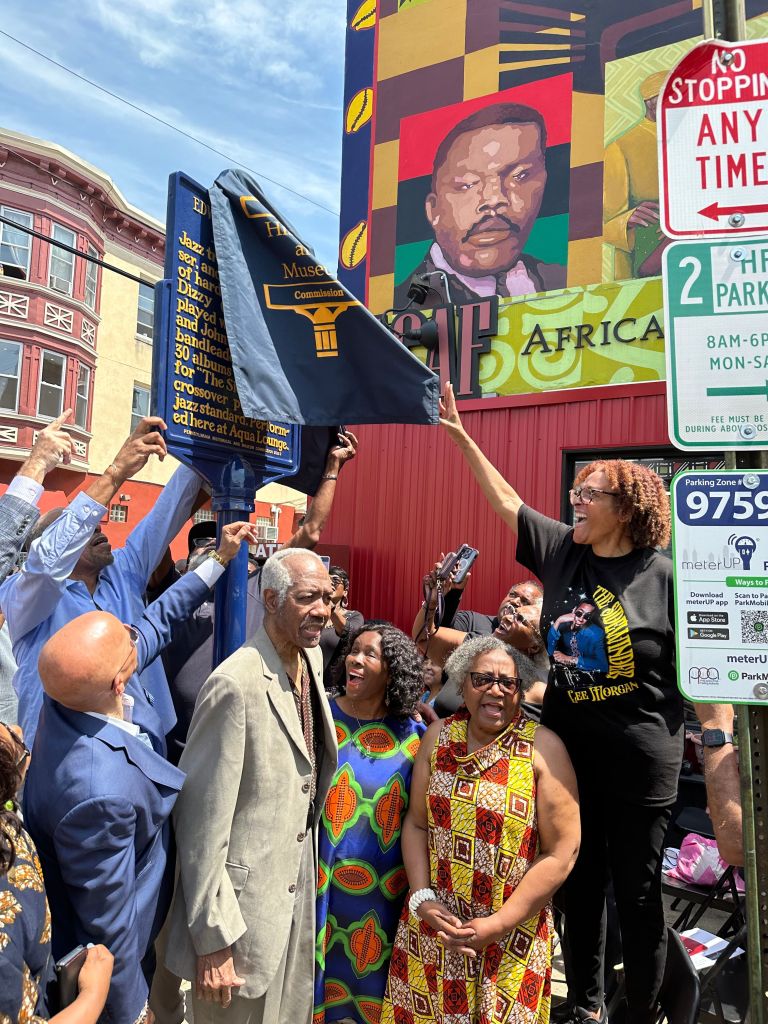
At the dedication ceremony, Lee received commendations from Governor Josh Shapiro, Senator Bob Casey, Representatives Brendan Boyle and Dwight Evans, state Senator Vincent Hughes, City Councilmember Jamie Gauthier and Mayor Cherelle L. Parker.
Lee’s masterpiece, “The Sidewinder,” was added to the Library of Congress’ National Recording Registry on April 16, 2024.
To celebrate Lee’s 86th birthday, I proposed the legendary trumpeter for a Google Doodle. If Google accepts my proposal, Lee will join his former bandleader, Dizzy Gillespie, who was honored with a Google Doodle on October 21, 2010.
As Black Music Month comes to a close, I want to focus on the message in our music. I believe to my soul that music can transform lives and inspire ordinary citizens to get involved in the fight for justice.
From the sorrow songs of the enslaved to right now, Black music has been the soundtrack of movements for social change.
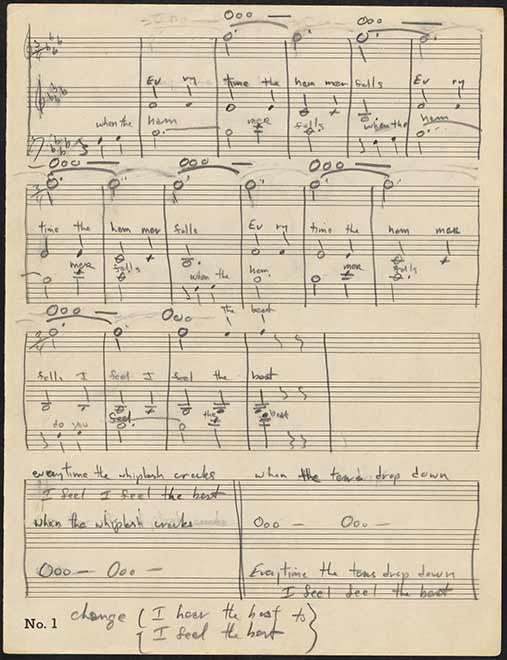
This year marks the centennial of the birth of drummer, composer, bandleader and activist Max Roach. His groundbreaking album, “We Insist! Max Roach’s Freedom Now Suite,” was influenced by the Emancipation Proclamation and the emerging Civil Rights Movement.
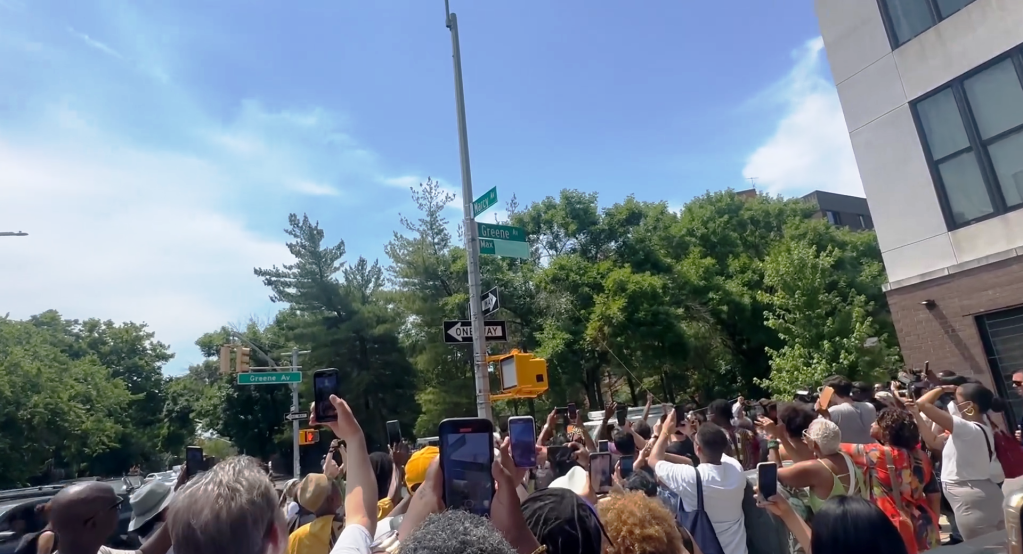
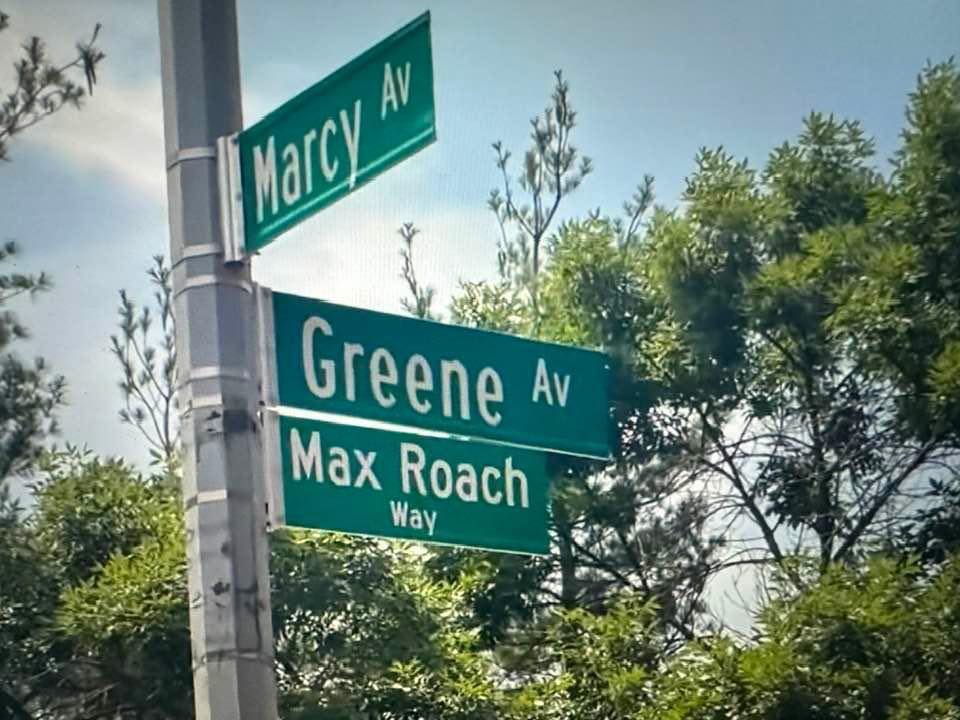
Born in North Carolina, Roach’s family moved to Bedford-Stuyvesant, a neighborhood in Brooklyn, when he was four. He grew up near the corner of Greene and Marcy avenues where the City of New York has co-named a street for the iconic drummer. Fittingly, the “Max Roach Way” co-naming ceremony was held on Juneteenth, Freedom Day.
The Library of Congress recently opened the David M. Rubenstein Treasures Gallery.
The permanent gallery, Collecting Memories: Treasures from the Library of Congress, features more than 120 items from across the Library’s holdings. The depository for the Max Roach Papers, the manuscript page for “We Insist!” is on display in the Treasures Gallery.
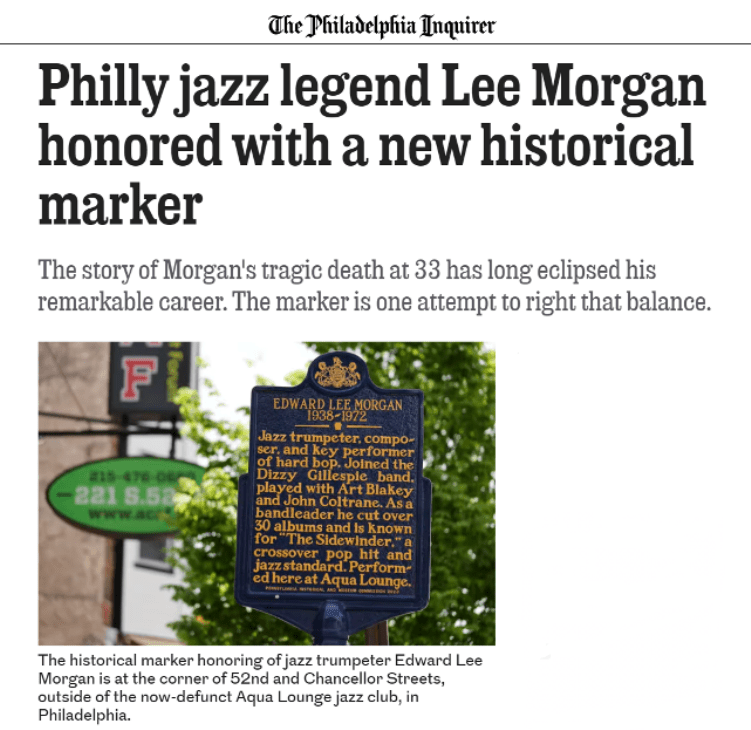
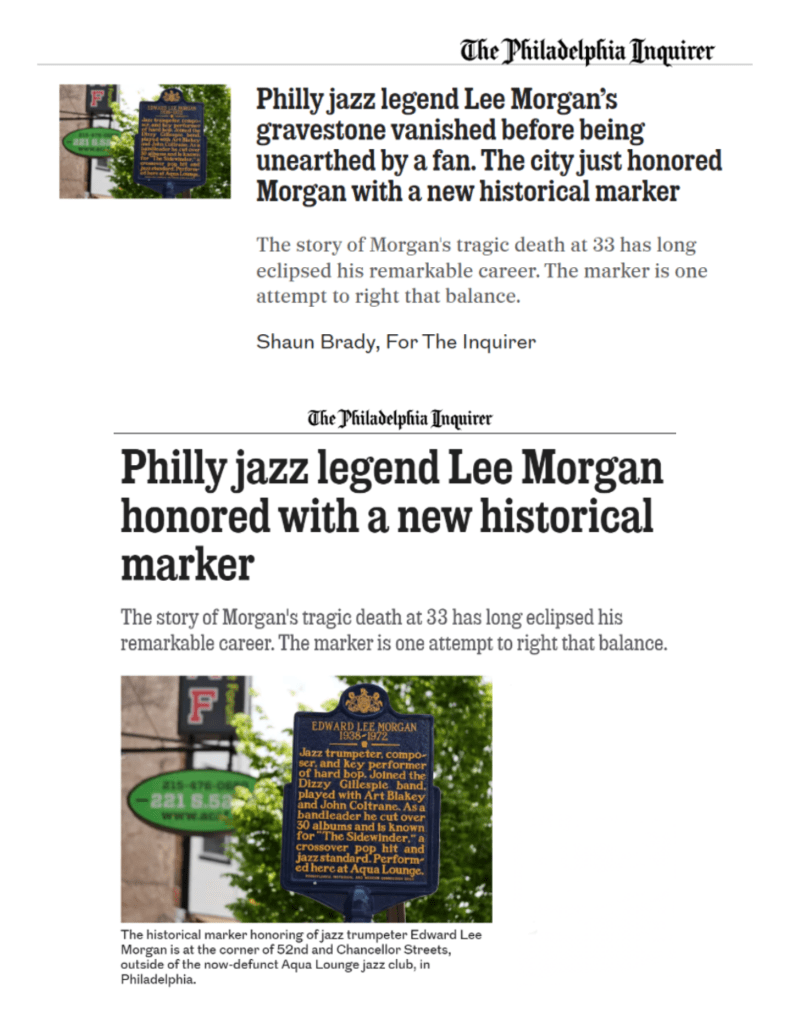
Two days after Lee Morgan’s historical marker was unveiled, The Philadelphia Inquirer published this false and defamatory headline.
Writing for The Inquirer, Shaun Brady dug up fake news that Lee Morgan’s gravesite had “vanished” and a white fan “unearthed” it. Brady did not interview Lee’s family members. In an email, his editor, Bedatri Choudhury, wrote, “In retrospect, he should’ve spoken to Mr. Morgan’s family.”
A headline captures the main point of a story. With nine of the 17 paragraphs devoted to a white man who has no connection with the Morgan family, the “White Savior” was the main point of the story, not the celebration of Black Excellence.
The headline is both false and wrong. The “city” did not honor Lee with a historical marker. The program is administered by the Pennsylvania Historical Museum and Commission, a state agency.
Lee is interred alongside his father, Otto Morgan. There was a reckless disregard of whether the claim was false. After I complained that Brady’s “different angle” damaged the reputation of identifiable family members, the headline was changed.
The Inquirer also retracted the false claim: “This story has been updated to clarify that the grave of Lee Morgan was never lost, but simply covered over.”
The retraction begs the question: If Lee’s gravesite was never lost, what was the point of Brady’s story? Lee Morgan played second fiddle to a random white man.
The headline was changed but the damage to family members’ reputation has already been done. The body of the story will live forever on the Internet.
I want The Inquirer‘s journalistic negligence to become a case study about the importance of fact-checking and editing.
An African proverb says, “Until the lion tells the story, the hunter will always be the hero.” On International Jazz Day, we told the story of Lee Morgan, a story of Black Excellence.
Even when we tell our story, a white journalist lionizes a white man in his report on the dedication of Edward Lee Morgan’s historical marker.
Writing for The Philadelphia Inquirer, Shaun Brady dug up the sensationalistic claim that a white fan “discovered” Lee Morgan’s “lost gravesite.” The “discovery” was made after the fan wandered around White Chapel Memorial Park during the coronaviruspandemic. When he finally asked for help, the groundskeeper took him to the location. The grave marker was covered by overgrown grass and vegetation at a time when there was a worker shortage across the board.
The “discovery” was so sensational that nine of the 17 paragraphs in Brady’s story are about a mediocre white man. That is more than the combined number of paragraphs about the legendary Black trumpeter, the Black family who loves him, the Black musicians who knew him, the Black property owners who preserved the memory of the Aqua Lounge, and the Black woman who nominated Lee Morgan for a historical marker and listing of “The Sidewinder” on the Library of Congress’ National Recording Registry.
It was lost on Brady that he should have fact-checked the claim. I brought his journalistic negligence to the attention of his editor, Bedatri Choudhury. Her response: “In retrospect, he should’ve spoken to Mr. Morgan’s family.”
In a recent profile of longtime jazz producer Leo Gadson, Michelle Lyu wrote:
Today, the narrative of jazz is shaped by an essentially white worldview; one which separates it from the people who made the major contribution to its creation and continuance.
This white worldview turned a joyous celebration of Black Excellence into a white savior story. In so doing, The Inquirer tarnished Lee Morgan’s legacy and damaged the reputation of his family members.
Malcolm X is memorialized on the mural that overlooks Lee Morgan’s historical marker. Our Black Shining Prince warned us about newspapers.
The false claim published in The Inquirer has readers “hating” a Black family for not knowing the location of Lee Morgan’s gravesite and “loving” a white man who discovered a gravesite that was not lost.
Lee Morgan’s family will correct the defamatory story by any means necessary.
The Inquirer also published a retraction: “This story has been updated to clarify that the grave of Lee Morgan was never lost, but simply covered over.”
On February 23, 1974, the Philadelphia Tribune published an open letter, “From A Sister, With Love,” written by Ernestine Morgan Cox, Lee Morgan’s sister.
On April 30, 2024, this sister, along with Lee’s family and the community that loves him, unveiled Edward Lee Morgan’s historical marker.
Lee Morgan was celebrated for the life he lived and the legacy he left.
All That Philly Jazz Director Faye Anderson nominated Edward “Lee” Morgan for a Pennsylvania historical marker on February 19, 2022, the 50th anniversary of his death. She chose that date to ensure the conversation was not solely about how Lee Morgan died. Faye wanted to shift the conversation to how the legendary trumpeter lived.
In an open letter published in the Philadelphia Tribune on February 23, 1974, Lee’s beloved sister, Ernestine Morgan Cox, wrote:
[T]hough he only lived to be 33, he managed to accomplish more than some of us who have sixty or more years in which to do it… Lee Morgan really lived a full life… Lee did indeed live and he has left an indelible impression on the lives of many whose path he has crossed.
WRTI Editorial Director Nate Chinen wrote an accurate account of how we got here.
Lee Morgan’s historical marker will be dedicated on International Jazz Day. Faye was privileged to get a sneak peek when she dropped off the cover. The marker is blocked and blurred because the text should not be revealed before the unveiling.
The dedication ceremony will be held on April 30, 2024 at 12pm – rain or shine. The marker will be installed at 52nd and Chancellor Streets, in front of the former site of the Aqua Lounge.
Following the unveiling, we will walk over to the Painted Bride Art Center (5212 Market Street) for a community celebration hosted by the Voices of 52nd Street Oral History Project from 2pm to 3:30pm. It will be an afternoon of sharing memories of Lee Morgan, the Aqua Lounge and “the Strip.”
The celebration will continue at the Black Bottom Jazz Fest featuring the Daud El-Bakara Quartet and the Drexel University Jazztet, presented by the Black Bottom Tribe Association. The concert will be held from 3pm to 6pm at Drexel Square, 3001 Market Street (across from William H. Gray III 30th Street Amtrak Station).













 All That Philly Jazz