Category Archives: Advocacy

Women’s History Month: U.S. Postal Service

President Trump has floated a plan to privatize the U.S. Postal Service. The United States Post Office Department was established in 1792. Enslaved Africans delivered mail and packages between plantations and towns. Before the introduction of home mail delivery in 1863, enslaved Africans often carried mail to and from the post office.
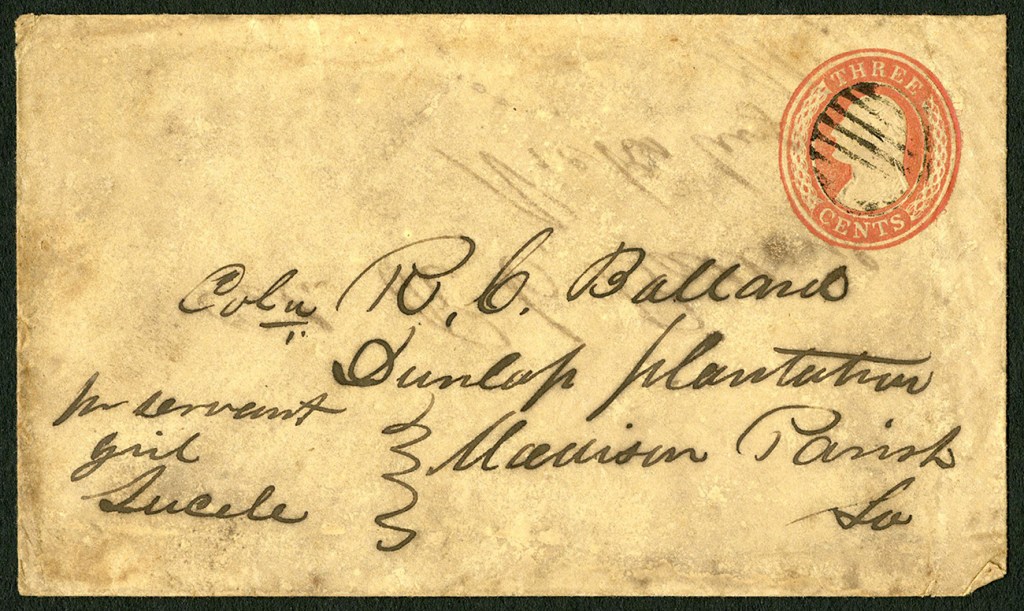
Mary Fields, aka Stagecoach Mary, was the first African American to carry mail on a Star Route for the Post Office Department.

Minnie M. Cox was the first Black female postmaster.
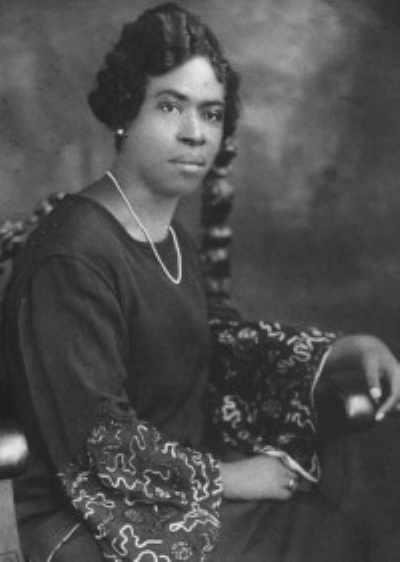
Mrs. Cox definitely earned it. Still, the white citizens of Indianola, Mississippi petitioned President Theodore Roosevelt to remove her from office. Roosevelt refused:

Initially, very few complaints were raised about Mrs. Cox’s appointment as postmaster. As time passed, however, concerns arose from the citizens of Indianola. During this time, Republican politics were being restructured by President Theodore Roosevelt, and the new party stance shifted so that it no longer continued the Reconstruction policy of placing African Americans to political appointments. The white citizens of Indianola called for the elimination of African Americans from leadership positions, and specifically for the removal of Mrs. Cox. In doing so, they hoped to create an opening for a white postmaster.

[…]

These threats concerned postal inspector Charles Fitzgerald, who suggested that “as a bona fide federal officer, Mrs. Cox should be protected, by federal troops if necessary, in the discharge of her duties.” However, President Roosevelt made it clear that there would be no need for federal troops and refused to accept Mrs. Cox’s resignation. Instead, he suspended the Indianola post office on January 2, 1903. Through this suspension, Roosevelt effectively showed Indianola citizens that mail would be rerouted until Mrs. Cox could resume her duties. The atmosphere, however, became so hostile that Mrs. Cox left Indianola for her own safety on January 5, 1903.

In response to the town’s actions against Mrs. Cox, President Roosevelt ordered the Attorney General to prosecute any citizens who had violently threatened Mrs. Cox. Furthermore, the Postmaster General decided to reduce the rank of the Indianola Post Office from a third-class to a fourth-class office on the grounds that the year’s lower postal receipts did not warrant third-class status.

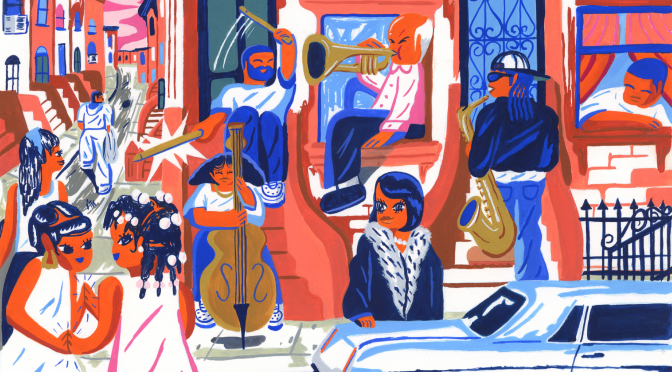
A jazz club in South Philly paid homage to postal workers and the role of the Postal Service in building the Black middle class.

The Postal Service offered opportunities for Black high school graduates, as well as those with undergraduate and post-graduate degrees. In 1940, approximately 14 percent of all middle-class African Americans worked for the Postal Service; 28 percent had at least some college education compared to 4.9 percent of the Black population in general.

Today, African Americans represent approximately 29 percent of the postal workforce.

The Postal Service also preserves African American history and culture in public memory.

A complete list of the phenomenal Black women who have been honored with a postage stamp is available here.
Women in Jazz Month

March is Women in Jazz Month, a time to celebrate the contributions of women to jazz. Truth be told, those contributions are often unheralded and overlooked. But as the National Museum of African American History and Culture notes, women were “present from its [jazz] inception”:

Jazz evolved from ragtime, an American style of syncopated instrumental music. Jazz first materialized in New Orleans, and is often distinguished by African American musical innovation. Multiple styles of the genre exist today from the dance-oriented music of the 1920s big band era to the experimental flair of modern avant-garde jazz. The radically new genre of music, originally seen as socially unacceptable, often called “the Devil’s music,” grew into an expression of high art, and as a result of many pioneering African American women. And while present from its inception, African American women are often omitted from the larger narrative in the history of the genre. Black women musicians fought harsh stereotypes levied against their gender, race, and musical abilities.

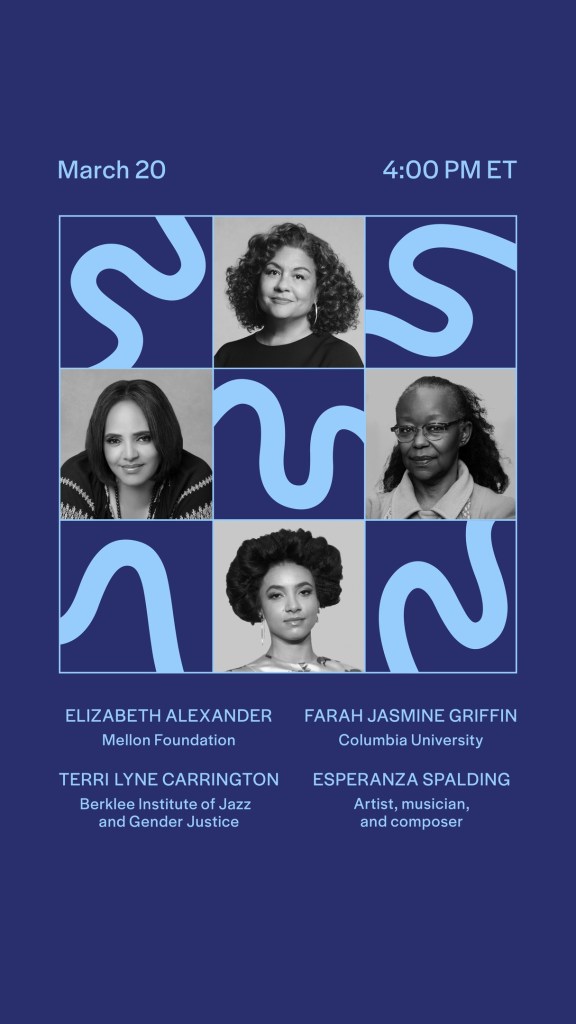
The Mellon Foundation is hosting a virtual discussion about jazz creativity and innovation featuring two women in jazz — Terri Lyne Carrington and esperanza spalding.

The event is free and open to the public. To register for the livestream, visit the Mellon Foundation.

Women’s History Month: Fannie Lou Hamer

Fannie Lou Hamer was a tireless and fearless civil rights leader. She was brutally beaten while imprisoned at a county jail in Winona, Mississippi. Still, she persisted in speaking truth to power.

Locked out of the all-white Mississippi Democratic Party, Mrs. Hamer co-founded the Mississippi Freedom Democratic Party. In August 1964, MFDP delegates traveled to Atlantic City, site of the Democratic National Convention. She testified before the DNC Credentials Committee.

Mrs. Hamer asked: “Is this America, the land of the free and the home of the brave?”

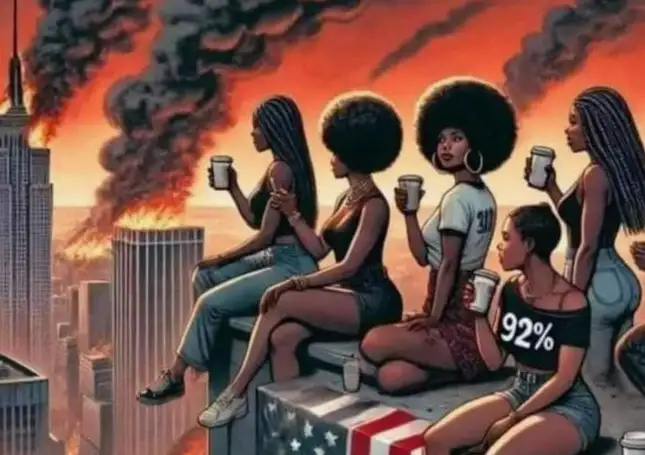
Sixty years later, Black women did their part to save the country from the chaos and trampling of democratic norms that they know are the hallmark of Donald Trump’s America.

Mrs. Hamer famously said, “I am sick and tired of being sick and tired.” Black women are sick and tired of showing up for others. So on Harriet Tubman Day, they are reclaiming self-care.

General Tubman knew the importance of self-care. As a child, she was viciously struck with a heavy weight which caused a traumatic head injury. While leading her people to freedom, she would sometimes stop and sleep. Though plagued by “sleeping spells,” General Tubman persisted:

I was the conductor of the Underground Railroad for eight years, and I can say what most conductors can’t say; I never ran my train off the track and I never lost a passenger.

With the Trump Administration off the rails, Black women are “sleeping in” on March 10, 2025, the National Day of Rest for Black Women.

Women’s History Month: Madam C.J. Walker

March is Women’s History Month, a time to celebrate women and their accomplishments and contributions to society. Madam C.J. Walker is one such phenomenal woman. Born Sarah Breedlove on December 23, 1867 to formerly enslaved parents, Madam Walker is best known for her hair care products and business acumen.

Madam Walker was the first Black female self-made millionaire.

Madam Walker was also a philanthropist and activist. She was a co-founder of the International League for Darker People whose goal was to unite African Americans with other “people of color” to pursue shared goals at the Paris Peace Conference.

ILDP’s first organizational meeting was held at Madam Walker’s estate, Villa Lewaro, on January 2, 1919. Notable figures in attendance included Marcus Garvey, A. Philip Randolph and Adam Clayton Powell Sr.

ILDP influenced Malcolm X’s internationalism and his formation of the Organization of Afro-American Unity.

Black History is American History

While President Trump tries to erase our history from public memory, African Americans celebrate Black Excellence, resistance and resilience.

We are unapologetically Black, loud and proud.

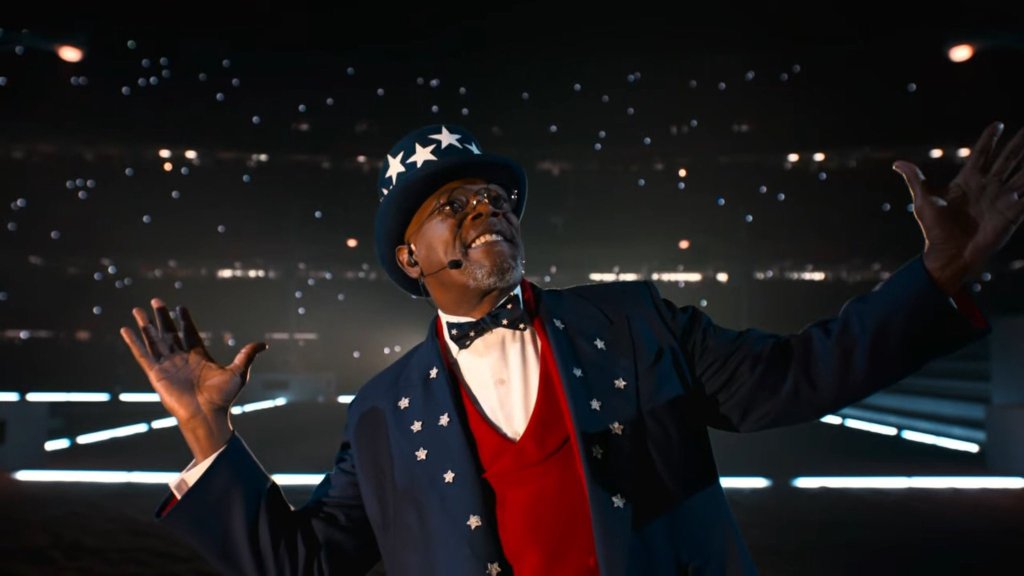
Black history is being taught at church, freedom schools and the Super Bowl.

Fifty years ago, Stevie Wonder recorded “Black Man,” a track on “Songs in the Key of Life,” which won Album of the Year at the 19th Grammy Awards.

Black Americans will not be silenced. We will “lift every voice and sing,” and tell our story by any means necessary.

Meet Moses Williams

Moses Williams (1776-1830) was born into slavery in Philadelphia, one month after the signing of the Declaration of Independence.

Williams was enslaved by “Portrait Painter of the Revolution” Charles Willson Peale who, as a member of the Pennsylvania General Assembly, voted for the Gradual Abolition of Slavery Act of 1780.

While enslaved, Williams was a factotum at Peale’s Museum. He participated in the first paleontological expedition in the new republic. As a skilled taxidermist, Williams was instrumental in the reconstruction of Peale’s exhumed mastodon.

Manumitted in 1802, Williams operated a physiognotrace (face tracing) machine “every day and evening” at Peale’s Museum which was located on the second floor of the building now known as Independence Hall.

Working in anonymity, Williams became a master silhouette artist and contributed to the success of Peale’s Museum.

Williams’ silhouettes are on view at, among other places, Philadelphia Museum of Art, Philadelphia Academy of the Fine Arts, Portrait Gallery in the Second Bank of the United States, The Peale Museum, Yale University Art Gallery, and in the archives of the American Philosophical Society.

Thomas Jefferson, president of the American Philosophical Society from 1797 to 1814, likely crossed paths with Williams whose silhouettes are on display in the Jefferson Library at Monticello.

Williams was the nation’s first Black museum professional. He excelled as a “cutter of profiles” and earned a place in history.

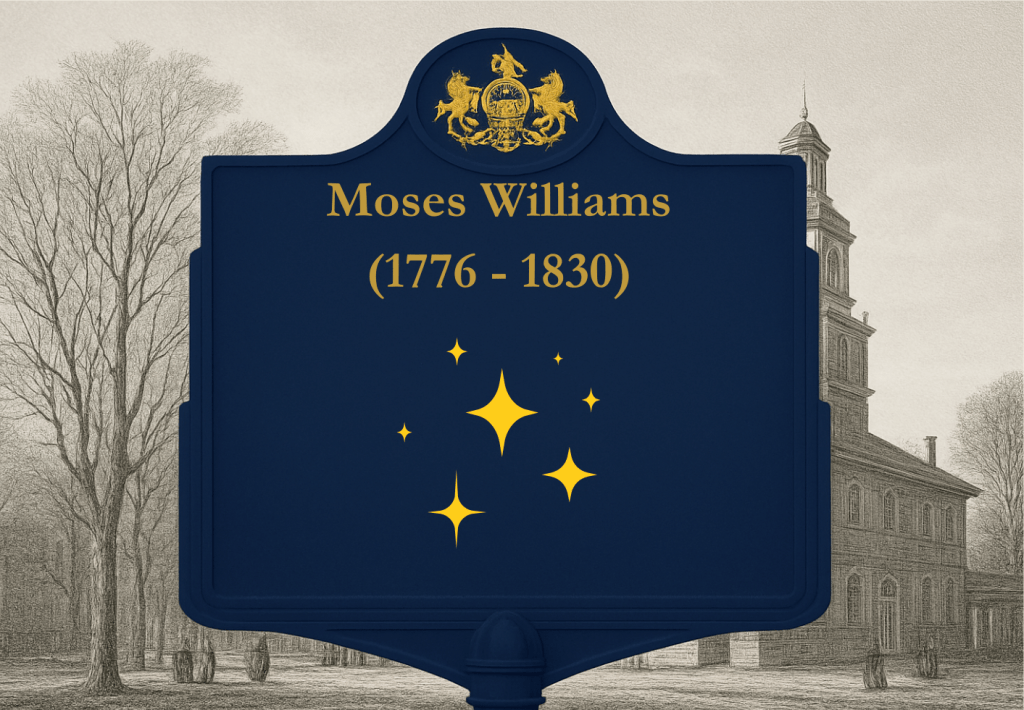
To recognize his impact on 19th century visual culture, All That Philly Founding Director Faye Anderson nominated Moses Williams for a Pennsylvania historical marker. If the nomination is approved, Williams’ marker will be dedicated in 2026, which is the 250th anniversary of both Williams’ birth and the Declaration of Independence.

Moses Williams will not be celebrated by President Trump’s Task Force 250, but we the people will say his name.

UPDATE: The nomination was approved. In 2026, the 250th anniversary of his birth, Moses Williams will be recognized with a Pennsylvania historical marker.

For too long, history remembered only his enslaver, Charles Willson Peale. This marker is a step toward telling the full story, reclaiming Williams’ legacy, and giving voice to the enslaved whose contributions shaped American art and culture.

In the meantime, Faye Anderson will lead a walking tour of Moses Williams’ Philadelphia.

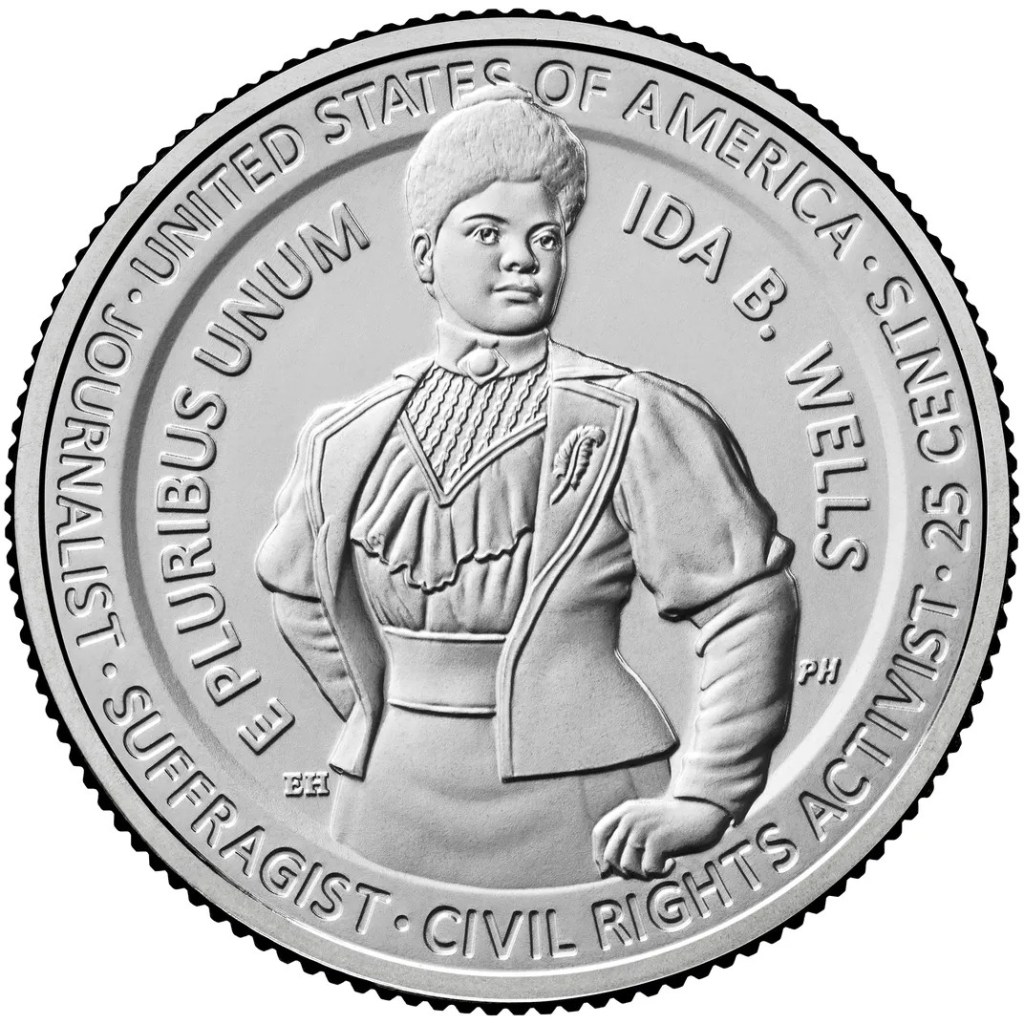
Black History Month: Ida B. Wells

Educator and investigative journalist Ida B. Wells gave no quarter to white supremacists. Born into slavery in Mississippi during the Civil War, Wells led an anti-lynching campaign and became a prominent voice against racial violence and discrimination.

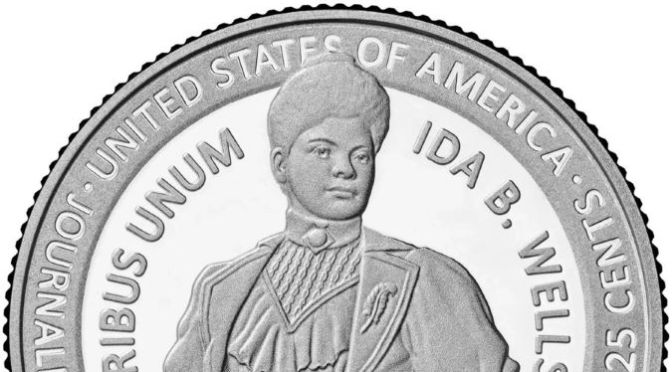
Beginning in 2022, the U.S. Mint American Women Quarters Program has commemorated phenomenal women.

The 2025 honorees are Althea Gibson, Juliette Gordon Low, Stacey Park Milbern, Dr. Vera Rubin and Ida B. Wells.

The quarters give new meaning to making some coin. To secure a bag of Ida B. Wells quarters, go here.

Great Migrations: A People on the Move

My parents were part of the first wave of the Great Migration. They left North Carolina and moved to Brooklyn, NY. “Great Migrations: A People on the Move” is a docuseries hosted by Dr. Henry Louis Gates Jr. The series examines the migrations of African Americans throughout the 20th and 21st centuries, and their lasting impact on American culture and society.

“Great Migrations” features interviews with historians, scholars, artists and everyday people.

The four-part series premieres on PBS on January 28, 2025 at 9/8c.

He’s Back

Karl Marx said, “History repeats itself, first as tragedy, second as farce.” Donald Trump’s first term ended with the tragic loss of life as his supporters stormed the Capitol on January 6, 2021.

Twice-impeached and convicted felon Trump will take the oath of office in the Capitol Rotunda, the scene of the crime, on January 20, 2025.

While it is customary to wait 100 days before evaluating a new president’s performance, we already know Trump’s true self. From Day One, this farce of a presidency will be chaotic, idiotic and autocratic.

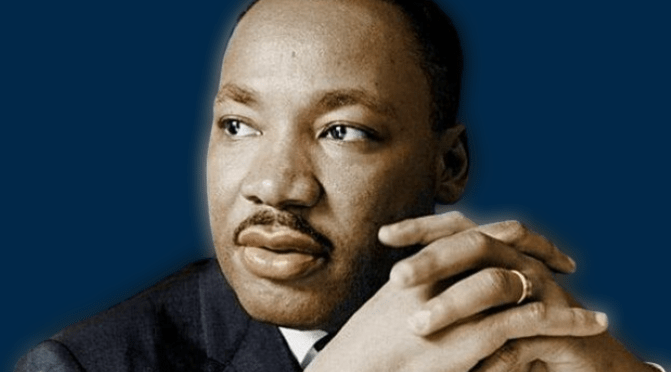
Happy Birthday, Dr. King

Martin Luther King Jr. was born in Atlanta, Georgia on January 15, 1929. This year marks the 39th anniversary of the first observation of Martin Luther King Jr. Day as a federal holiday.

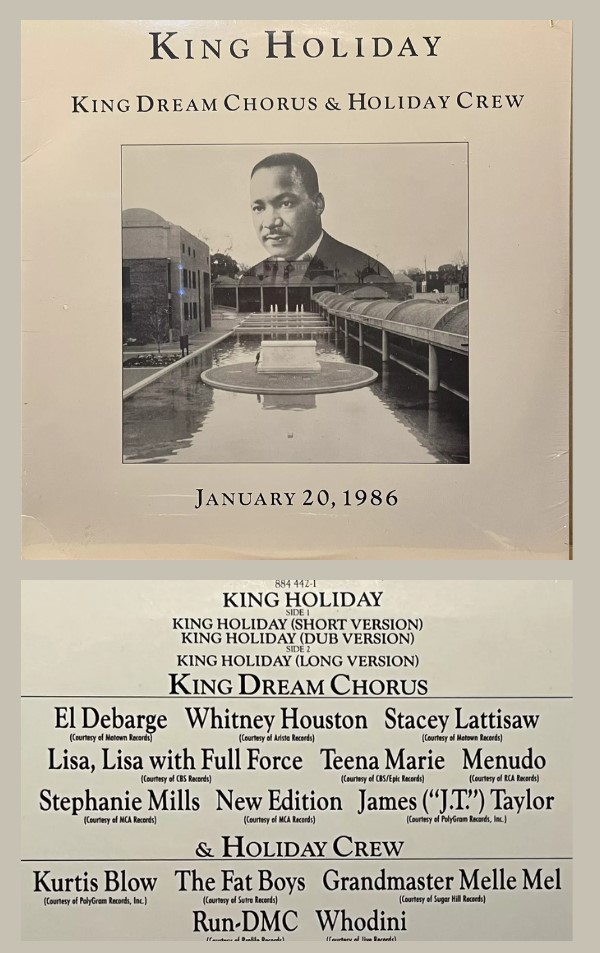
In 1986, an all-star collective of artists, including El DeBarge, Grandmaster Melle Mel, Kurtis Blow, Run–DMC, Whitney Houston, Teena Marie, Stephanie Mills, James “JT” Taylor and Whodini, released a tribute song, “King Holiday,” celebrating Dr. King and the new holiday.

We’re still celebrating the “drum major for justice.” Happy heavenly birthday, Dr. King.