Category Archives: 400 Years of African American History

President Trump’s ‘Truth’ Echoes 1984

In my recent opinion piece published in the Philadelphia Inquirer, I wrote: “The review of content at the President’s House is an Orwellian descent into censorship. It’s interpretive panels and books today. Will it be National Park Service videos and trading cards tomorrow?

Two days later, President Trump applied new pressure on Smithsonian interpretive texts and exhibitions. The Washington Post reported that White House officials are conducting a comprehensive review of Smithsonian museums:

The White House will launch a sweeping review of Smithsonian exhibitions, collections and operations ahead of America’s 250th-birthday celebrations next year — the first time the Trump administration has detailed steps to scrutinize the institution, which officials say should reflect the president’s call to restore “truth and sanity” to American history.

The vetting process would include reviewing public-facing and online content, curatorial processes and guidelines, exhibition planning and collection use, according to a letter sent to Smithsonian Secretary Lonnie G. Bunch III on Tuesday and signed by White House senior associate Lindsey Halligan, Domestic Policy Council Director Vince Hale and White House Office of Management and Budget chief Russell Vought.

[…]

The letter states that the initial review will focus on eight museums: the National Museum of American History, the National Museum of Natural History, the National Museum of African American History and Culture, the National Museum of the American Indian, the National Air and Space Museum, the Smithsonian American Art Museum, the National Portrait Gallery and the Hirshhorn Museum and Sculpture Garden.

The American Association for State and Local History denounced the White House’s interference:

For nearly two centuries, the Smithsonian has served as a globally renowned model of scholarship and public engagement. Smithsonian museums and sites are beloved, trusted destinations for millions of visitors annually looking to gain knowledge, spark curiosity, and find connection. The administration is maligning the expertise and autonomy of an institution that represents the pinnacle of museum and scholarly practice.

This pressure on Smithsonian history museums, in particular, reveals the administration’s ambition to delegitimize the work of the history field and to rob the public of its ability to learn from the past. Sound historical practice depends upon meticulous research of a wide array of sources, open-minded embrace of complexity and ambiguity, and a willingness to update understandings as new information arises. Time and again, Americans have said that they want our country’s full story. Censoring and manipulating content to fit a predetermined, triumphalist narrative is the antithesis of historical practice and a disservice to us all.

Smithsonian exhibitions are grounded in scholarly research. The ahistorical, willfully ignorant Trump wants to impose his interpretation of American history.

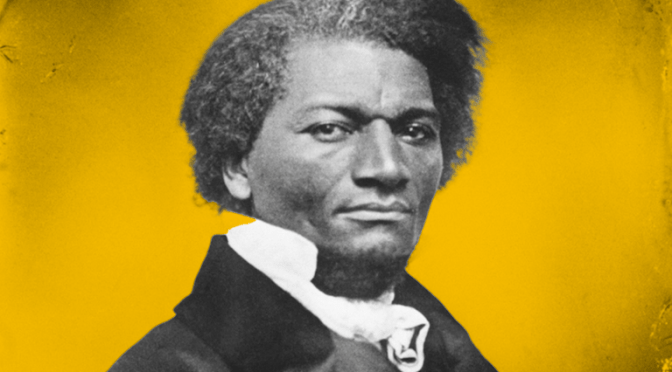
Truth is, Trump knows little, if anything, about Black history. He thought Frederick Douglass was still alive in 2017.

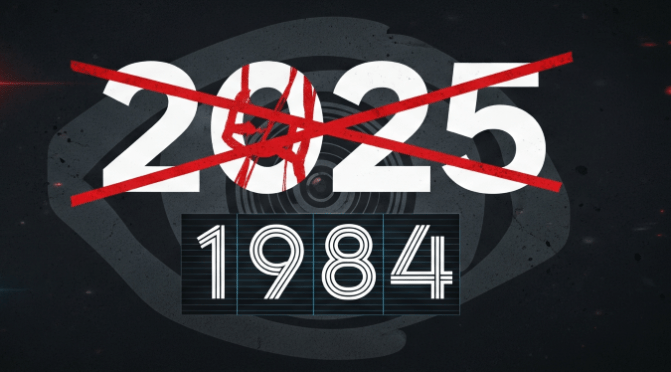
While gleaning clues from Project 2025, Trump’s whitewashing of American history is foretold in George Orwell’s 1984:

The Party told you to reject the evidence of your eyes and ears. It was their final, most essential command.

[…]

And if all others accepted the lie which the Party imposed—if all records told the same tale—then the lie passed into history and became truth.

Trump’s Big Lie that the Smithsonian had “come under the influence of a divisive, race-centered ideology” is straight out of the dictator’s playbook.
International Underground Railroad Month

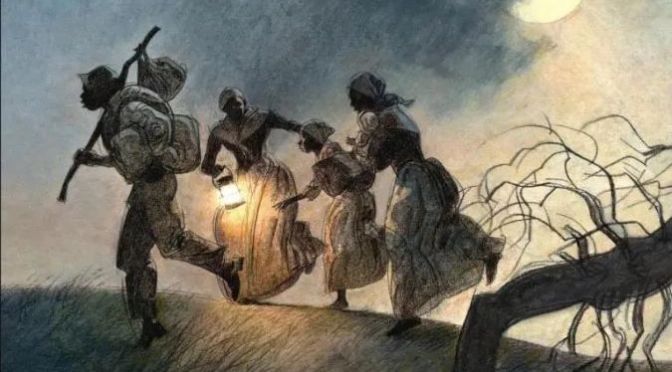
International Underground Railroad Month is a designated time to celebrate the history and legacy of the Underground Railroad. Observed annually in September, the month highlights the courage and resilience of the enslaved who used a covert network of antislavery activists and safe havens to escape bondage.

The State of Maryland proclaimed September as International Underground Railroad Month in 2019:

Governor Larry Hogan today proclaimed September as International Underground Railroad Month, which recognizes Maryland as the most powerful destination for authentic Underground Railroad history. It also commemorates all those involved in the Underground Railroad, including Maryland’s courageous Harriet Tubman, the brilliant orator Frederick Douglass, and thousands of freedom seekers

Frederick Douglass embarked on his journey to freedom on September 3, 1838. Harriet Tubman began her escape on September 17, 1849.

On January 16, 1865, Union General William T. Sherman issued Special Field Order No. 15 which promised the formerly enslaved 40 acres and a mule. The descendants of enslaved Africans are still waiting for their inheritance, preferably payable by check.

The call for reparations dates back to 1783 when Belinda Royall petitioned the Massachusetts General Court (the state legislature) requesting a pension based on her years of enslavement from the proceeds of her master’s estate. Fast forward to today, African Americans from California to New York are saying it’s past time for reparations.

On June 22, 2023, City Council authorized the creation of the Philadelphia Reparations Task Force to “study and develop reparations proposals for Black Philadelphian descendants of enslaved Africans in the United States.”

The Cost of Inheritance: An America ReFramed Special explores “the nation’s legacy of systemic inequities to modern-day America, introducing audiences to descendants of enslaved persons and slave owners, profiling their complex intertwined histories and detailing how their quest to bridge divides galvanized them to seek reparations together.”

The Cost of Inheritance: An America ReFramed Special premieres on Monday, January 8, 2024, at 10:00 pm ET on PBS, PBS.org and the PBS app.

Slavery Did Not Benefit Black People

The arrival of the “White Lion” at Point Comfort (Hampton), Virginia on August 20, 1619 marks the beginning of 250 years of chattel slavery in America. The slave ship carried “20 and odd” Africans who were traded to the English colonists for food.

Hungry for attention, Florida Gov. Ron DeSantis pushed through new Black history standards that instruct students that enslaved Africans developed skills that, “in some instances, could be applied for their personal benefit.” DeSantis offered to debate Vice President Kamala Harris on whether slavery benefited Black people. Harris told DeSantis to take a seat.

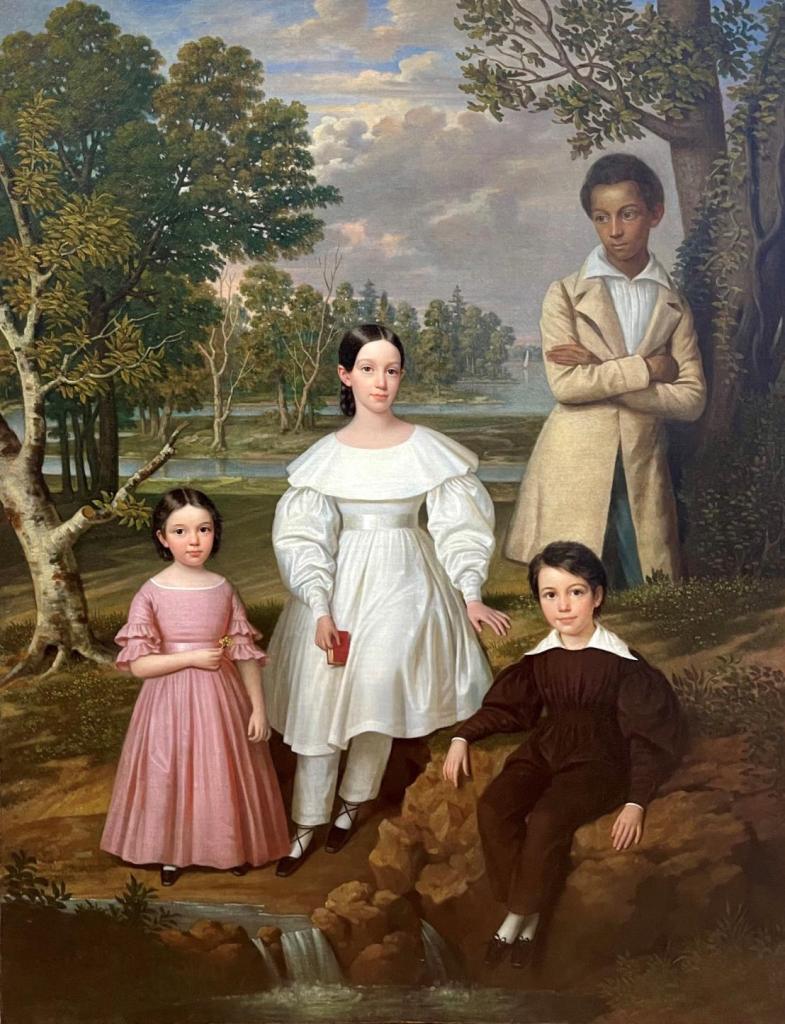
The erasure of Black history is American history. The Metropolitan Museum of Art recently acquired a 19th century portrait from which an enslaved child had been erased. The New York Times reports:

For many years, a 19th century painting of three white children in a Louisiana landscape held a secret. Beneath a layer of overpaint meant to look like the sky: the figure of an enslaved youth. Covered up for reasons that remain unspecified, the image of the young man of African descent was erased from the work around the turn of the last century, and languished for decades in attics and a museum basement.

Through conservation and historical research, the children and their enslaved caretaker have been identified.

“Bélizaire and the Frey Children” will be on view at The Met in the fall.

Happy 5th of July

“What, to the slave, is the Fourth of July,” asked Frederick Douglass in a speech at an Independence Day celebration in Rochester, New York on July 5, 1852.

In a 6-to-3 vote, the Supreme Court ended affirmative action. In her dissenting opinion, Associate Justice Ketanji Brown Jackson wrote:

Given the lengthy history of state-sponsored race-based preferences in America, to say that anyone is now victimized if a college considers whether that legacy of discrimination has unequally advantaged its applicants fails to acknowledge the well-documented “intergenerational transmission of inequality” that still plagues our citizenry.

What, to the descendants of the enslaved, is Independence Day? “This Fourth of July is yours, not mine.”

Zora Neale Hurston: Claiming a Space

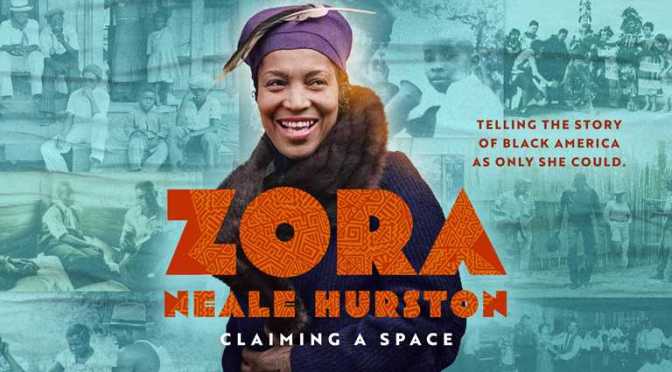
When a Clarence Thomas, Candace Owens or Herschel Walker is in the news, Zora Neale Hurston’s quote, “All my skinfolk ain’t kinfolk,” comes to mind. Zora was a novelist, folklorist, and anthropologist. Author of Their Eyes Were Watching God, she interviewed Cudjoe Lewis, the last known survivor of the Transatlantic Slave Trade. Cudjoe was on the slave ship Clotilda which arrived in Mobile, Alabama in 1860. Zora’s book, Barracoon: The Story of the Last “Black Cargo,” was published in 2018, 68 years after her death.

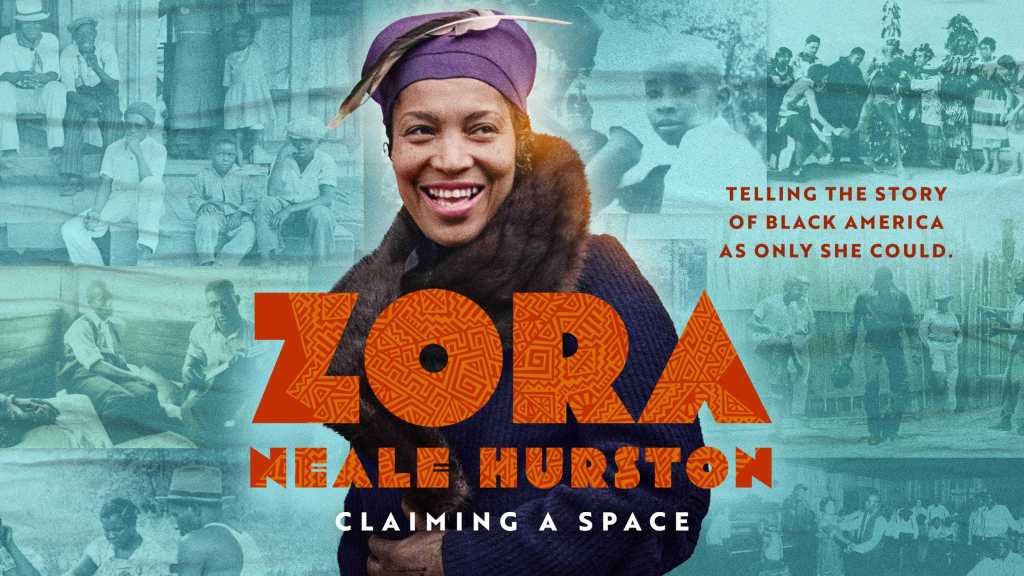
Zora Neale Hurston: Claiming a Space premieres on PBS this month.

AMERICAN EXPERIENCE executive producer Cameo George said:

Zora Neale Hurston has long been considered a literary giant of the Harlem Renaissance, but her anthropological and ethnographic endeavors were equally important and impactful. Her research and writings helped establish the dialects and folklore of African American, Caribbean and African people throughout the American diaspora as components of a rich, distinct culture, anchoring the Black experience in the Americas.

Zora Neale Hurston: Claiming a Space premieres nationwide on Tuesday, January 17, 2023. The documentary will be available on PBS, PBS.org and PBS Video App. Check your local listing here.

Election Day 2022

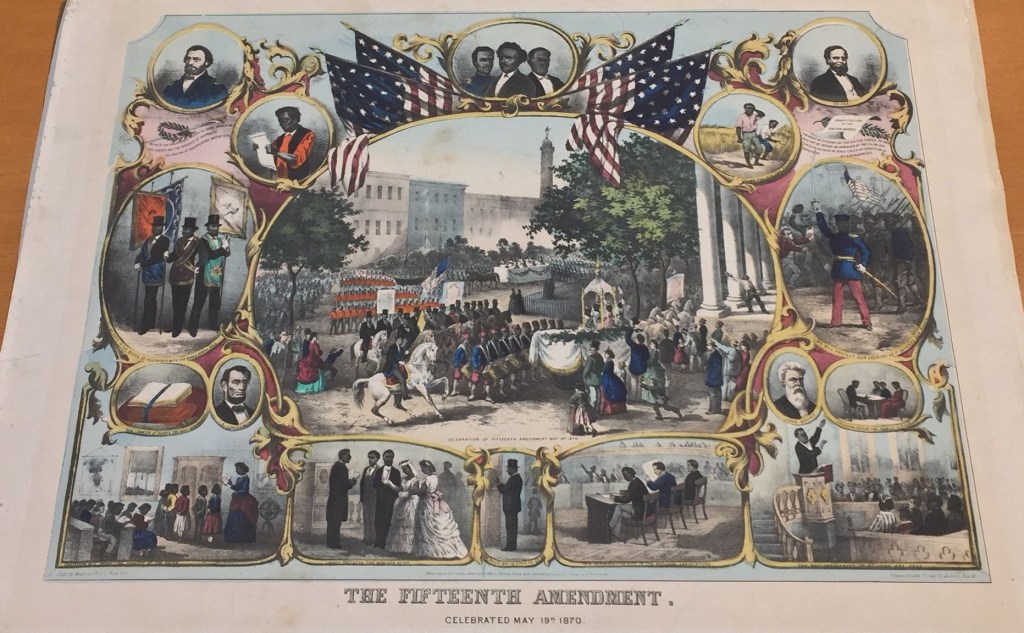
The 15th Amendment to the U.S. Constitution was ratified on February 3, 1870.

Section 1 of the Reconstruction Amendment reads:

The right of citizens of the United States to vote shall not be denied or abridged by the United States or by any State on account of race, color, or previous condition of servitude.

Election Day is Tuesday, November 8. Be careful how you vote.

What to the Slave is the Fourth of July?

In an Independence Day speech to the Rochester Ladies’ Anti-Slavery Society on July 5, 1852, Frederick Douglass asked, “What to the slave is the Fourth of July?”


The world will come to Philadelphia in 2026 to commemorate the 250th anniversary of the Declaration of Independence. In an op-ed published in The Philadelphia Inquirer, I wrote that rather than celebrate slaveholders (34 of the 56 Signers, including Thomas Jefferson, owned slaves), we should celebrate resistance to slavery as personified by Douglass.

The renowned orator’s presence in Philadelphia dates back to his escape from bondage. He arrived by steamboat from Wilmington in 1838. We can bring Frederick Douglass to life by staging public readings of his iconic speech at places and sites associated with the abolitionist, including Independence Hall, Mother Bethel AME Church, Concert Hall, the Union League of Philadelphia and Camp William Penn. Douglass was delivering a lecture at National Hall when the news came about John Brown’s raid on Harpers Ferry.

At the same time, we should heed the advice that Douglass gave a Black activist shortly before his death: “Agitate! Agitate! Agitate!” Agitation means we resist Philadelphia insiders who presume to tell us how the United States Semiquincentennial should be commemorated. We should follow the blueprint of the July 4th Coalition which, in 1976, rallied between 30,000 and 40,000 people to protest the lack of diversity in official celebrations and the whitewashing of history.

Read my full op-ed in The Philadelphia Inquirer.

Soul Heaven

Benjamin Franklin famously said, “In this world, nothing is certain except death and taxes.” When I leave this world, I want to go to “Soul Heaven” where every month is Black Music Appreciation Month.

Black Music Appreciation Month 2022

President Jimmy Carter designated June as Black Music Appreciation Month in 1979.

In a proclamation, President Joe Biden said:

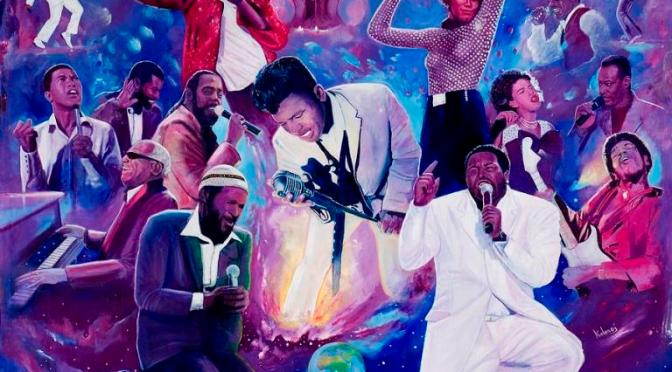
 For generations, Black music has conveyed the hopes and struggles of a resilient people — spirituals mourning the original sin of slavery and later heralding freedom from bondage, hard truths told through jazz and the sounds of Motown during the Civil Rights movement, and hip-hop and rhythm and blues that remind us of the work that still lies ahead.  The music created by Black artists continues to influence musicians of all persuasions, entertain people of all backgrounds, and shape the story of our Nation.

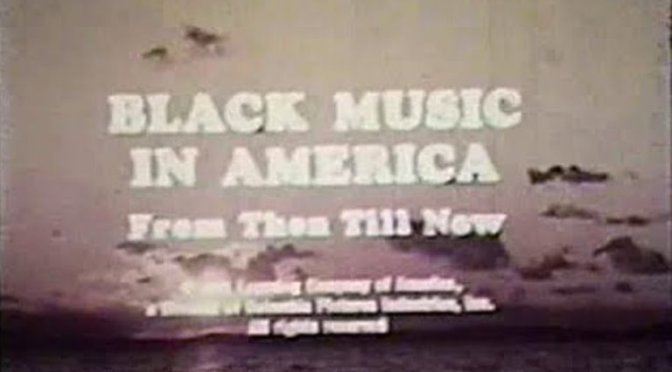
As noted in the 1971 documentary “Black Music in America: From Then Till Now,” Black music is “one of the great artistic contributions to American culture. Black music in America began as the African drum beat and plantation song ignored and then suppressed by white culture.”

To explore the history of Black American music, check out the Black Music Project.