I am director of All That Philly Jazz, a place-based public history project that is documenting and contextualizing Philadelphia’s golden age of jazz. The project is at the intersection of art, public policy, and cultural heritage preservation.
March is Women’s History Month, a time to celebrate women and their accomplishments and contributions to society. Madam C.J. Walker is one such phenomenal woman. Born Sarah Breedlove on December 23, 1867 to formerly enslaved parents, Madam Walker is best known for her hair care products and business acumen.
Madam Walker was the first Black female self-made millionaire.
Madam Walker was also a philanthropist and activist. She was a co-founder of the International League for Darker People whose goal was to unite African Americans with other “people of color” to pursue shared goals at the Paris Peace Conference.
ILDP’s first organizational meeting was held at Madam Walker’s estate, Villa Lewaro, on January 2, 1919. Notable figures in attendance included Marcus Garvey, A. Philip Randolph and Adam Clayton Powell Sr.
I am closing out Black History Month with Victor Hugo Green, the visionary publisher of “The Negro Motorist Green Book.”
Green was a postal worker who lived in Harlem and had routes in New Jersey. The Green Book was a crowdsourced travel guide to help African Americans navigate Jim Crow laws in the South and racial segregation in the North.
Green identified businesses through his own travel and a network of postal workers. The travel guide directed Black travelers to nondiscriminatory lodging, dining, entertainment and other services. The Green Book was published from 1936 to 1966.
It’s been nearly 60 years since the last edition of the travel guide was published, but the Green Book is still in the news.
I lead a walking tour of Green Book sites in Philadelphia. The next walk will be held in April 2025. For updates, send contact info to greenbookphl@gmail.com.
While enslaved, Williams was a factotum at Peale’s Museum. He participated in the first paleontological expedition in the new republic. As a skilled taxidermist, Williams was instrumental in the reconstruction of Peale’s exhumed mastodon.
Manumitted in 1802, Williams operated a physiognotrace (face tracing) machine “every day and evening” at Peale’s Museum which was located on the second floor of the building now known as Independence Hall.
Working in anonymity, Williams became a master silhouette artist and contributed to the success of Peale’s Museum.
Williams’ silhouettes are on view at, among other places, Philadelphia Museum of Art, Philadelphia Academy of the Fine Arts, Portrait Gallery in the Second Bank of the United States, The Peale Museum, Yale University Art Gallery, and in the archives of the American Philosophical Society.
Thomas Jefferson, president of the American Philosophical Society from 1797 to 1814, likely crossed paths with Williams whose silhouettes are on display in the Jefferson Library at Monticello.
Williams was the nation’s first Black museum professional. He excelled as a “cutter of profiles” and earned a place in history.
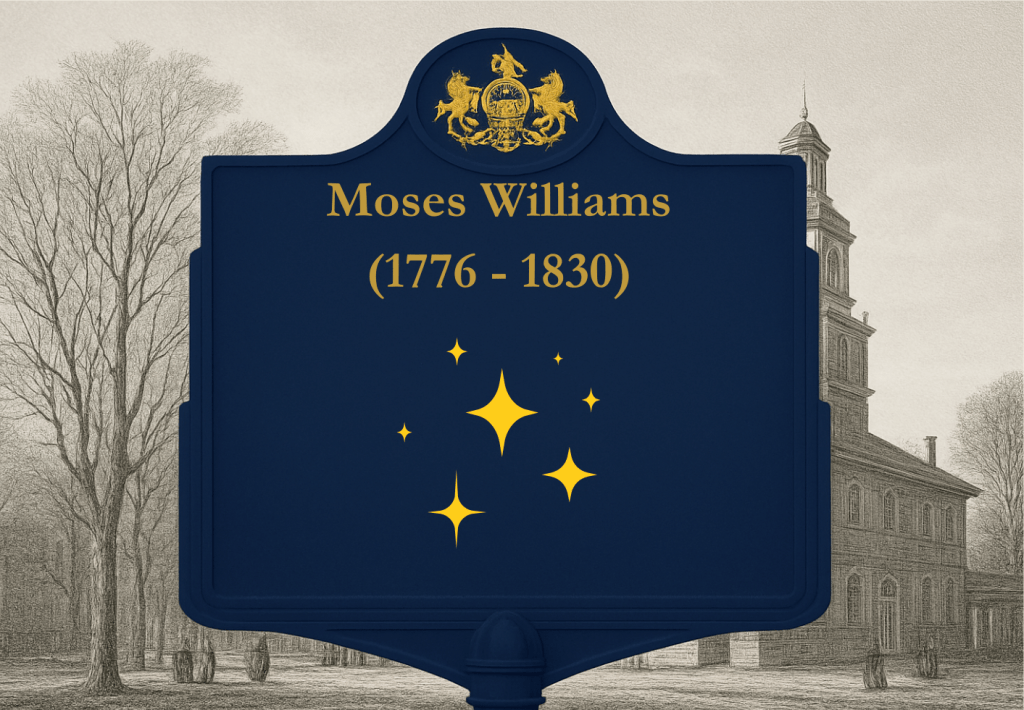
To recognize his impact on 19th century visual culture, All That Philly Founding Director Faye Anderson nominated Moses Williams for a Pennsylvania historical marker. If the nomination is approved, Williams’ marker will be dedicated in 2026, which is the 250th anniversary of both Williams’ birth and the Declaration of Independence.
Moses Williams will not be celebrated by President Trump’s Task Force 250, but we the people will say his name.
UPDATE: The nomination was approved. In 2026, the 250th anniversary of his birth, Moses Williams will be recognized with a Pennsylvania historical marker.
For too long, history remembered only his enslaver, Charles Willson Peale. This marker is a step toward telling the full story, reclaiming Williams’ legacy, and giving voice to the enslaved whose contributions shaped American art and culture.
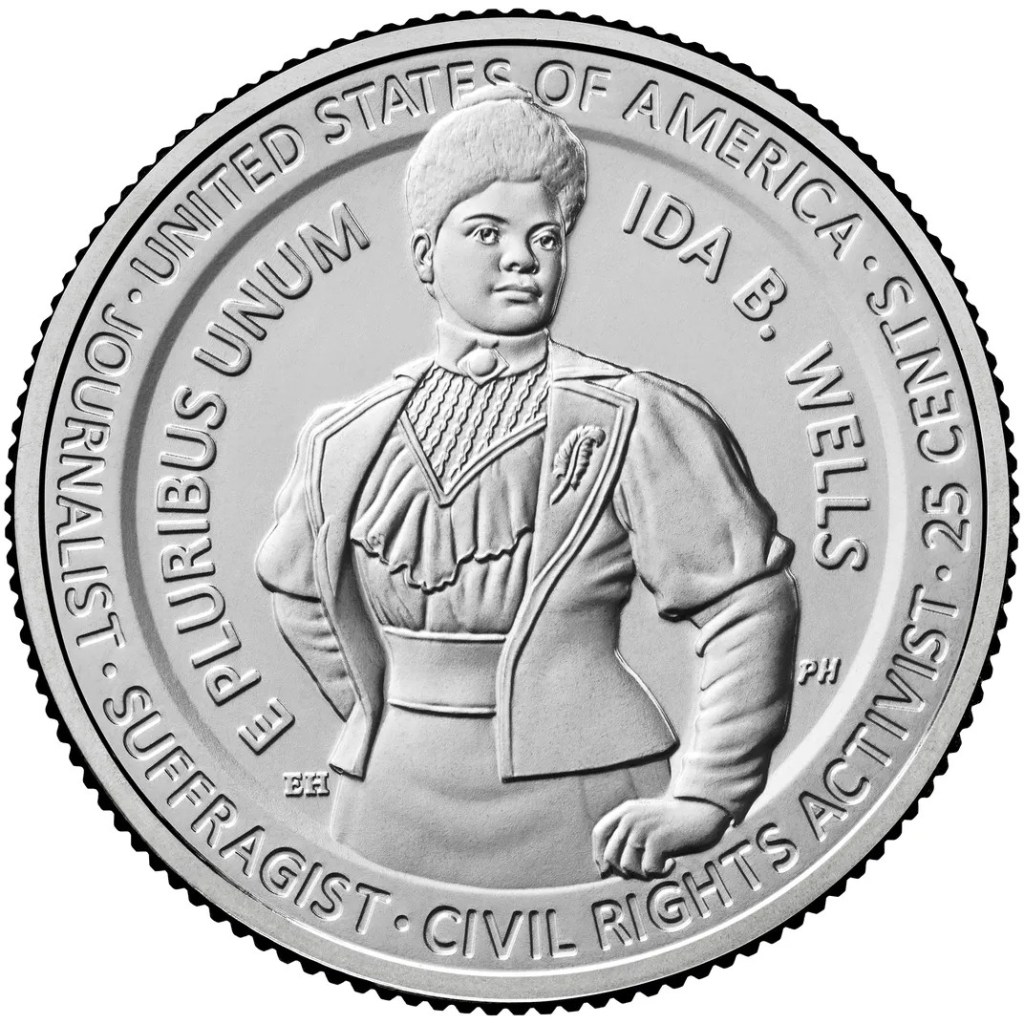
Educator and investigative journalist Ida B. Wells gave no quarter to white supremacists. Born into slavery in Mississippi during the Civil War, Wells led an anti-lynching campaign and became a prominent voice against racial violence and discrimination.
My parents were part of the first wave of the Great Migration. They left North Carolina and moved to Brooklyn, NY. “Great Migrations: A People on the Move” is a docuseries hosted by Dr. Henry Louis Gates Jr. The series examines the migrations of African Americans throughout the 20th and 21st centuries, and their lasting impact on American culture and society.
“Great Migrations” features interviews with historians, scholars, artists and everyday people.
The four-part series premieres on PBS on January 28, 2025 at 9/8c.
Karl Marx said, “History repeats itself, first as tragedy, second as farce.” Donald Trump’s first term ended with the tragic loss of life as his supporters stormed the Capitol on January 6, 2021.
Twice-impeached and convicted felon Trump will take the oath of office in the Capitol Rotunda, the scene of the crime, on January 20, 2025.
While it is customary to wait 100 days before evaluating a new president’s performance, we already know Trump’s true self. From Day One, this farce of a presidency will be chaotic, idiotic and autocratic.
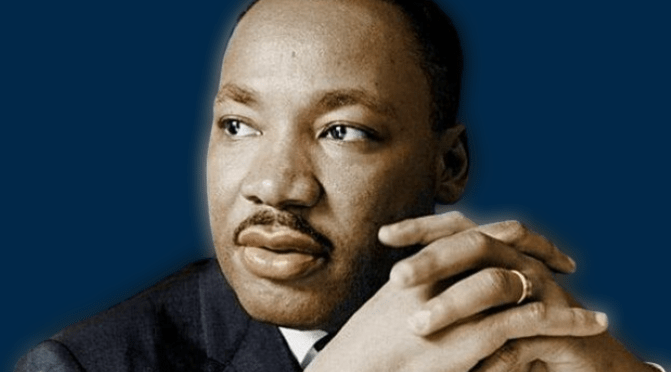
Martin Luther King Jr. was born in Atlanta, Georgia on January 15, 1929. This year marks the 39th anniversary of the first observation of Martin Luther King Jr. Day as a federal holiday.
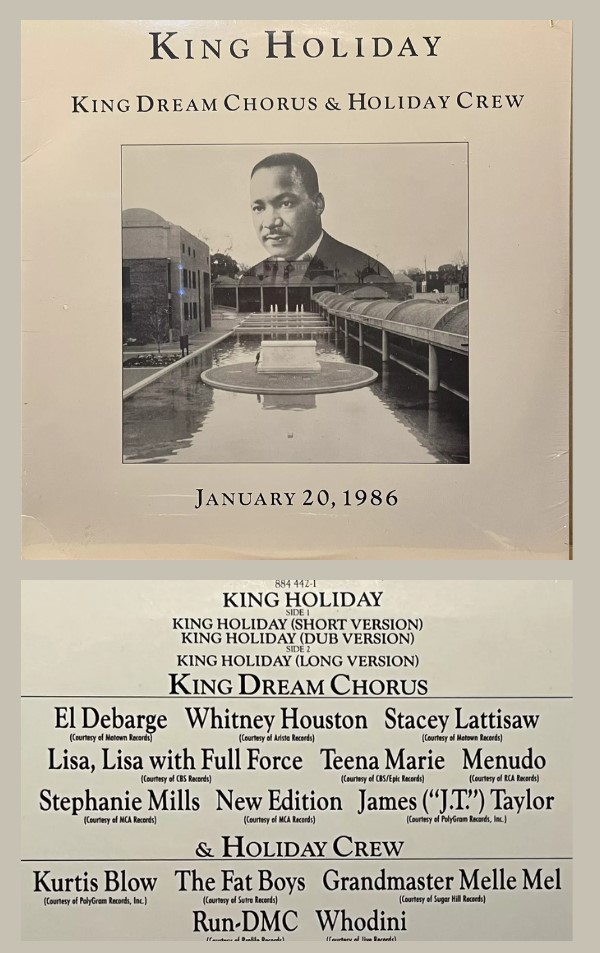
In 1986, an all-star collective of artists, including El DeBarge, Grandmaster Melle Mel, Kurtis Blow, Run–DMC, Whitney Houston, Teena Marie, Stephanie Mills, James “JT” Taylor and Whodini, released a tribute song, “King Holiday,” celebrating Dr. King and the new holiday.
We’re still celebrating the “drum major for justice.” Happy heavenly birthday, Dr. King.
Jimmy Carter has joined the ancestors at age 100. Former President Carter was a humanitarian, and a tireless champion of democracy and human rights. The late president will be honored with a state funeral at Washington National Cathedral.
I do further appoint January 9, 2025, as a National Day of Mourning throughout the United States. I call on the American people to assemble on that day in their respective places of worship, there to pay homage to the memory of President James Earl Carter, Jr. I invite the people of the world who share our grief to join us in this solemn observance.
Along with former First Lady Rosalynn Carter, President Carter co-founded The Carter Center. The Democracy Program was a pioneer in election observation. The Carter Center established the criteria for free and fair elections, and paved the way for ordinary citizens to get involved in the global democracy movement. I observed elections in Ethiopia and Nigeria, and led voter education workshops in Angola and Kazakhstan.
It is widely known that President Carter hosted the first Black Music Month celebration at the White House.
Less well known is that a year earlier on June 18, 1978, President Carter held the first White House concert devoted to jazz to commemorate the 25th anniversary of the Newport Jazz Festival. Performers included Pearl Bailey, Louis Bellson, George Benson, Eubie Blake, Ron Carter, Ornette Coleman, Roy Eldrige, Stan Getz, Dexter Gordon, Lionel Hampton, Herbie Hancock, Max Roach, Zoot Sims, McCoy Tyner and Mary Lou Williams.
President Carter provided the vocals on Dizzy Gillespie’s “Salt Peanuts.”
As noted in his remarks, President Carter’s appreciation of jazz dates back to his early youth:
I began listening to jazz when I was quite young—on the radio, listening to performances broadcast from New Orleans. And later when I was a young officer in the navy, in the early ’40s, I would go to Greenwich Village to listen to the jazz performers who came there. And with my wife later on, we’d go down to New Orleans and listen to individual performances on Sunday afternoon on Royal Street, sit in on the jam sessions that lasted for hours and hours.
[…]
Twenty-five years ago, the first Newport Jazz Festival was held. So this is a celebration of an anniversary and a recognition of what it meant to bring together such a wide diversity of performers and different elements of jazz in its broader definition that collectively is even a much more profound accomplishment than the superb musicians and the individual types of jazz standing alone.
And it’s with a great deal of pleasure that I—as president of the United States—welcome tonight superb representatives of this music form. Having performers here who represent the history of music throughout this century, some quite old in years, still young at heart, others newcomers to jazz who have brought an increasing dynamism to it, and a constantly evolving, striving for perfection as the new elements of jazz are explored.
The concert was broadcast live on a special edition of NPR’s Jazz Alive! hosted by Billy Taylor.
The sequence of events for Jimmy Carter’s state funeral is available here.










 All That Philly Jazz