All posts by Faye Anderson

I am director of All That Philly Jazz, a place-based public history project that is documenting and contextualizing Philadelphia’s golden age of jazz. The project is at the intersection of art, public policy, and cultural heritage preservation.

Since his return to the White House, President Trump has punished individuals and institutions that refuse to bend the knee. In a guest essay published in the New York Times, Henry J. Farrell, a professor of democracy and international affairs at Johns Hopkins University, argues that collective action is the best defense against authoritarianism:

President Trump is trying to seize power that he is not entitled to under the law or the Constitution.

But Mr. Trump will fail in remaking American politics if people and institutions coordinate against him, which is why his administration is targeting businesses, nonprofits and the rest of civil society, proposing corrupting bargains to those who acquiesce and punishing holdouts to terrify the rest into submission.

This is one part of Mr. Trump’s bigger agenda to remake American politics so that everyone wants to be his friend and no one dares to be his enemy.

[…]

Those who oppose authoritarianism have to play a different game, creating solidarity among an unwieldy coalition, which knows that if everyone holds together, they will surely succeed.

Coordinated resistance stopped the National Park Service from removing interpretive signs at the President’s House for now.

In a recent editorial, the Philadelphia Inquirer acknowledged the impact of vigilance and collective courage:

Kudos to everyone who pushed back against Donald Trump’s attempt to whitewash the history of slavery at the President’s House site near the Liberty Bell.

Trump’s ridiculous executive order instructed the National Park Service to remove or cover up displays on federal sites that “inappropriately disparage Americans past or living.”

The arbitrary Sept. 17 deadline to remove the material has passed. For now, the President’s House exhibits remain untouched. But vigilance is still required, given Trump’s erratic policy approach and alarming cognitive state.

I am name-checked in the editorial. All That Philly Jazz is one of 255 signatories to an open statement pushing back against Trump’s attacks on arts and cultural institutions.

Mobilized by the National Coalition Against Censorship and the Vera List Center for Art and Politics, we are standing together to resist censorship:

Arts and culture bring people together. They spark joy, foster belonging, enrich communities, and help us imagine new possibilities. Arts and culture also open space for complexity—for grappling with different perspectives, for hearing what we might rather ignore, and for facing what makes us uncomfortable. Cultural organizations, including art, culture, history, and science museums, as well as libraries, theaters, and dance and performance spaces, make these encounters possible. They are key to the functioning of a democracy, as they promote freedom of expression, encourage critical thinking, and create important opportunities for public discussion and dissent.

[…]

As contributors to the sphere of art and culture, and as representatives of US art and cultural institutions that create space for art, ideas, innovation, and public engagement, we stand firm in the shared values that make for a robust arts and culture landscape: free expression, active debate, responsibility, and care.

Add your voice to the resistance at collective-courage.com.

Moses Williams’ Philadelphia Walking Tour

October is National Arts and Humanities Month. All That Philly Jazz Director Faye Anderson will lead a walking tour of the people, places and events in Moses Williams’ Philadelphia.

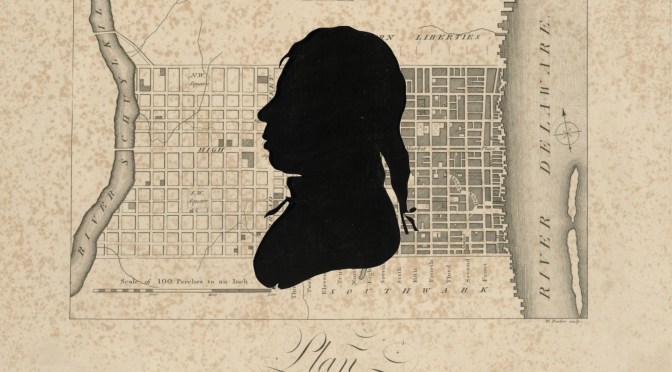
The first Black museum professional and master silhouette artist, Moses Williams was born into slavery in August 1776 in the household of Charles Willson Peale, “Portrait Painter of the Revolution.”

Faye successfully nominated Moses Williams (1776-1830) for a Pennsylvania historical marker. The marker will be dedicated in 2026, the 250th anniversary of his birth.

The walk and talk will start at 3rd and Lombard streets, near the site of the home of Charles Willson Peale, and end at Philosophical Hall, near the proposed location for installation of Moses Williams’ historical marker (.06 mile).

Points of interest along the way include:

  • Site of the home of entrepreneur and abolitionist James Forten;
  • Charles Willson Peale’s gravesite;
  • Church where George Washington and Absalom Jones worshipped;
  • Site of the home of Francis Johnson, the forefather of jazz;
  • Site of the first Black Episcopal church in the United States;
  • Locations of Peale’s Museum; and
  • Organization founded by Benjamin Franklin that has a collection of Moses Williams’ silhouettes.

The walking tour will be held on select Saturdays in October, from 10 a.m. to 12 p.m.

Buy Tickets

September was designated Gospel Music Heritage Month in 2008 following the passage of House Joint Resolution 90 sponsored by the late Representative Sheila Jackson Lee. The resolution highlighted gospel music’s deep roots in the African American experience and acknowledged its influence on other genres, including jazz, blues, soul, R&B and rock.

Gospel music is how African Americans got over during the Jim Crow era.

Formed in 1928, the Dixie Hummingbirds were one of the most popular and influential gospel groups. Their best-known recordings include “Thank You For One More Day,” “I’ve Been Born Again,” and “Loves Me Like a Rock” which won the 1973 Grammy Award for Best Soul Gospel Performance.

On Wednesday, September 24, 2025, the Charles L. Blockson Afro-American Collection will host a talk with Dr. Lynn Peterson, author of “Flying with the Birds: Rev. Joe Williams, The Last Original Member of the Iconic Dixie Hummingbirds.”

Also on September 24, I will give a gallery talk about the exhibit that I curated for the Historical Society of Pennsylvania, “Message In Our Music.” I will highlight objects in the exhibit related to gospel music, including Bishop Richard Allen’s collection of hymns and spirituals, a program from the Jubilee Singers’ 1873 concert at the Academy of Music, and a reel-to-reel tape of a live performance by Sister Rosetta Tharpe.

The gallery talk is free and open to the public. To register, go here.

Whitewashing American History

Harriet Tubman began her journey to freedom on Monday, September 17, 1849.

On Monday, September 15, 2025, the Washington Post reported on President Trump’s plan to whitewash the everyday brutality of slavery, including removing the photograph of self-emancipated Peter from Fort Pulaski National Monument in Georgia. The photograph of “a typical Negro” was first published in Harper’s Weekly on July 4, 1863.

Abolitionists used the iconic photograph to raise awareness of “how bad slavery was.” I recently viewed an original print of “The Scourged Back” at the Metropolitan Museum of Art.

President Trump wants to erase the truth that President George Washington enslaved nine Black people and signed into law the Fugitive Slave Act of 1793 in the shadow of the Liberty Bell.

According to the Post, interpretive panels at the President’s House have been flagged for removal:

In his executive order, Trump singled out the “corrosive ideology” at Philadelphia’s Independence National Historical Park, where the founders signed the Declaration of Independence.

“This is not just a handful of signs that tell the story of slavery, said Ed Stierli, senior Mid-Atlantic regional director at the advocacy group National Parks Conservation Association. “This is a place that tells the complete story not just of slavery in America, but what it was like for those who were enslaved by George Washington.”

Trying to extricate slavery from the President’s House exhibit would fundamentally change the nature of the site, said Cindy MacLeod, who was superintendent of Independence National Historical Park for 15 years until 2023.

Read more

Party with a Purpose at the Johnson House

September is International Underground Railroad Month, a celebration of the history and legacy of the Underground Railroad. Events highlight stories of the self-emancipators who used a covert network of antislavery activists and safe havens to escape bondage.

Frederick Douglass embarked on his journey to freedom on September 3, 1838. Harriet Tubman began her escape on September 17, 1849.

Archival records show that William Still, Father of the Underground Railroad, held meetings at the Johnson House, an Underground Railroad station in Philadelphia. The Johnson House Historic Site is a National Historic Landmark, the highest designation for a historic property.

With the whitewashing of American history, the Johnson House stands as a powerful memorial to faith, resilience and resistance.

This International Underground Railroad Month, the Johnson House will host a party with a purpose, Jammin’ in the Garden 2025: A Celebration of Music and Community, on Saturday, September 20, 2025, from 4:00pm to 7:00pm. The fundraiser will support their preservation work and the Center for Social Advocacy.

To get tickets, go here.

I have President Trump fatigue. And I’m not alone. According to the latest Quinnipiac poll, only 37 percent of voters approve of the way Trump is handling his job; 55 percent disapprove.

There are signs of resistance to the chaos and madness. So this Labor Day, the message is in the music.

The President’s House.ai

For more than 200 years, the nine enslaved Africans who lived in the Executive Mansion, located at 190 High (Market) Street in Philadelphia, were erased from history. This lost history was uncovered in 2002 and memorialized in the President’s House. The National Park Service site opened on December 15, 2010.

The story of slavery in the shadow of the Liberty Bell was whitewashed from the centennial, sesquicentennial and bicentennial celebrations of the signing of the Declaration of Independence.

For the Semiquincentennial, we will breathe life into President George Washington’s enslaved workers and say their names – Austin, Christopher, Giles, Hercules, Joe, Moll, Ona, Paris and Richmond – with joy.

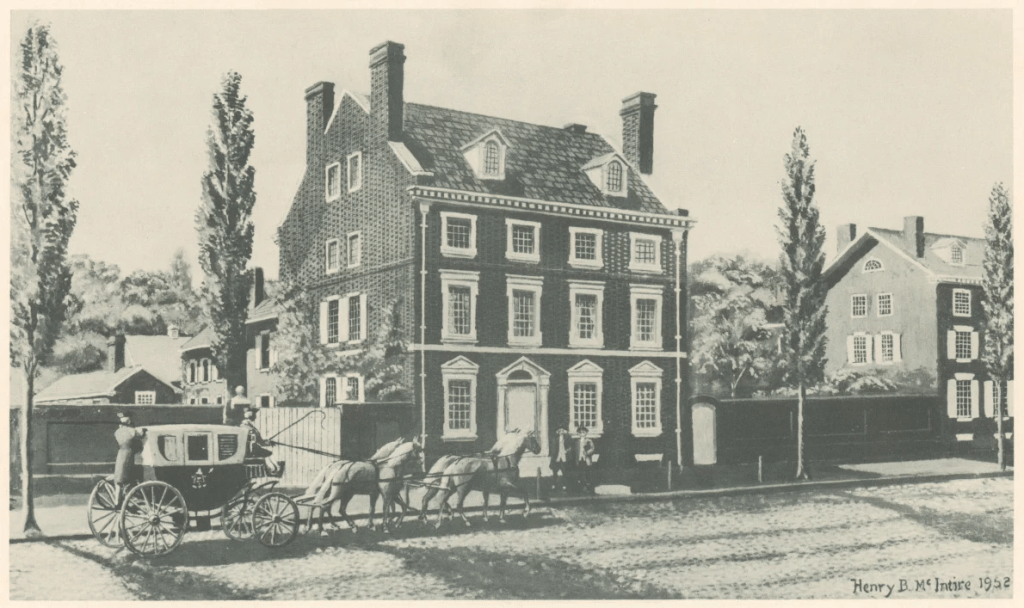
In 1926, a group of women, the Women’s Committee of the Philadelphia Sesqui-Centennial International Exposition, reconstructed Revolutionary era buildings on the fairgrounds in South Philadelphia.

The Daughters of the American Revolution sponsored the George Washington House, aka the President’s House.

The “High Street” exhibit included period-accurate reenactors. The exhibit presented an idealized view of the Revolutionary era. The existence of slavery in the Executive Mansion was left out of the history of 190 High Street.

In 2026, a group of activists, architects, technologists and historians will digitally reconstruct the original President’s House and outbuildings.

Instead of reenactors, we will create period-accurate AI avatars of the nine Black people enslaved by President Washington, including his chief cook, Hercules Posey.

In his book, Recollections and Private Memoirs of the Life and Character of Washington, George Washington Parke Custis, the president’s step-grandson, gave a detailed description of an outfit that Hercules wore:

While the masters of the republic were engaged in discussing the savory viands of the Congress dinner, the chief cook retired to make his toilet for an evening promenade. His perquisites from the slops of the kitchen were from one to two hundred dollars a year. Though homely in person, he lavished the most of these large avails upon dress. In making his toilet his linen was of unexceptionable whiteness and quality, then black silk shorts, ditto waistcoat, ditto stockings, shoes highly polished, with large buckles covering a considerable part of the foot, blue cloth coat with velvet collar and bright metal buttons, a long watch-chain dangling from his fob, a cocked-hat, and gold-headed cane completed the grand costume of the celebrated dandy (for there were dandies in those days) of the president’s kitchen.

Custis recalled “the chief cook invariably passed out at the front door.”

The President’s House.ai is currently in development. For more information or to get involved, contact Project Director Faye Anderson at presidentshouseAI@gmail.com.

President Trump’s ‘Truth’ Echoes 1984

In my recent opinion piece published in the Philadelphia Inquirer, I wrote: “The review of content at the President’s House is an Orwellian descent into censorship. It’s interpretive panels and books today. Will it be National Park Service videos and trading cards tomorrow?

Two days later, President Trump applied new pressure on Smithsonian interpretive texts and exhibitions. The Washington Post reported that White House officials are conducting a comprehensive review of Smithsonian museums:

The White House will launch a sweeping review of Smithsonian exhibitions, collections and operations ahead of America’s 250th-birthday celebrations next year — the first time the Trump administration has detailed steps to scrutinize the institution, which officials say should reflect the president’s call to restore “truth and sanity” to American history.

The vetting process would include reviewing public-facing and online content, curatorial processes and guidelines, exhibition planning and collection use, according to a letter sent to Smithsonian Secretary Lonnie G. Bunch III on Tuesday and signed by White House senior associate Lindsey Halligan, Domestic Policy Council Director Vince Hale and White House Office of Management and Budget chief Russell Vought.

[…]

The letter states that the initial review will focus on eight museums: the National Museum of American History, the National Museum of Natural History, the National Museum of African American History and Culture, the National Museum of the American Indian, the National Air and Space Museum, the Smithsonian American Art Museum, the National Portrait Gallery and the Hirshhorn Museum and Sculpture Garden.

The American Association for State and Local History denounced the White House’s interference:

For nearly two centuries, the Smithsonian has served as a globally renowned model of scholarship and public engagement. Smithsonian museums and sites are beloved, trusted destinations for millions of visitors annually looking to gain knowledge, spark curiosity, and find connection. The administration is maligning the expertise and autonomy of an institution that represents the pinnacle of museum and scholarly practice.

This pressure on Smithsonian history museums, in particular, reveals the administration’s ambition to delegitimize the work of the history field and to rob the public of its ability to learn from the past. Sound historical practice depends upon meticulous research of a wide array of sources, open-minded embrace of complexity and ambiguity, and a willingness to update understandings as new information arises. Time and again, Americans have said that they want our country’s full story. Censoring and manipulating content to fit a predetermined, triumphalist narrative is the antithesis of historical practice and a disservice to us all.

Smithsonian exhibitions are grounded in scholarly research. The ahistorical, willfully ignorant Trump wants to impose his interpretation of American history.

Truth is, Trump knows little, if anything, about Black history. He thought Frederick Douglass was still alive in 2017.

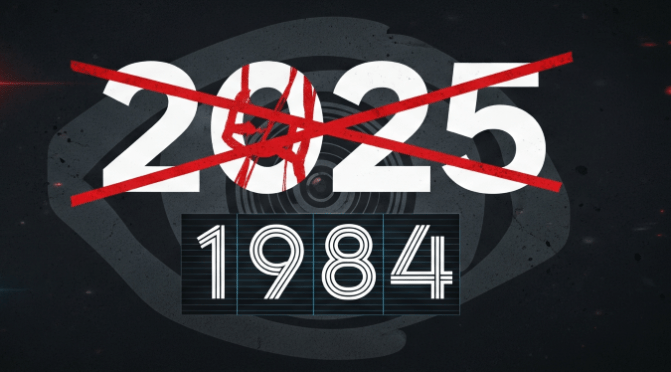
While gleaning clues from Project 2025, Trump’s whitewashing of American history is foretold in George Orwell’s 1984:

The Party told you to reject the evidence of your eyes and ears. It was their final, most essential command.

[…]

And if all others accepted the lie which the Party imposed—if all records told the same tale—then the lie passed into history and became truth.

Trump’s Big Lie that the Smithsonian had “come under the influence of a divisive, race-centered ideology” is straight out of the dictator’s playbook.

Learn From History

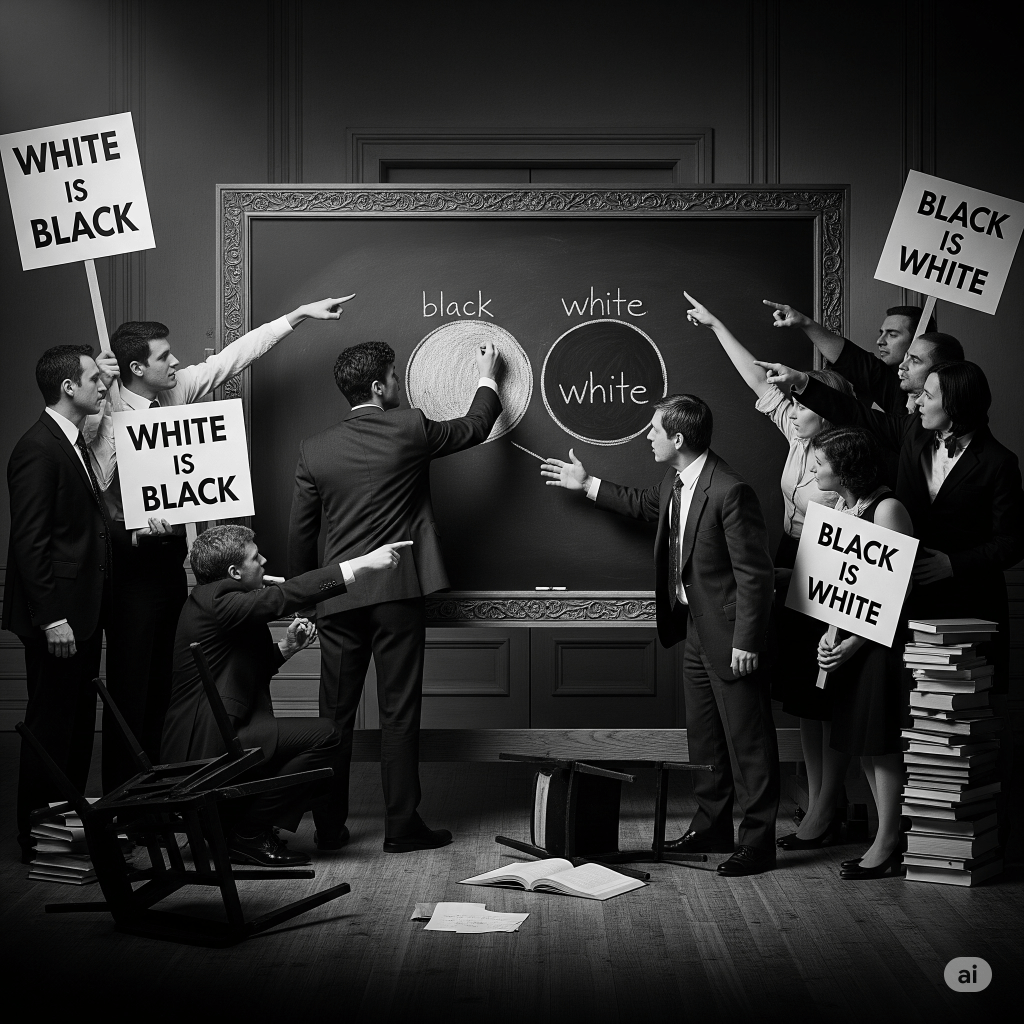
In Gulliver’s Travels, Jonathan Swift wrote: “I said there was a society of men among us, bred up from their youth in the art of proving, by words multiplied for the purpose, that white is black, and black is white, according as they are paid. To this society all the rest of the people are slaves.”

President Trump claims he wants to restore “truth and sanity to American history.” Facing the threat of termination, National Park Service employees may be forced to acquiesce to the insane notion of “a concerted and widespread effort to rewrite our Nation’s history, replacing objective facts with a distorted narrative driven by ideology rather than truth.”

For the wannabe king, the truth is what he says it is.

In a joint statement, the American Association for State and Local History, Organization of American Historians, Association for the Study of African American Life and History, Association of African American Museums, and National Council on Public History, denounced Trump’s diktat to rewrite history:

National Park Service (NPS) sites are being forced to remove historical content that the White House views as “negative about either past or living Americans.” This top-down directive erases people and events that do not fit within a narrow, triumphalist view of history.

What makes this erasure even more alarming is that the U.S. Department of the Interior (DOI), which runs NPS, is couching its censorship efforts in the very terms that historians and educators often use to explain their own work. Federal officials are eliminating the experiences of Native Americans, African Americans, women, members of the LGBTQ+ community, and others from history while calling it—to quote a DOI spokesperson—“honest, respectful storytelling” that “honor[s] the complexity of our nation’s shared journey.” In fact, they are doing the opposite. And requiring knowledgeable NPS staff to attribute these alterations to the White House’s interest in “historical accuracy” is doubly deceptive and contrary to the professional standards by which historians conduct their work.

Our country’s 433 NPS sites, which serve millions of visitors per year, are just the starting point for this skewed approach to history, but they will not be the last. Recent pressure on the Smithsonian Institution, National Endowment for the Humanities, Institute for Museum and Library Services, and others show just how far this administration is willing to go to distort the past toward ideological aims in the present. This drive to sanitize and warp history endangers vital sources of public knowledge, from state and local history museums to social studies classrooms to libraries.

Read more

The President’s House

The President’s House: Freedom and Slavery in the Making of a New Nation, an open-air installation, was dedicated on December 15, 2010. The National Park Service site pays homage to the nine enslaved people in the household of President George Washington – Austin, Christopher Sheels, Giles, Hercules, Joe, Moll, Oney Judge, Paris and Richmond.

The President’s House at Independence National Historical Park was born out of protest.

In a sign of the times, the President’s House is in the crosshairs of President Trump who wants to sugarcoat and whitewash American history. The Philadelphia Inquirer reports the site has been flagged for content review:

The President’s House Site, where Presidents George Washington and John Adams once lived, came under particular scrutiny with six exhibits flagged for review. The exhibit focuses on the contradictory coexistence of liberty and slavery during the founding of America and memorializes the people Washington enslaved.

For instance, park staff commented on a display titled “Life Under Slavery,” flagging that it “speaks of whipping, depriving of food, clothing, and shelter; as well as beating, torturing, and raping those they enslaved.”

[…]

Thirteen specific items spread across six exhibits at the site were identified for review.

This includes components of displays titled: “Life Under Slavery,” “History Lost & Found,” “The Executive Branch,” “The Dirty Business of Slavery,” “The House and the People Who Worked & Lived In It,” and an illustration with the words “An Act respecting fugitives from Justice,” in reference to Washington’s signing of the Fugitive Slave Act, according to an internal form, reviewed by The Inquirer, where employees were directed to submit their reviews.

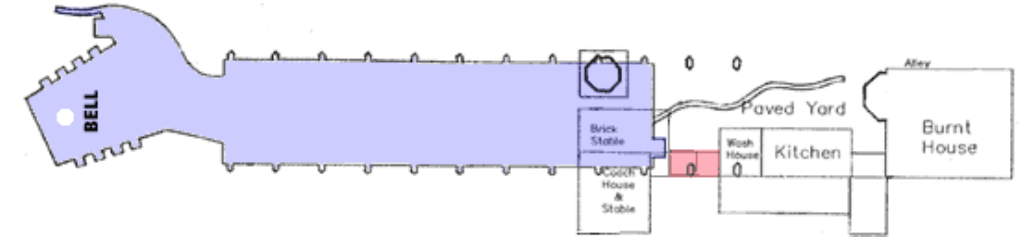
In 2002, the NPS had planned to ignore the full and accurate history of the site. The Liberty Bell Center, then-under construction, is in the footprint of President Washington’s slave quarters (circled).

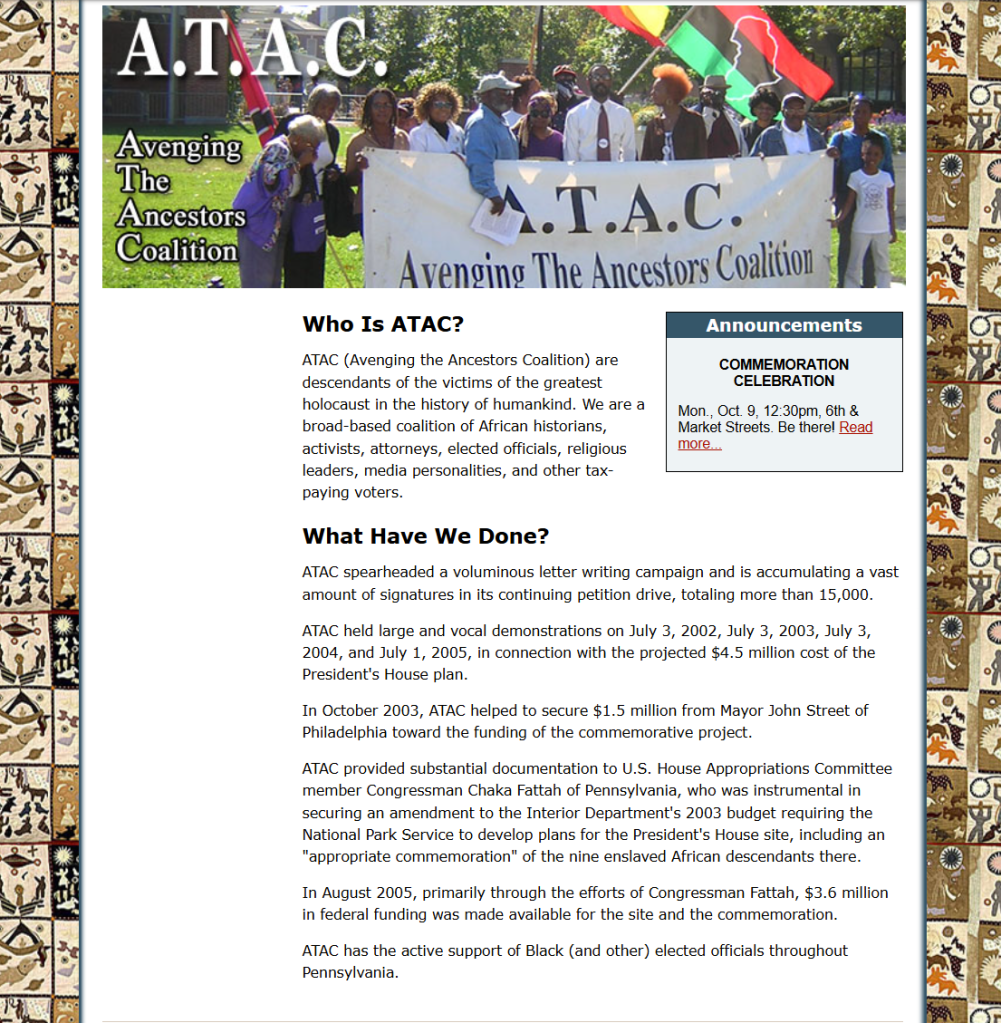
Attorney Michael Coard, a founder of Avenging The Ancestors Coalition, was a member of the President’s House Project Oversight Committee which oversaw development and construction of the site. Coard led the charge to tell the full story.

We will resist any attempt to erase the complicated history of this memorial site.

As we protest to preserve the physical structure and interpretive panels, we also will use digital technologies and 3D modeling to reconstruct the President’s House and outbuildings without constraint or compromise.

The President’s House.ai will be accessible to visitors on any device or browser anywhere in the world.

We will create AI-generated avatars of the nine African descendants enslaved by President Washington, including Ona Judge (1773-1848) and Hercules Posey (1748-1812).

Visitors to the President’s House.ai will be able to hold real-time conversations with the AI ancestors. The avatars’ training will be grounded in trusted primary and secondary sources.

AI Ona will spill the tea on how she escaped from bondage.

President Washington placed an advertisement in the May 24, 1796 edition of The Philadelphia Gazette offering a $10 reward (roughly $365 today) for the capture of Oney Judge.

As activists, historians, architects and technologists resist President Trump’s efforts to censor uncomfortable truths, the witless president unwittingly triggered the Streisand Effect.