

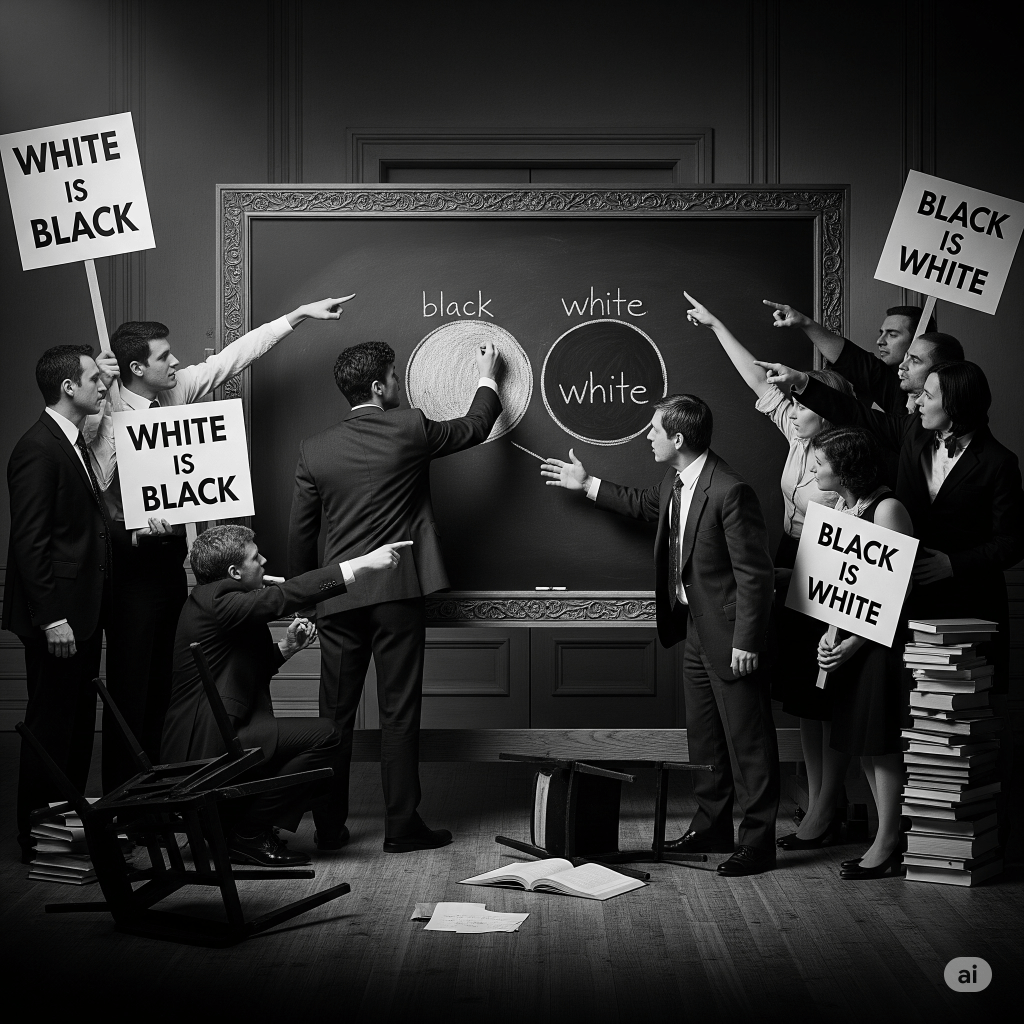
In Gulliver’s Travels, Jonathan Swift wrote: “I said there was a society of men among us, bred up from their youth in the art of proving, by words multiplied for the purpose, that white is black, and black is white, according as they are paid. To this society all the rest of the people are slaves.”
President Trump claims he wants to restore “truth and sanity to American history.” Facing the threat of termination, National Park Service employees may be forced to acquiesce to the insane notion of “a concerted and widespread effort to rewrite our Nation’s history, replacing objective facts with a distorted narrative driven by ideology rather than truth.”
For the wannabe king, the truth is what he says it is.
In a joint statement, the American Association for State and Local History, Organization of American Historians, Association for the Study of African American Life and History, Association of African American Museums, and National Council on Public History, denounced Trump’s diktat to rewrite history:
National Park Service (NPS) sites are being forced to remove historical content that the White House views as “negative about either past or living Americans.” This top-down directive erases people and events that do not fit within a narrow, triumphalist view of history.
What makes this erasure even more alarming is that the U.S. Department of the Interior (DOI), which runs NPS, is couching its censorship efforts in the very terms that historians and educators often use to explain their own work. Federal officials are eliminating the experiences of Native Americans, African Americans, women, members of the LGBTQ+ community, and others from history while calling it—to quote a DOI spokesperson—“honest, respectful storytelling” that “honor[s] the complexity of our nation’s shared journey.” In fact, they are doing the opposite. And requiring knowledgeable NPS staff to attribute these alterations to the White House’s interest in “historical accuracy” is doubly deceptive and contrary to the professional standards by which historians conduct their work.
Our country’s 433 NPS sites, which serve millions of visitors per year, are just the starting point for this skewed approach to history, but they will not be the last. Recent pressure on the Smithsonian Institution, National Endowment for the Humanities, Institute for Museum and Library Services, and others show just how far this administration is willing to go to distort the past toward ideological aims in the present. This drive to sanitize and warp history endangers vital sources of public knowledge, from state and local history museums to social studies classrooms to libraries.
 All That Philly Jazz
Faye Anderson is a scholarly activist who uses her pen as a sword (and a shield) to defend Black history in and around Philadelphia. Well done, Faye. Very well done!